Silicate

Axinite

Sharp axe-blade crystals in clove brown with violet flashes, strongly pleochroic and unmistakable once seen.
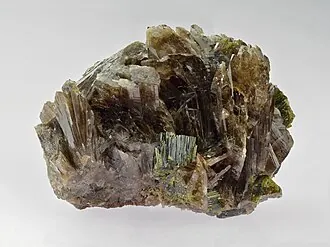
Axinite — mineral specimen
Reference photograph: Wikimedia Commons · source. Specimens in the shop vary.

Judging quality

Look for translucent wedge-shaped crystals with glassy faces and clean edges. French Alpine material from the Oisans is the historical benchmark.

Care

Brittle at the thin edges. Handle by the body of the crystal.

History & lore

The classic Alpine locality of Bourg d'Oisans has been collected since the eighteenth century and defined the species.

Cultural history, recorded as tradition rather than as medical or scientific claim.

Common questions about Axinite

What is Axinite?
Sharp axe-blade crystals in clove brown with violet flashes, strongly pleochroic and unmistakable once seen.
How hard is Axinite and what is it made of?
Axinite is a Silicate-family mineral with the composition Ca2(Fe,Mn)Al2BSi4O15(OH). It crystallizes in the triclinic system and rates 6.5-7 on the Mohs hardness scale. It occurs in clove brown, violet.
Where does Axinite come from?
Notable localities for Axinite include France (Bourg d'Oisans), Pakistan, Mexico, USA.
How do you tell good Axinite from filler?
Look for translucent wedge-shaped crystals with glassy faces and clean edges. French Alpine material from the Oisans is the historical benchmark.
How do you care for Axinite?
Brittle at the thin edges. Handle by the body of the crystal.

See it in person

Photographs only go so far

Both rooms are open six days a week, and there is always someone happy to pull pieces out of the case so you can compare them under the light.

Plan a visit
Share Axinite