The crystal encyclopedia
61 of 218
For study desks and decisions—quartz, fluorite and the analytical stones.
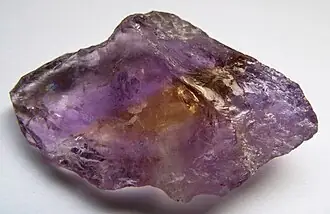
Quartz
Ametrine
A single quartz crystal zoned into amethyst purple and citrine gold, formed where differing temperatures acted on opposite ends of the same crystal. Commercially it comes essentially from one deposit in eastern Bolivia.
Mohs 7 · Purple, Yellow
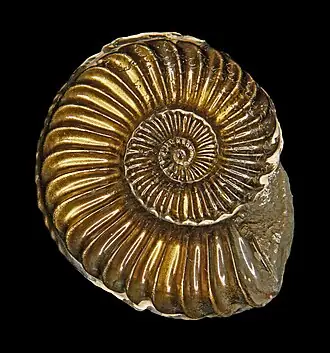
Fossil
Ammonite
The coiled shells of cephalopods that vanished with the dinosaurs. Ammolite, the iridescent Albertan variety, is one of only a handful of organic gemstones.
Mohs 3.5-4 · Brown, Iridescent
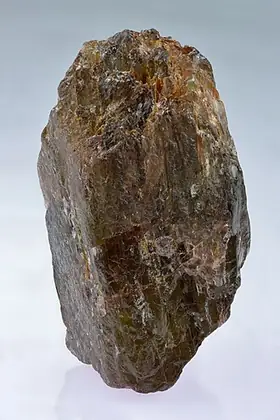
Silicate
Andalusite
A strongly pleochroic gem that shows green, gold and red-brown simultaneously from different directions — cutters deliberately orient it to display all three at once rather than trying to eliminate them.
Mohs 7-7.5 · Olive green, Brown
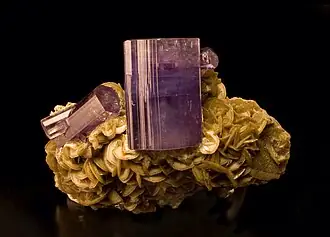
Phosphate
Apatite
The mineral of bone and tooth enamel, and a gem in its own right. Neon blue-green Madagascan apatite is one of the most electric colors in the mineral kingdom.
Mohs 5 · Blue, Green
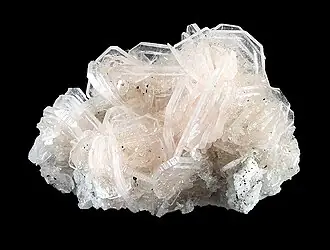
Phyllosilicate
Apophyllite
Glassy pyramidal crystals that grow in the basalt cavities of the Deccan Traps, frequently perched on green stilbite or purple chalcedony.
Mohs 4.5-5 · Colorless, Green
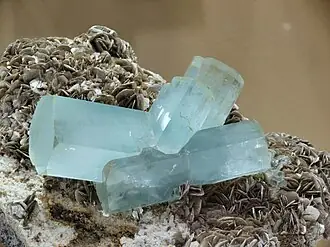
Beryl
Aquamarine
Blue beryl, colored by iron, and the same mineral species as emerald and morganite. Crystals grow as long hexagonal prisms with flat terminations and can reach enormous size.
Mohs 7.5-8 · Blue, Blue-green
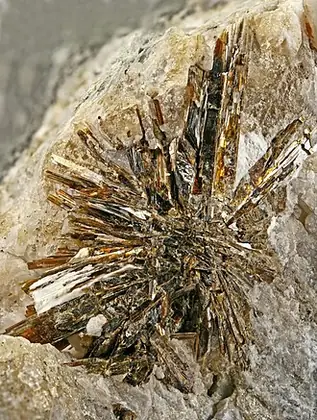
Silicate
Astrophyllite
Bronze-gold blades radiating in star-bursts through dark nepheline syenite. The name means star leaf, and a good slab looks like a night sky of gold flares.
Mohs 3-4 · Bronze, Golden
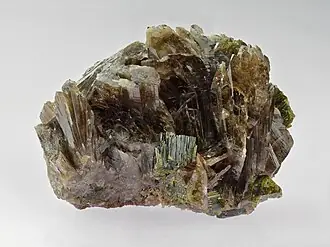
Silicate
Axinite
Sharp axe-blade crystals in clove brown with violet flashes, strongly pleochroic and unmistakable once seen.
Mohs 6.5-7 · Clove brown, Violet
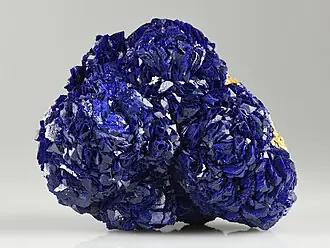
Carbonate
Azurite
Intense blue copper carbonate, frequently intergrown with green malachite into which it slowly alters over geological time.
Mohs 3.5-4 · Deep blue
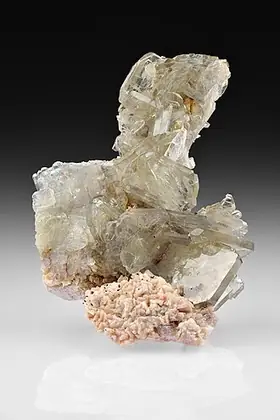
Sulfate
Barite
Unusually heavy for a pale mineral — its high barium content makes barite feel like metal in the hand. Grows in blades, roses and elegant tabular crystals.
Mohs 3-3.5 · White, Blue
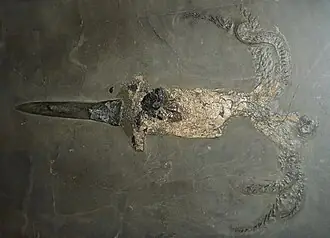
Fossil
Belemnite
The bullet-shaped internal skeleton of an extinct squid relative. Cut and polished, the calcite shows a radiating fibrous structure from a central apical line.
Mohs 3-4 · Brown, Amber
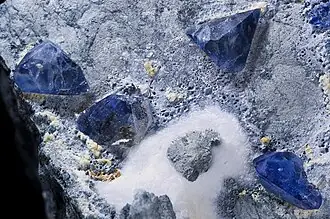
Silicate
Benitoite
California's state gemstone and a genuine local rarity: sapphire-blue triangular crystals in white natrolite, from one small serpentinite body in San Benito County. The mine is effectively worked out, which makes every good specimen finite.
Mohs 6-6.5 · Blue, Deep blue
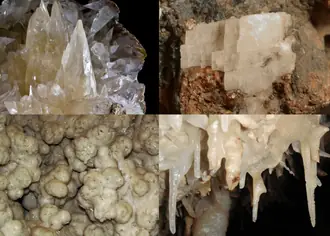
Carbonate
Calcite
One of the most polymorphic minerals known, with hundreds of crystal habits and every color of the spectrum. Optical calcite from Iceland splits an image in two through double refraction.
Mohs 3 · Orange, Honey
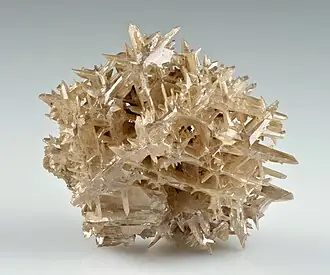
Carbonate
Cerussite
Lead carbonate with adamantine, almost diamond-like lustre, forming twinned snowflake and reticulated networks. Tsumeb specimens are legendary.
Mohs 3-3.5 · Colorless, White
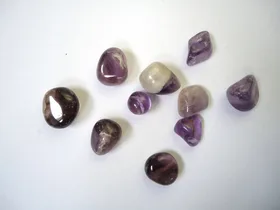
Quartz
Chevron Amethyst
Banded amethyst in which purple and milky white quartz alternate in sharp V-shaped chevrons, recording rhythmic growth along the vein.
Mohs 7 · Purple, White
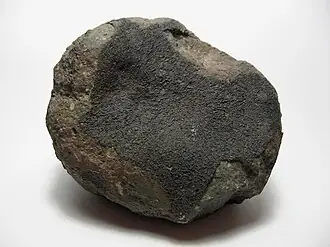
Meteorite
Chondrite Meteorite
The most common meteorite type and the oldest rock anyone can hold: stony material containing chondrules, millimetre droplets of melt that condensed 4.56 billion years ago before the planets existed.
Mohs 5-6 · Grey, Brown
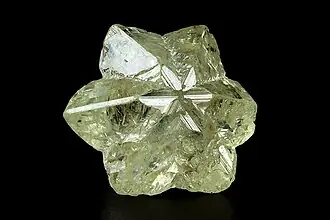
Oxide
Chrysoberyl
The third hardest gem mineral after diamond and corundum, and badly underrated. Ordinary chrysoberyl is a crisp yellow-green; the cat's eye variety cymophane shows a razor-sharp band of light from fine parallel inclusions.
Mohs 8.5 · Yellow-green, Golden
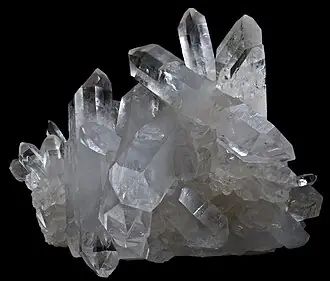
Quartz
Clear Quartz
The reference stone of the mineral world. Clear quartz grows as six-sided prisms terminated by a point, and its combination of hardness, transparency and abundance has made it the most collected crystal on earth. Quality runs from cloudy commercial material to water-clear Himalayan and Brazilian points with mirror-bright faces.
Mohs 7 · Colorless, White
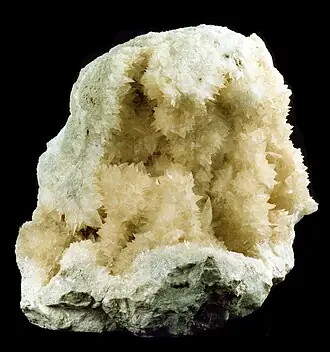
Borate
Colemanite
Glassy colorless borate crystals that grow in blocky, brilliantly lustrous groups. Californian material from the Death Valley borate districts set the standard.
Mohs 4-4.5 · Colorless, White
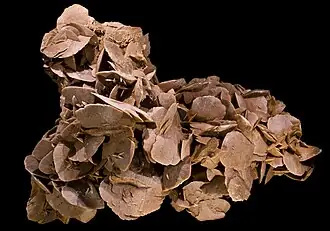
Gypsum
Desert Rose
Rosette clusters of gypsum or barite that grow in arid basins, trapping sand grains between their blades so each 'petal' carries the color of the desert it formed in.
Mohs 2 · Sand, Tan
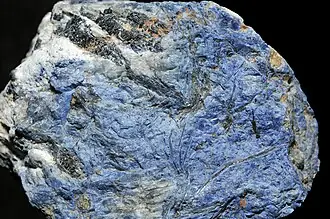
Silicate
Dumortierite
Dense blue borosilicate, usually massive or as fibrous inclusions in quartz. Hard, deeply colored and often mistaken for sodalite or lapis.
Mohs 7-8.5 · Blue, Violet
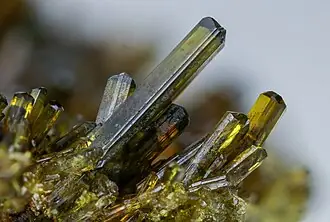
Silicate
Epidote
Distinctly pistachio-green striated crystals with a resinous lustre, often forming radiating sprays on quartz or prehnite.
Mohs 6-7 · Pistachio green, Black-green
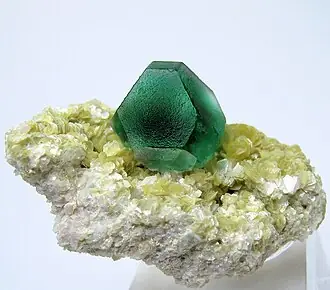
Halide
Fluorite
The most colorful mineral in the world, fluorite grows in perfect cubes and octahedra, often color-zoned in bands of green, purple and clear within a single crystal.
Mohs 4 · Green, Purple
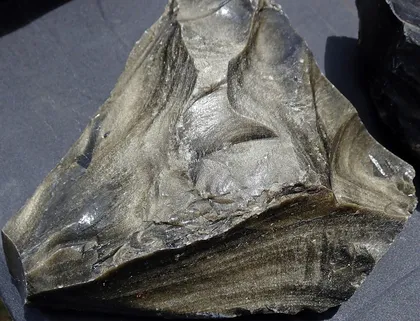
Volcanic glass
Gold & Silver Sheen Obsidian
Obsidian with a metallic golden or silver shimmer produced by a layer of aligned microscopic gas bubbles reflecting light in unison.
Mohs 5-5.5 · Black, Golden
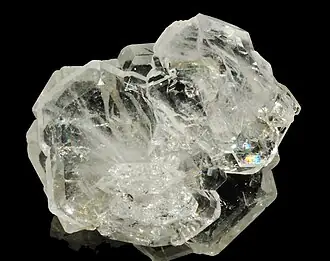
Beryl
Goshenite
Colorless beryl — the pure end member with no coloring trace elements at all. It is the parent of every other beryl variety and makes an unusually crisp, clean faceted stone.
Mohs 7.5-8 · Colorless, Clear
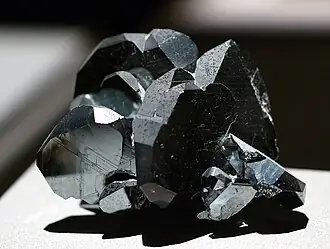
Oxide
Hematite
Iron oxide with a metallic mirror surface and a signature red-brown streak. Botryoidal 'kidney ore' from Cumbria and iridescent rainbow hematite from Brazil are the collector forms.
Mohs 5-6.5 · Silver, Black
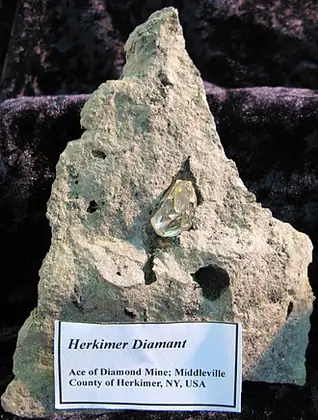
Quartz
Herkimer Diamond
Doubly terminated quartz crystals that grew free-floating in pockets of Cambrian dolostone, emerging with natural points at both ends and extraordinary clarity.
Mohs 7 · Colorless
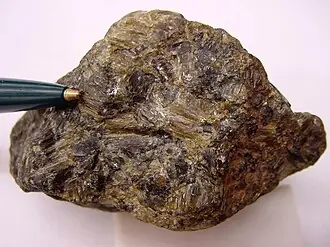
Pyroxene
Hypersthene
A dark orthopyroxene with a metallic bronze-to-silver sheen from fine exsolution lamellae. Polished Madagascan cabochons show a moving silvery streak against near-black.
Mohs 5-6 · Black, Bronze
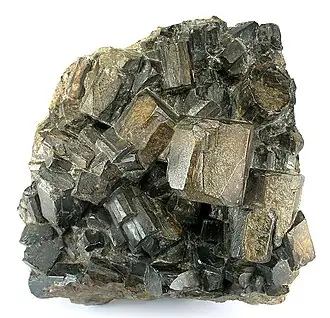
Cordierite
Iolite
Strongly pleochroic cordierite that reads violet-blue from one direction and pale yellow-grey from another, all within a single crystal.
Mohs 7-7.5 · Violet-blue, Grey
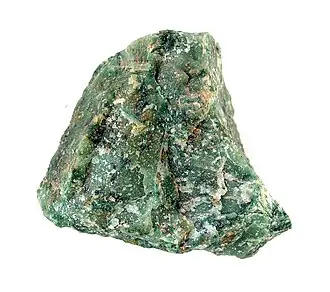
Pyroxene
Jadeite
The rarer, harder jade, and the source of imperial green. Nearly all top gem jadeite comes from a small region of northern Myanmar.
Mohs 6.5-7 · Green, Lavender
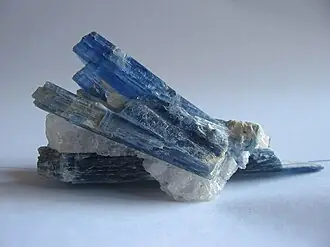
Silicate
Kyanite
A remarkable mineral with two different hardnesses in one crystal: about 4.5 along the blade and 7 across it. Blue blades from Brazil and Nepal are the classic specimen.
Mohs 4.5-7 · Blue, Black
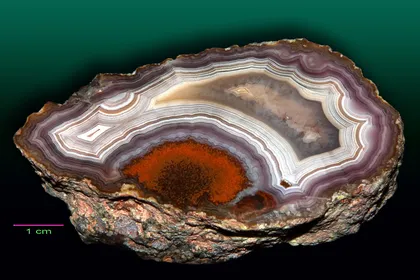
Chalcedony
Laguna Agate
Widely considered the finest banded agate on earth: tight, high-contrast red and white fortification banding from one ranch in Chihuahua. Collector-grade nodules are sold by name and by pattern.
Mohs 6.5-7 · Red, Orange
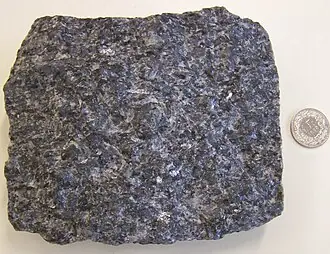
Igneous
Larvikite
Norwegian building stone shot with silvery-blue schiller from feldspar exsolution lamellae — labradorescence in a dark grey rock. Widely used as facade cladding, and quietly one of the most beautiful stones in any city.
Mohs 6-6.5 · Grey, Steel grey
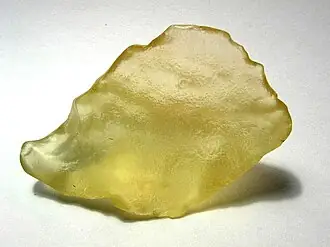
Impactite
Libyan Desert Glass
Almost pure silica glass, twenty-nine million years old, scattered across a remote corner of the Sahara by an impact event that has never been fully resolved.
Mohs 6-7 · Pale yellow, Clear
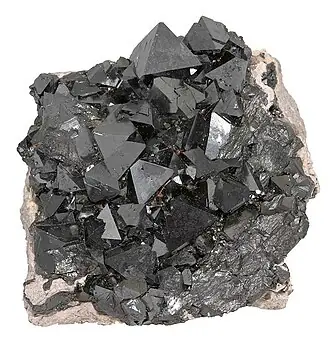
Oxide
Magnetite
The most magnetic naturally occurring mineral. Strongly magnetic pieces are called lodestone and will pick up iron filings unaided.
Mohs 5.5-6.5 · Black
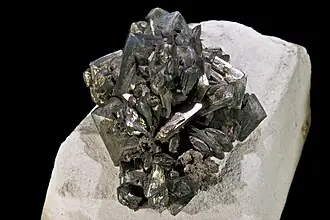
Sulfide
Marcasite
Chemically identical to pyrite but crystallising in a different system, marcasite is paler, more brittle and prone to breaking down over time.
Mohs 6-6.5 · Pale brass, Silver
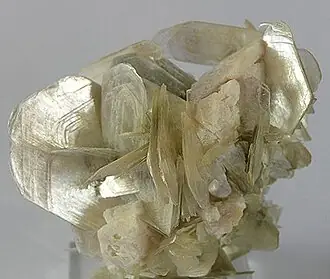
Mica
Muscovite
The common white mica, splitting into flexible transparent sheets. Star muscovite and pink Brazilian rosettes are the specimen forms.
Mohs 2-2.5 · Silver, Pink
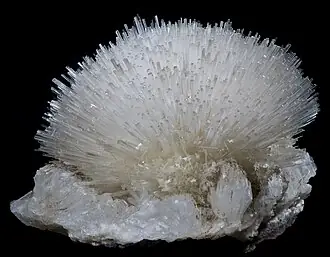
Zeolite
Natrolite
Needle-sharp radiating sprays of sodium zeolite, often clear enough to facet in small stones. It is the matrix mineral that hosts benitoite in California.
Mohs 5-5.5 · White, Colorless
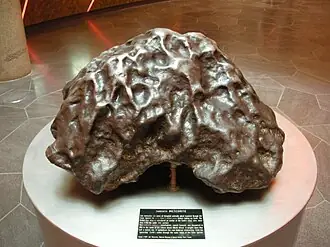
Meteorite
Nickel-Iron Meteorite
Fragments of the shattered cores of early planetesimals: solid iron-nickel that cooled over millions of years, producing the interlocking Widmanstatten pattern revealed by etching.
Mohs 4-5 · Silver, Grey
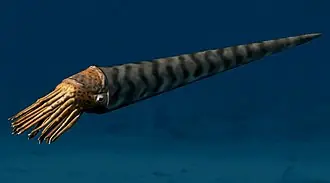
Fossil
Orthoceras
Straight-shelled cephalopods from the Devonian seas, now polished into black limestone plates that read like ink drawings.
Mohs 3-4 · Black, Grey
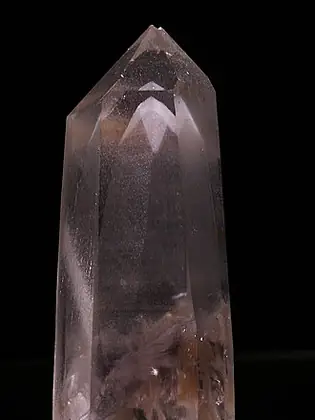
Quartz
Phantom Quartz
Quartz that paused during growth long enough for a film of chlorite, hematite or clay to settle on its faces, then resumed — leaving a ghost crystal sealed inside the finished one.
Mohs 7 · Colorless, Green
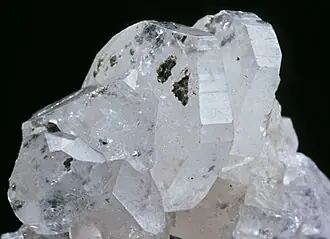
Silicate
Phenakite
A hard, brilliant beryllium silicate that is rare as gem rough and prized by collectors for water-clear rhombohedral crystals. Its name comes from the Greek for deceiver, because it was so often mistaken for quartz.
Mohs 7.5-8 · Colorless, White
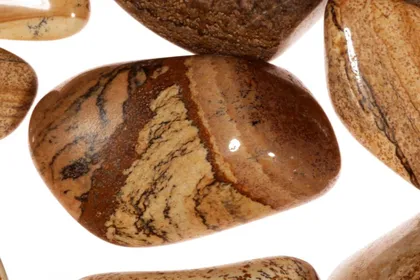
Chalcedony
Picture Jasper
Jasper whose iron staining and sediment layering read as desert landscapes — mesas, dunes, storm skies. Biggs and Bruneau material from the Pacific Northwest are the classics of the type.
Mohs 6.5-7 · Tan, Brown
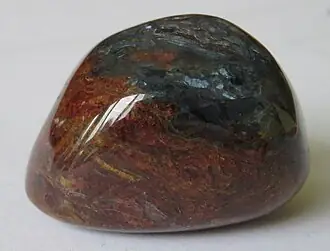
Quartz
Pietersite
A brecciated chatoyant quartz in which fragments of tiger's eye and hawk's eye were shattered and recemented, producing swirling storm-like chatoyancy.
Mohs 6.5-7 · Blue, Gold
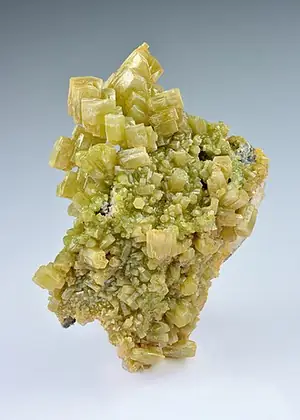
Phosphate
Pyromorphite
Barrel-shaped green hexagonal crystals with a resinous glow, forming dense druses on matrix. Chinese material from Guangxi transformed the market in the 2000s.
Mohs 3.5-4 · Green, Yellow
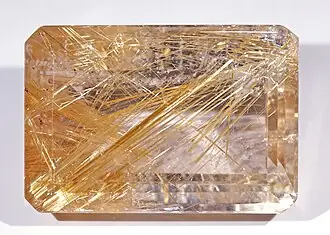
Quartz
Rutilated Quartz
Clear or smoky quartz threaded with needles of rutile, a titanium oxide that grows in golden, copper or silver hairs. The best material looks like light frozen mid-flight.
Mohs 7 · Colorless, Golden
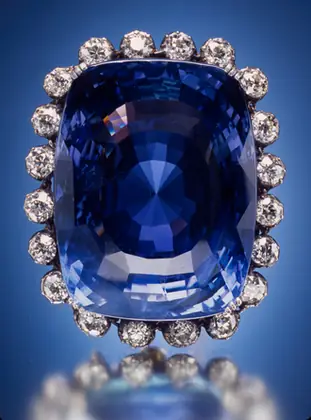
Corundum
Sapphire
Every color of gem corundum other than red. Blue comes from iron and titanium; the pink-orange padparadscha is the rarest and most coveted.
Mohs 9 · Blue, Yellow
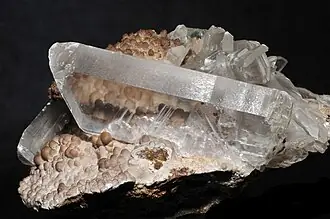
Gypsum
Selenite
A clear, satin or fibrous variety of gypsum that grows in blades, wands and — at Naica in Mexico — beams over ten metres long. Soft enough to scratch with a fingernail.
Mohs 2 · White, Colorless
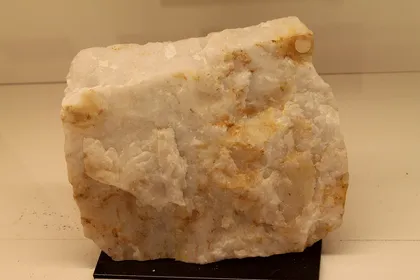
Quartz
Snow Quartz
Dense opaque white quartz, sometimes marketed as quartzite or milky quartz, cut into spheres and slabs for a clean matte white that holds light softly.
Mohs 7 · White, Cream
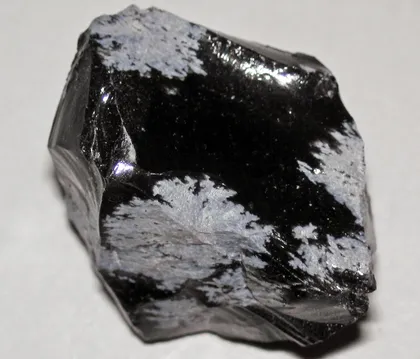
Volcanic glass
Snowflake Obsidian
Black volcanic glass in which grey-white cristobalite spherulites have begun to crystallise out — the first stage of the glass slowly devitrifying over geological time.
Mohs 5-5.5 · Black, White
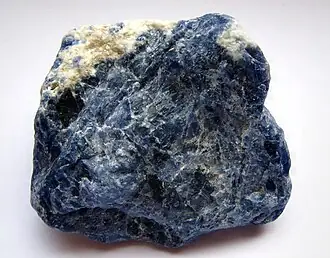
Feldspathoid
Sodalite
Royal blue feldspathoid streaked with white calcite veining. Often confused with lapis, but sodalite lacks pyrite and reads more violet.
Mohs 5.5-6 · Blue, White
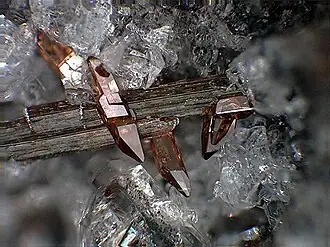
Silicate
Sphene (Titanite)
Titanite, better known as sphene, has dispersion higher than diamond, throwing intense rainbow fire from every cut surface.
Mohs 5-5.5 · Green, Yellow
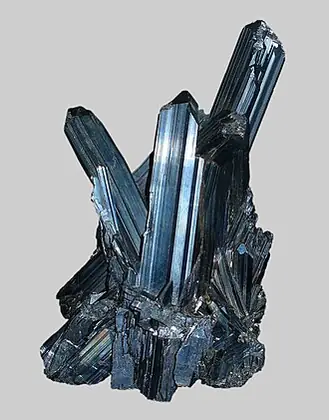
Sulfide
Stibnite
Long steel-grey blades with a brilliant metallic lustre, growing in dramatic radiating sprays. Chinese specimens from Wuning are among the most spectacular mineral objects ever mined.
Mohs 2 · Steel grey
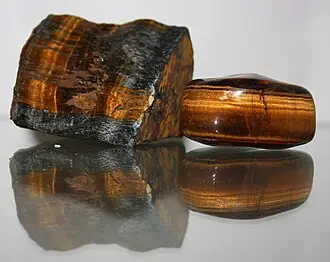
Quartz
Tiger's Eye
Quartz that replaced fibrous crocidolite, inheriting its parallel structure and producing a rolling band of light called chatoyancy. Blue hawk's eye is the unoxidised form.
Mohs 6.5-7 · Gold, Brown
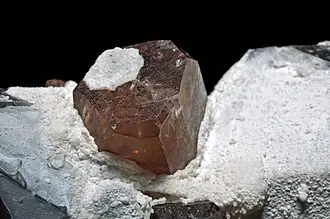
Silicate
Topaz
A very hard silicate that grows in glassy prismatic crystals. Imperial topaz, the sherry-orange to pink material from Ouro Preto, is the aristocrat of the family.
Mohs 8 · Colorless, Blue
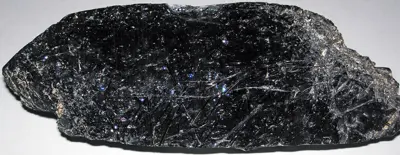
Quartz
Tourmalinated Quartz
Clear quartz shot through with black schorl tourmaline, producing graphic ink-on-glass patterns. Slabs and spheres show the composition best.
Mohs 7 · Colorless, Black
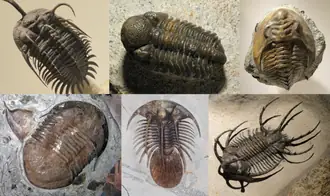
Fossil
Trilobite
Arthropods that ruled the sea floor for nearly 300 million years and left one of the best fossil records on earth. Moroccan Devonian species carry extravagant spines; Russian material from the Baltic is famously three-dimensional and glossy.
Mohs 3-6 · Brown, Black
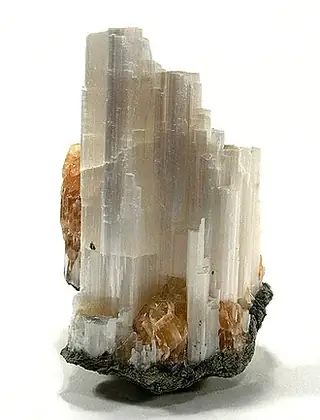
Borate
Ulexite
'TV rock' — parallel fibres act as natural optical fibres and project an image from the base of a cut slab to its polished top, so text under the stone appears to float on its surface.
Mohs 2-2.5 · White, Colorless
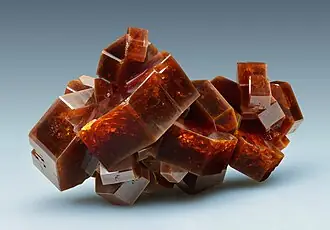
Vanadate
Vanadinite
Brilliant red-orange hexagonal crystals that grow on barite matrix in the lead deposits of Morocco. Few minerals are so intensely colored.
Mohs 3-4 · Red, Orange
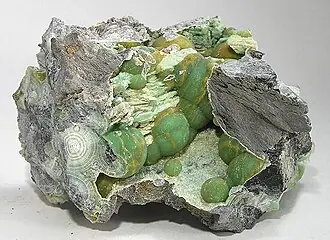
Phosphate
Wavellite
Radiating spheres of green needles that, when broken open, show a starburst cross-section like a cut kiwi. Arkansas material from the Ouachita Mountains is the world's best.
Mohs 3.5-4 · Apple green, Yellow-green
Silicate
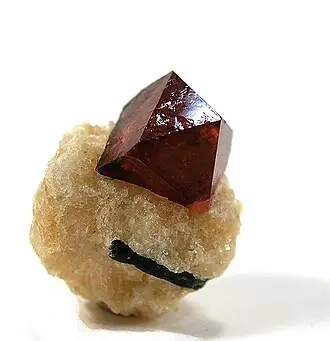
Zircon
A genuinely brilliant natural gem with dispersion approaching diamond, and quite unrelated to cubic zirconia despite the name confusion. Cambodian material is heat-treated to the familiar electric blue; natural stones run honey, red and brown.
Mohs 6-7.5 · Blue, Golden
Please noteTraditional properties, effects, and aura associations are shared for cultural, historical, and personal-interest reasons only. They are folklore, not medicine. Nothing here is medical, psychological, or financial advice, and no stone is intended to diagnose, treat, cure, or prevent any condition. Please see a qualified professional for health concerns.