Judging quality
Satin spar shows a moving cat's-eye line down its length; true selenite plates are transparent enough to read through. Look for uncracked, undulled surfaces.
Gypsum
A clear, satin or fibrous variety of gypsum that grows in blades, wands and — at Naica in Mexico — beams over ten metres long. Soft enough to scratch with a fingernail.
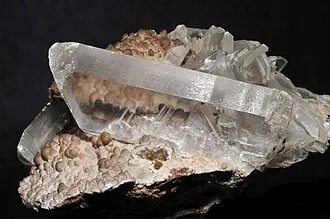
Satin spar shows a moving cat's-eye line down its length; true selenite plates are transparent enough to read through. Look for uncracked, undulled surfaces.
Water dissolves it. Never wash selenite; dust with a dry brush only, and keep it off damp surfaces.
The Cave of the Crystals at Naica, discovered in 2000, holds the largest natural crystals ever documented.
Cultural history, recorded as tradition rather than as medical or scientific claim.
See it in person
Both rooms are open six days a week, and there is always someone happy to pull pieces out of the case so you can compare them under the light.