Gypsum

Desert Rose

Rosette clusters of gypsum or barite that grow in arid basins, trapping sand grains between their blades so each 'petal' carries the color of the desert it formed in.
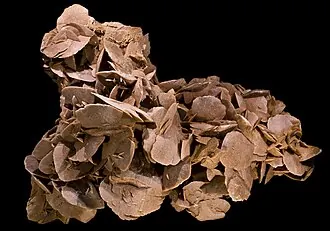
Desert Rose — mineral specimen
Reference photograph: Didier Descouens, CC BY-SA 4.0 · source. Specimens in the shop vary.

Judging quality

Good specimens have full, symmetrical rosettes with intact blade edges and no crumbling. Barite roses are noticeably heavier than gypsum ones.

Care

Extremely fragile and water-soluble. Display out of reach and never rinse.

History & lore

Sahara roses have been collected and traded across North Africa for centuries as natural curiosities.

Cultural history, recorded as tradition rather than as medical or scientific claim.

Common questions about Desert Rose

What is Desert Rose?
Rosette clusters of gypsum or barite that grow in arid basins, trapping sand grains between their blades so each 'petal' carries the color of the desert it formed in.
How hard is Desert Rose and what is it made of?
Desert Rose is a Gypsum-family mineral with the composition CaSO4·2H2O. It crystallizes in the monoclinic system and rates 2 on the Mohs hardness scale. It occurs in sand, tan, white.
Where does Desert Rose come from?
Notable localities for Desert Rose include Morocco, Mexico, Tunisia, Australia.
How do you tell good Desert Rose from filler?
Good specimens have full, symmetrical rosettes with intact blade edges and no crumbling. Barite roses are noticeably heavier than gypsum ones.
How do you care for Desert Rose?
Extremely fragile and water-soluble. Display out of reach and never rinse.

See it in person

Photographs only go so far

Both rooms are open six days a week, and there is always someone happy to pull pieces out of the case so you can compare them under the light.

Plan a visit
Share Desert Rose