The crystal encyclopedia
82 of 218
Clarity and connection — the top of the ladder.
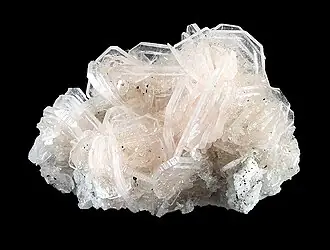
Phyllosilicate
Apophyllite
Glassy pyramidal crystals that grow in the basalt cavities of the Deccan Traps, frequently perched on green stilbite or purple chalcedony.
Mohs 4.5-5 · Colorless, Green
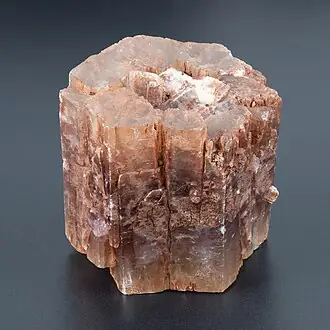
Carbonate
Aragonite
Chemically identical to calcite but with a different crystal structure, aragonite grows in radiating sputnik clusters, coral-like sprays and the nacre of shells.
Mohs 3.5-4 · Brown, Orange
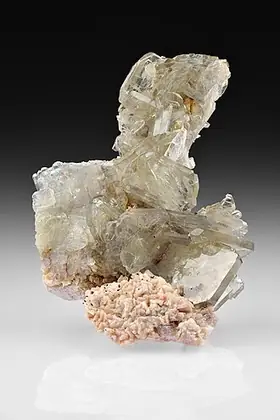
Sulfate
Barite
Unusually heavy for a pale mineral — its high barium content makes barite feel like metal in the hand. Grows in blades, roses and elegant tabular crystals.
Mohs 3-3.5 · White, Blue
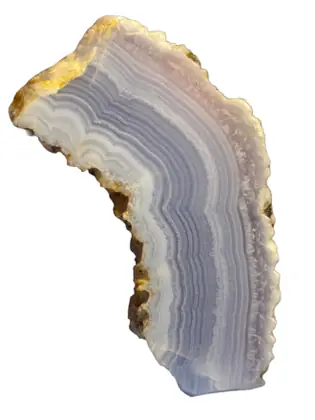
Chalcedony
Blue Lace Agate
Powder-blue banded chalcedony threaded with white lace, from a single small Namibian deposit that has been effectively mined out — which is why good material now costs multiples of what it did a decade ago.
Mohs 6.5-7 · Pale blue, Sky blue
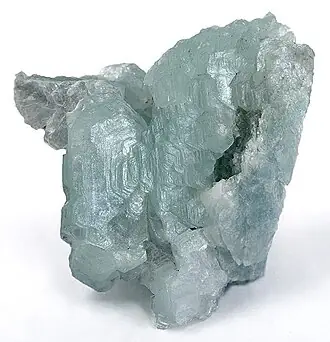
Hydroxide
Brucite
Pale golden-yellow platy crystals with a pearly, almost waxy glow, best known from Pakistani specimens where honey-colored brucite sits on grey matrix.
Mohs 2.5-3 · Yellow, Golden
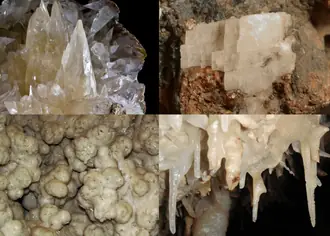
Carbonate
Calcite
One of the most polymorphic minerals known, with hundreds of crystal habits and every color of the spectrum. Optical calcite from Iceland splits an image in two through double refraction.
Mohs 3 · Orange, Honey
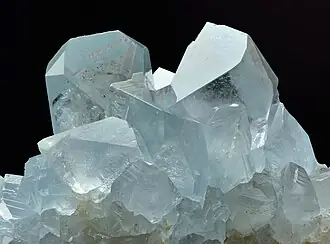
Sulfate
Celestite
Strontium sulfate that lines geodes with pale sky-blue tabular crystals. Madagascan geodes are the most familiar form worldwide.
Mohs 3-3.5 · Pale blue, White
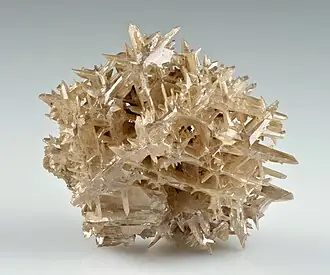
Carbonate
Cerussite
Lead carbonate with adamantine, almost diamond-like lustre, forming twinned snowflake and reticulated networks. Tsumeb specimens are legendary.
Mohs 3-3.5 · Colorless, White
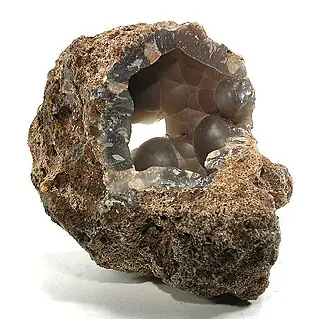
Chalcedony
Chalcedony
Microcrystalline quartz without banding — the parent material of agate, carnelian and jasper. The Turkish and Namibian blue-grey material has a milky glow like frozen smoke.
Mohs 6.5-7 · Blue, White
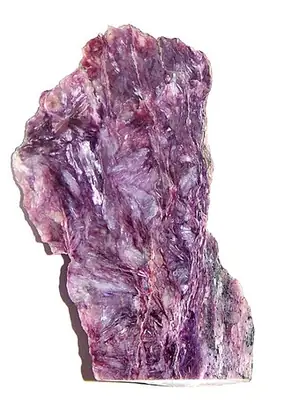
Silicate
Charoite
Swirling fibrous violet silicate found only along the Chara River in Siberia. The chatoyant feathered patterning is unmistakable.
Mohs 5-6 · Violet, Purple
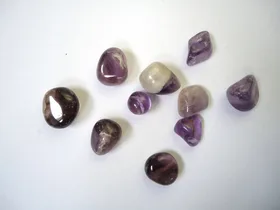
Quartz
Chevron Amethyst
Banded amethyst in which purple and milky white quartz alternate in sharp V-shaped chevrons, recording rhythmic growth along the vein.
Mohs 7 · Purple, White
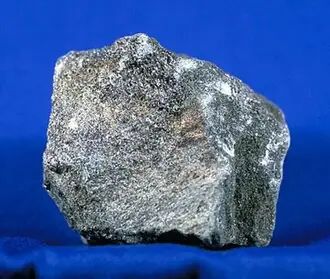
Quartz
Chlorite Quartz
Quartz with green chlorite included as clouds, phantoms or surface coatings. Himalayan chlorite quartz often pairs the green with iron staining and pristine terminations.
Mohs 7 · Green, Colorless
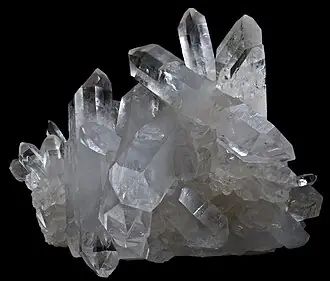
Quartz
Clear Quartz
The reference stone of the mineral world. Clear quartz grows as six-sided prisms terminated by a point, and its combination of hardness, transparency and abundance has made it the most collected crystal on earth. Quality runs from cloudy commercial material to water-clear Himalayan and Brazilian points with mirror-bright faces.
Mohs 7 · Colorless, White
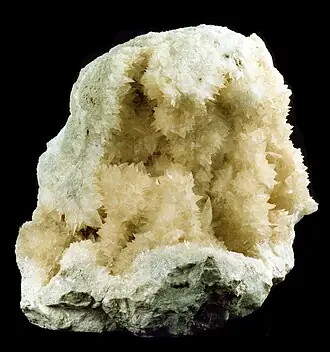
Borate
Colemanite
Glassy colorless borate crystals that grow in blocky, brilliantly lustrous groups. Californian material from the Death Valley borate districts set the standard.
Mohs 4-4.5 · Colorless, White
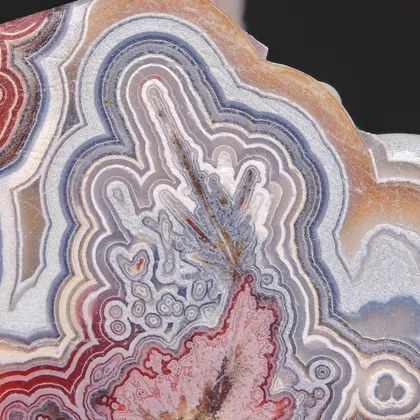
Chalcedony
Crazy Lace Agate
Chaotic swirling agate in cream, butterscotch and brick red, formed in Cretaceous limestone in northern Mexico. Sometimes called the laughter stone for how busy and cheerful the pattern reads.
Mohs 6.5-7 · Red, Cream
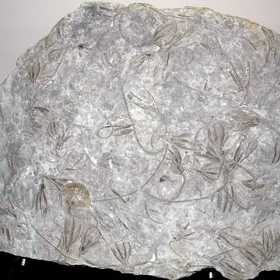
Fossil
Crinoid
Sea lilies — stalked echinoderms that carpeted Palaeozoic sea beds. Most material is disarticulated stem segments in limestone; complete crowns with the feeding arms intact are dramatically rarer and prepared over many hours.
Mohs 3-4 · Cream, Tan
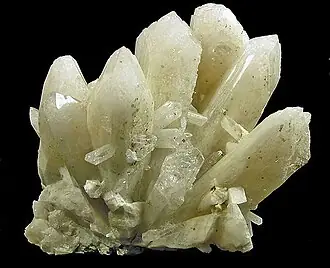
Silicate
Danburite
Chisel-tipped prisms of glassy calcium boron silicate, most familiar from the Charcas mines of San Luis Potosí where crystals grow water-clear and doubly terminated.
Mohs 7-7.5 · Colorless, Pale yellow
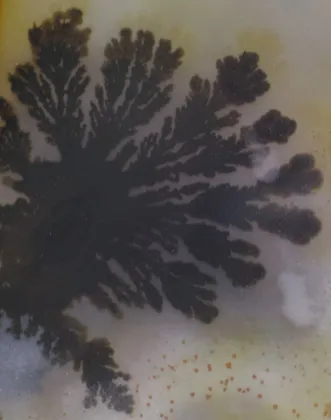
Chalcedony
Dendritic Agate
Translucent chalcedony containing black fern-like dendrites of manganese oxide that look exactly like plants but are pure mineral growth along fractures.
Mohs 6.5-7 · White, Colorless
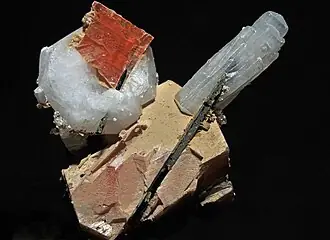
Mineraloid
Dendritic Opal
Common opal without play-of-color, patterned instead by black manganese dendrites branching through pale cream host — sometimes called Merlinite in the trade.
Mohs 5.5-6.5 · Cream, Black
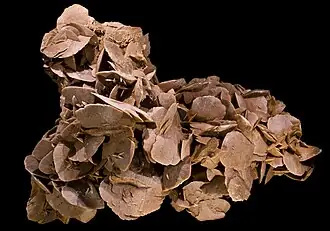
Gypsum
Desert Rose
Rosette clusters of gypsum or barite that grow in arid basins, trapping sand grains between their blades so each 'petal' carries the color of the desert it formed in.
Mohs 2 · Sand, Tan
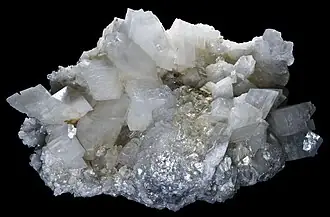
Carbonate
Dolomite
A calcium magnesium carbonate that grows in saddle-shaped curved rhombs, often forming the sparkling white matrix beneath more colorful minerals.
Mohs 3.5-4 · White, Pink
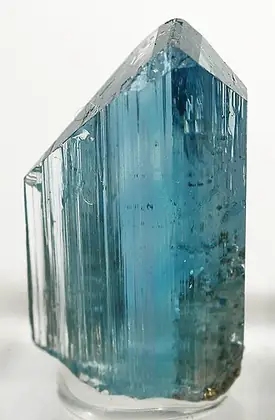
Silicate
Euclase
A collector's gem in soft aquamarine blue, notoriously difficult to cut because of perfect cleavage — the name means 'easily broken'. Colombian crystals from the emerald belt are the finest blue known.
Mohs 7.5 · Pale blue, Blue
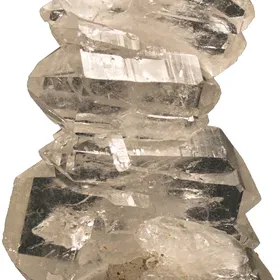
Quartz
Faden Quartz
Tabular quartz plates carrying a white thread running through the crystal — the record of a fracture that kept re-healing as the rock slowly pulled apart. Each faden line is literally a scar the crystal grew across.
Mohs 7 · Clear, Colorless
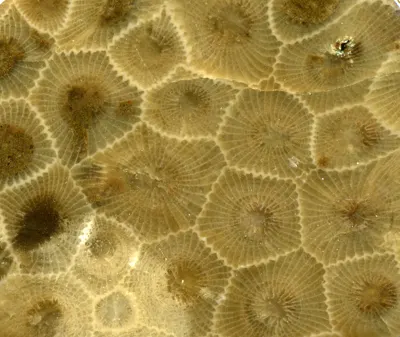
Fossil
Fossil Coral
Colonial coral replaced by agate or chalcedony, preserving the flower-like corallite pattern as a permanent stone. Florida agatised coral shows crisp white florets in grey; Petoskey stone from Michigan is a Devonian rugose coral polished to a honeycomb.
Mohs 6.5-7 · Tan, Grey
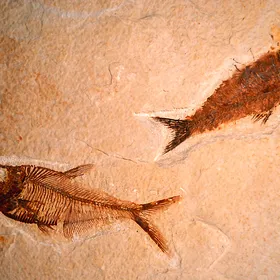
Fossil
Fossil Fish
Eocene lake fish from the Green River Formation — Knightia, Diplomystus, Phareodus — preserved whole with fins and scales in fine laminated limestone. Lebanese Cretaceous material is marine and older.
Mohs 3-4 · Brown, Cream
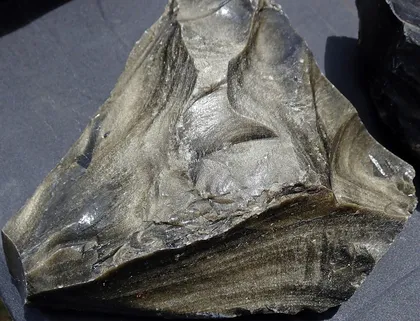
Volcanic glass
Gold & Silver Sheen Obsidian
Obsidian with a metallic golden or silver shimmer produced by a layer of aligned microscopic gas bubbles reflecting light in unison.
Mohs 5-5.5 · Black, Golden
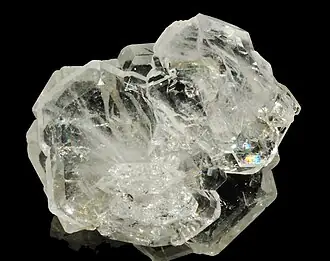
Beryl
Goshenite
Colorless beryl — the pure end member with no coloring trace elements at all. It is the parent of every other beryl variety and makes an unusually crisp, clean faceted stone.
Mohs 7.5-8 · Colorless, Clear
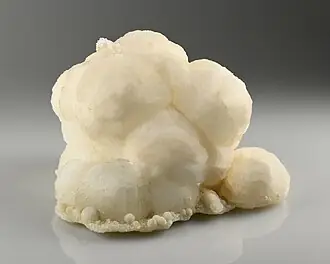
Zeolite-associated
Gyrolite
Pale spherical aggregates with a concentric internal structure, usually nested among green apophyllite and white stilbite in Indian basalt cavities.
Mohs 3-4 · White, Cream
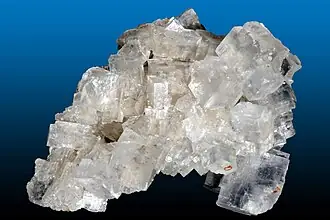
Halide
Halite
Rock salt, crystallising in perfect cubes — sometimes hopper-shaped with stepped hollow faces. Rare blue halite from German potash mines gets its color from lattice defects, not impurities.
Mohs 2-2.5 · Colorless, Pink
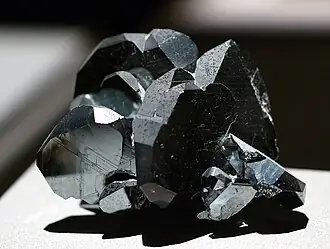
Oxide
Hematite
Iron oxide with a metallic mirror surface and a signature red-brown streak. Botryoidal 'kidney ore' from Cumbria and iridescent rainbow hematite from Brazil are the collector forms.
Mohs 5-6.5 · Silver, Black
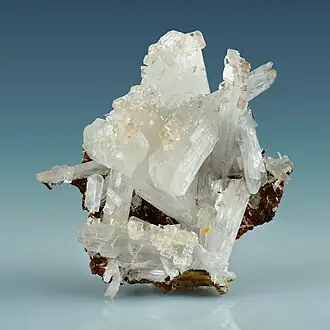
Silicate
Hemimorphite
Zinc silicate that forms both bladed crystal sprays and soft blue botryoidal crusts. The Chinese blue material is among the most beautiful secondary zinc minerals.
Mohs 4.5-5 · Blue, Colorless
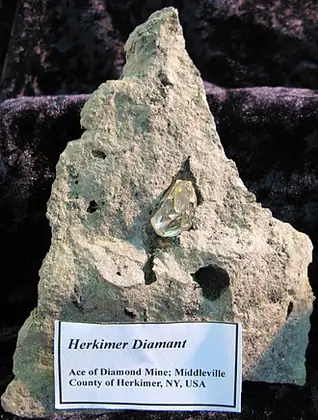
Quartz
Herkimer Diamond
Doubly terminated quartz crystals that grew free-floating in pockets of Cambrian dolostone, emerging with natural points at both ends and extraordinary clarity.
Mohs 7 · Colorless
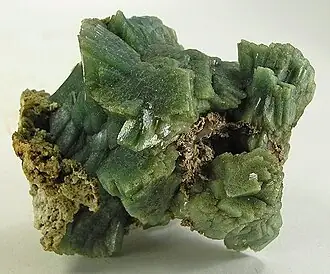
Zeolite
Heulandite
Tabular zeolite crystals in coffin-shaped plates, often orange-peach and frequently mistaken for stilbite, with which it shares its Indian localities.
Mohs 3-3.5 · Peach, White
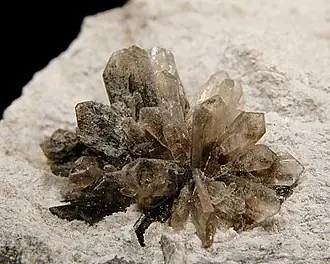
Borate
Howlite
Chalky white borate with grey webbing, porous enough to take dye perfectly — which is why most fake turquoise on the market is dyed howlite.
Mohs 3.5 · White, Grey
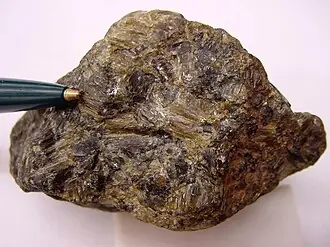
Pyroxene
Hypersthene
A dark orthopyroxene with a metallic bronze-to-silver sheen from fine exsolution lamellae. Polished Madagascan cabochons show a moving silvery streak against near-black.
Mohs 5-6 · Black, Bronze
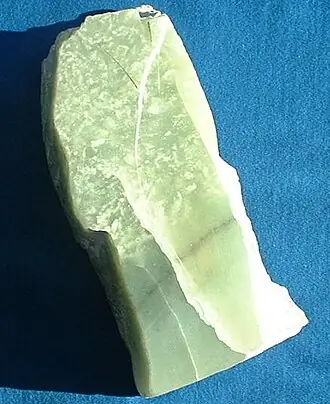
Amphibole
Jade (Nephrite)
One of two minerals sold as jade. Nephrite is an interlocking amphibole felt, which makes it the toughest natural stone known — far harder to break than to scratch.
Mohs 6-6.5 · Green, Cream
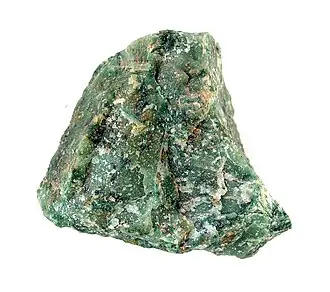
Pyroxene
Jadeite
The rarer, harder jade, and the source of imperial green. Nearly all top gem jadeite comes from a small region of northern Myanmar.
Mohs 6.5-7 · Green, Lavender
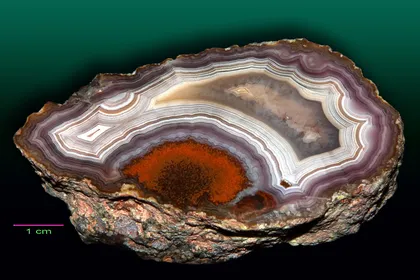
Chalcedony
Laguna Agate
Widely considered the finest banded agate on earth: tight, high-contrast red and white fortification banding from one ranch in Chihuahua. Collector-grade nodules are sold by name and by pattern.
Mohs 6.5-7 · Red, Orange
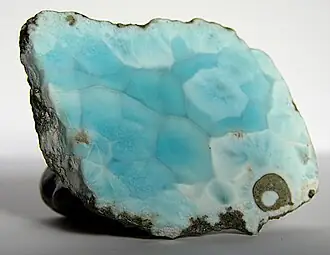
Pectolite
Larimar
Blue pectolite found in exactly one place on earth: a single mountainside in the Dominican Republic. Volcanic in origin, its patterning looks like sunlight on shallow Caribbean water.
Mohs 4.5-5 · Sky blue, White
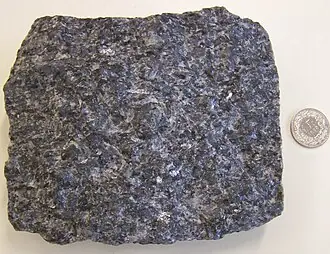
Igneous
Larvikite
Norwegian building stone shot with silvery-blue schiller from feldspar exsolution lamellae — labradorescence in a dark grey rock. Widely used as facade cladding, and quietly one of the most beautiful stones in any city.
Mohs 6-6.5 · Grey, Steel grey
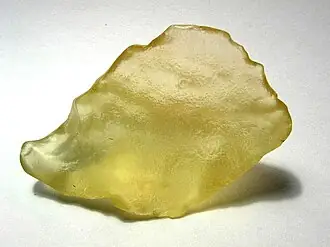
Impactite
Libyan Desert Glass
Almost pure silica glass, twenty-nine million years old, scattered across a remote corner of the Sahara by an impact event that has never been fully resolved.
Mohs 6-7 · Pale yellow, Clear
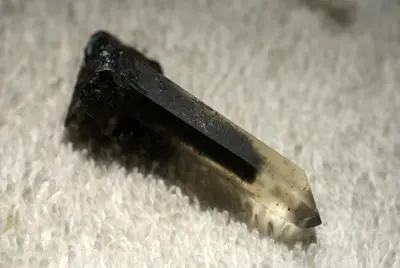
Quartz
Lodolite (Garden Quartz)
Clear quartz with mineral inclusions arranged into landscapes — mossy hills, undersea scenes, drifting clouds. Cutters orient the rough deliberately so that the interior scene reads through the polished face.
Mohs 7 · Clear, Green
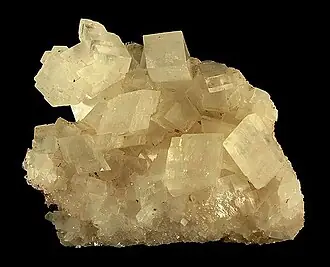
Carbonate
Magnesite
White magnesium carbonate, usually massive with a porcelain-like texture crossed by grey veining. Frequently dyed to imitate turquoise or lapis.
Mohs 3.5-4.5 · White, Cream
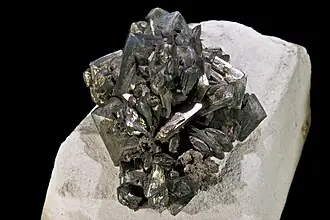
Sulfide
Marcasite
Chemically identical to pyrite but crystallising in a different system, marcasite is paler, more brittle and prone to breaking down over time.
Mohs 6-6.5 · Pale brass, Silver
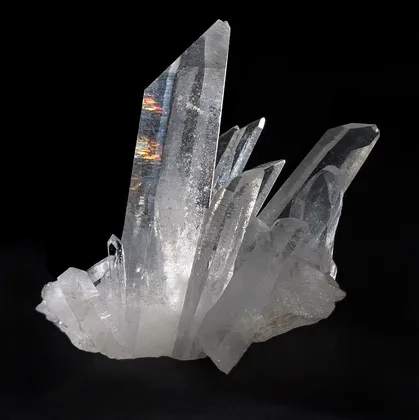
Quartz
Milky Quartz
Quartz clouded white by countless microscopic fluid inclusions trapped during growth. The most abundant form of crystalline quartz on the planet and the white vein rock of countless mountainsides.
Mohs 7 · White, Cream
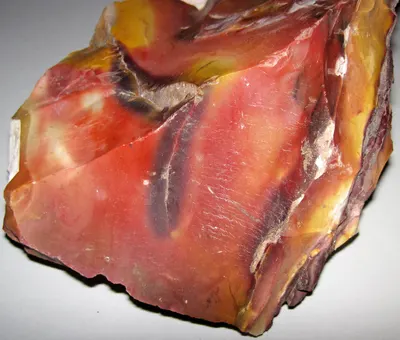
Chalcedony
Mookaite
Australian radiolarite — silicified deep-sea microfossil ooze — in mustard yellow, plum and brick red. Dense, takes a glassy polish and comes from one station in the Kennedy Ranges.
Mohs 6.5-7 · Red, Yellow
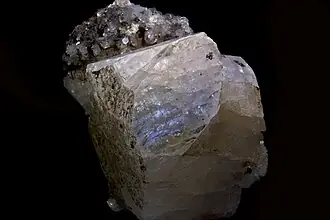
Feldspar
Moonstone
Orthoclase feldspar with a floating blue-white sheen called adularescence, caused by light scattering between microscopic layers of two feldspars.
Mohs 6-6.5 · White, Peach
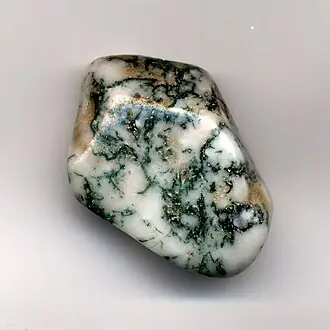
Chalcedony
Moss Agate
Translucent chalcedony filled with dendritic mineral growths that look like moss, ferns or distant trees. Not banded, so technically not a true agate.
Mohs 6.5-7 · Green, Colorless
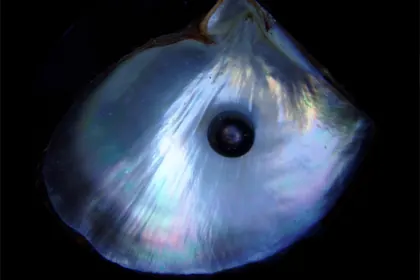
Organic
Mother of Pearl
The nacre lining of pearl oysters and freshwater mussels, cut into plates and cabochons. A soft silvery-white with a slow moving sheen rather than the hard flash of abalone.
Mohs 2.5-4 · White, Cream
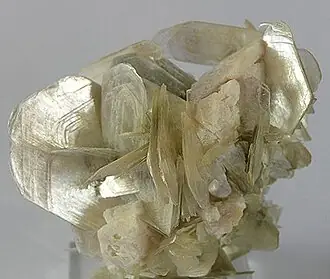
Mica
Muscovite
The common white mica, splitting into flexible transparent sheets. Star muscovite and pink Brazilian rosettes are the specimen forms.
Mohs 2-2.5 · Silver, Pink
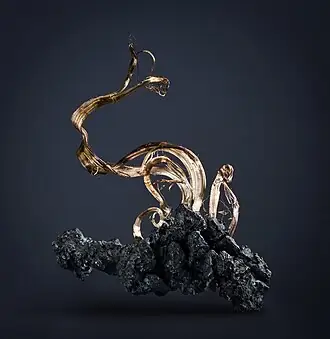
Element
Native Silver
Silver in wires, ropes and herringbone crystal groups. Kongsberg produced the finest wire silver ever mined, and specimens from its 340-year run are museum currency.
Mohs 2.5-3 · Silver, Grey
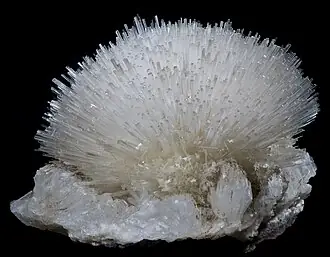
Zeolite
Natrolite
Needle-sharp radiating sprays of sodium zeolite, often clear enough to facet in small stones. It is the matrix mineral that hosts benitoite in California.
Mohs 5-5.5 · White, Colorless
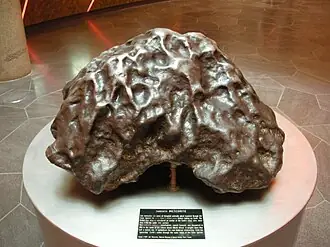
Meteorite
Nickel-Iron Meteorite
Fragments of the shattered cores of early planetesimals: solid iron-nickel that cooled over millions of years, producing the interlocking Widmanstatten pattern revealed by etching.
Mohs 4-5 · Silver, Grey
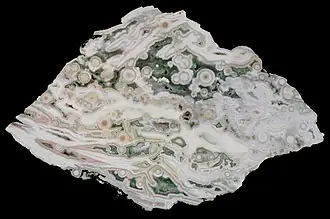
Chalcedony
Ocean Jasper
Orbicular chalcedony covered in floating spherulites like bubbles or eyes, from a tidal outcrop on the northwest coast of Madagascar reachable only at low tide. The original deposit is exhausted, so material is finite.
Mohs 6.5-7 · Green, Blush
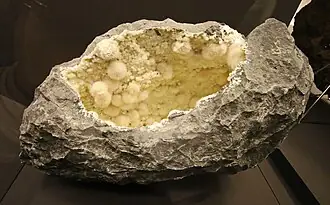
Zeolite-associated
Okenite
Puffball sprays of hair-fine white fibres sitting in basalt cavities — often described as cotton balls, and genuinely soft to the touch, since the fibres flex under a finger.
Mohs 4.5-5 · White, Cream
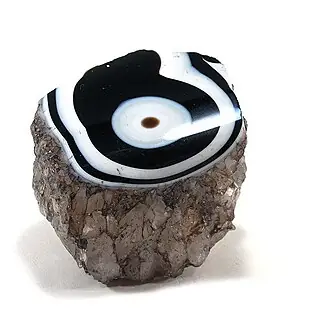
Chalcedony
Onyx
Chalcedony with straight parallel banding. Most 'black onyx' on the market is grey chalcedony dyed black, a practice so old and so standard that it is not considered a deception.
Mohs 6.5-7 · Black, White
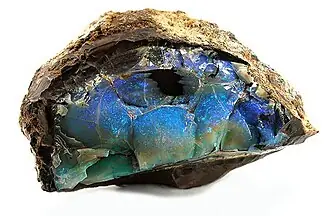
Mineraloid
Opal
Hydrated silica whose spheres diffract light into shifting play-of-color. Black opal from Lightning Ridge is the most valuable; Ethiopian Welo opal is the great recent discovery.
Mohs 5.5-6.5 · Play-of-color, White
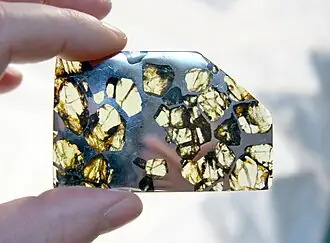
Meteorite
Pallasite Meteorite
The rarest class of meteorite most people ever see: olivine crystals suspended in a nickel-iron matrix, formed at the boundary between the core and mantle of a shattered planetesimal. Cut into slices, the gem olivine glows amber-green in transmitted light.
Mohs 4-6.5 · Silver, Golden
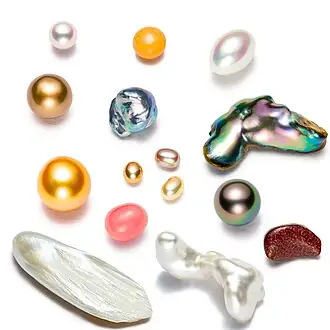
Organic
Pearl
Concentric nacre laid down by a mollusc around an irritant. Almost all pearls on the market are cultured; natural pearls are rare enough to be an auction category of their own.
Mohs 2.5-4 · White, Cream
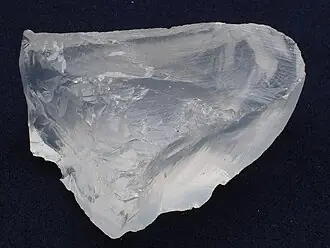
Silicate
Petalite
A lithium aluminium silicate with a soft, satiny character — usually colorless to pale pink, and one of the quiet stones people gravitate to without being able to say why.
Mohs 6-6.5 · Colorless, White
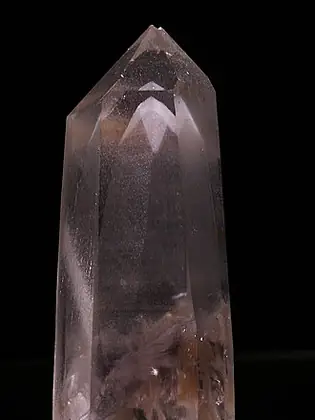
Quartz
Phantom Quartz
Quartz that paused during growth long enough for a film of chlorite, hematite or clay to settle on its faces, then resumed — leaving a ghost crystal sealed inside the finished one.
Mohs 7 · Colorless, Green
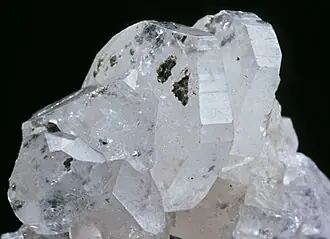
Silicate
Phenakite
A hard, brilliant beryllium silicate that is rare as gem rough and prized by collectors for water-clear rhombohedral crystals. Its name comes from the Greek for deceiver, because it was so often mistaken for quartz.
Mohs 7.5-8 · Colorless, White
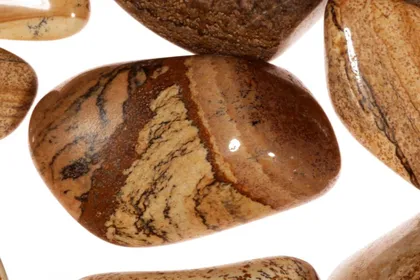
Chalcedony
Picture Jasper
Jasper whose iron staining and sediment layering read as desert landscapes — mesas, dunes, storm skies. Biggs and Bruneau material from the Pacific Northwest are the classics of the type.
Mohs 6.5-7 · Tan, Brown
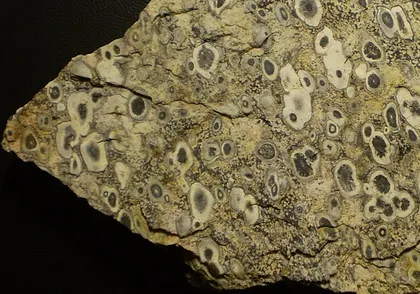
Igneous
Rainforest Rhyolite
Green and cream orbicular rhyolite, sometimes called rainforest jasper, patterned by epidote and quartz-filled gas pockets in an old lava flow.
Mohs 6-7 · Green, Olive green
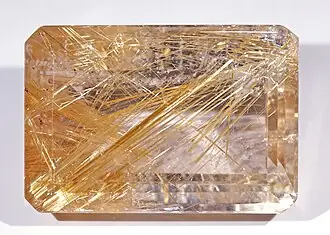
Quartz
Rutilated Quartz
Clear or smoky quartz threaded with needles of rutile, a titanium oxide that grows in golden, copper or silver hairs. The best material looks like light frozen mid-flight.
Mohs 7 · Colorless, Golden
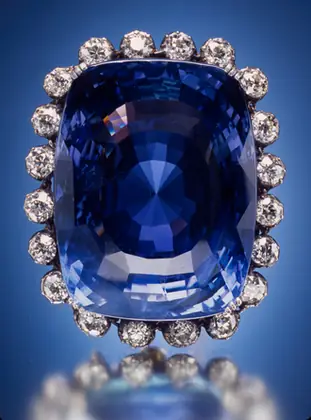
Corundum
Sapphire
Every color of gem corundum other than red. Blue comes from iron and titanium; the pink-orange padparadscha is the rarest and most coveted.
Mohs 9 · Blue, Yellow
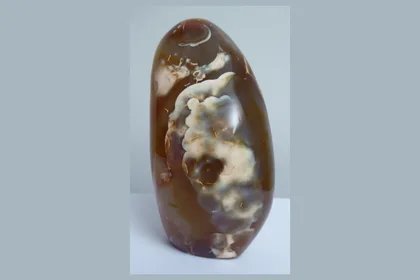
Chalcedony
Sardonyx
Straight-banded chalcedony alternating reddish-brown sard with white — the classic cameo material, because a carver can cut through the pale layer to reveal the dark one beneath.
Mohs 6.5-7 · Red, White
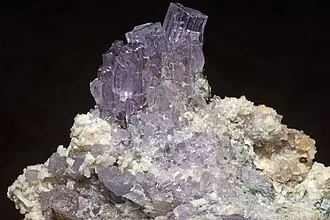
Silicate
Scapolite
An under-known gem that comes in lilac, honey yellow and pink, sometimes with a strong cat's eye from parallel tube inclusions. Tanzanian violet material is the most sought.
Mohs 5.5-6 · Violet, Yellow
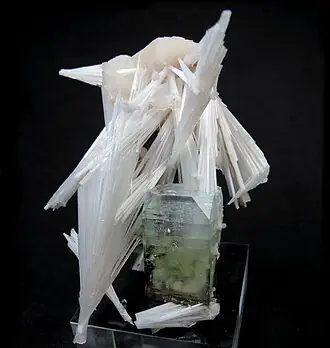
Zeolite
Scolecite
Fine needle-like white zeolite crystals that radiate in silky sprays, sometimes forming dense pillow-like masses.
Mohs 5-5.5 · White, Colorless
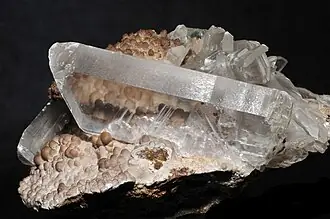
Gypsum
Selenite
A clear, satin or fibrous variety of gypsum that grows in blades, wands and — at Naica in Mexico — beams over ten metres long. Soft enough to scratch with a fingernail.
Mohs 2 · White, Colorless
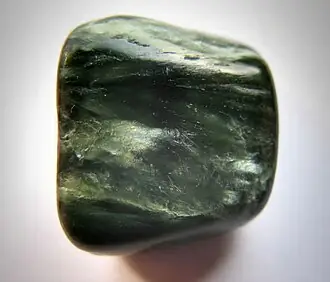
Chlorite
Seraphinite
A deep green clinochlore from one Siberian locality, shot through with silvery feather patterns that look like folded wings. Every piece comes from the Lake Baikal region; there is no second source.
Mohs 2-2.5 · Bottle green, Silver-green
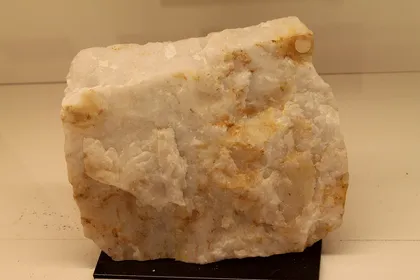
Quartz
Snow Quartz
Dense opaque white quartz, sometimes marketed as quartzite or milky quartz, cut into spheres and slabs for a clean matte white that holds light softly.
Mohs 7 · White, Cream
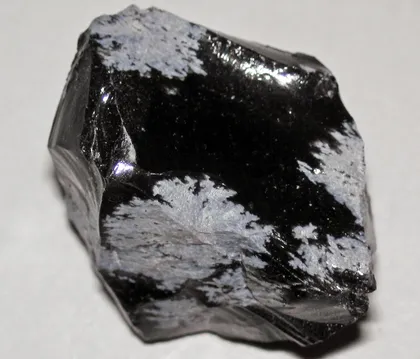
Volcanic glass
Snowflake Obsidian
Black volcanic glass in which grey-white cristobalite spherulites have begun to crystallise out — the first stage of the glass slowly devitrifying over geological time.
Mohs 5-5.5 · Black, White
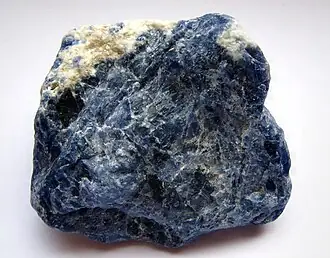
Feldspathoid
Sodalite
Royal blue feldspathoid streaked with white calcite veining. Often confused with lapis, but sodalite lacks pyrite and reads more violet.
Mohs 5.5-6 · Blue, White
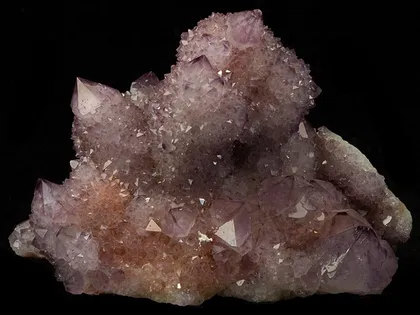
Quartz
Spirit Quartz
Amethyst or citrine points entirely encrusted with a coat of tiny second-generation crystals, so the wand bristles like frost. Found in commercial quantity in one district of South Africa.
Mohs 7 · Lavender, Violet
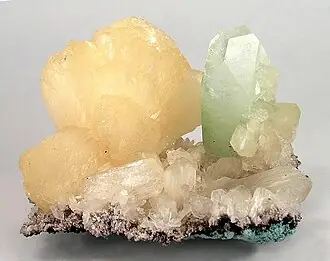
Zeolite
Stilbite
A zeolite that grows in peach-colored bowtie and sheaf-like sprays, most often alongside apophyllite in Indian basalt pockets.
Mohs 3.5-4 · Peach, White
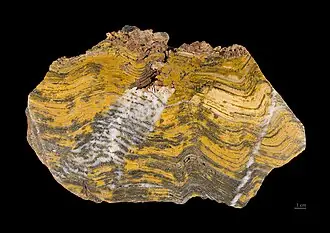
Fossil
Stromatolite
Layered structures built by cyanobacterial mats — the oldest evidence of life on earth, with examples running back 3.5 billion years. The wavy laminations polish into striking banded slabs.
Mohs 3-7 · Banded, Grey
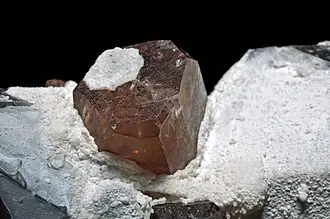
Silicate
Topaz
A very hard silicate that grows in glassy prismatic crystals. Imperial topaz, the sherry-orange to pink material from Ouro Preto, is the aristocrat of the family.
Mohs 8 · Colorless, Blue
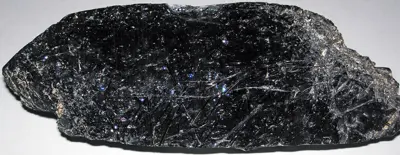
Quartz
Tourmalinated Quartz
Clear quartz shot through with black schorl tourmaline, producing graphic ink-on-glass patterns. Slabs and spheres show the composition best.
Mohs 7 · Colorless, Black
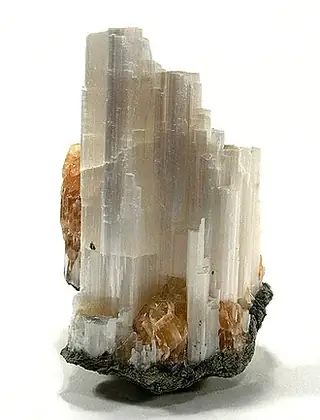
Borate
Ulexite
'TV rock' — parallel fibres act as natural optical fibres and project an image from the base of a cut slab to its polished top, so text under the stone appears to float on its surface.
Mohs 2-2.5 · White, Colorless
Phosphate
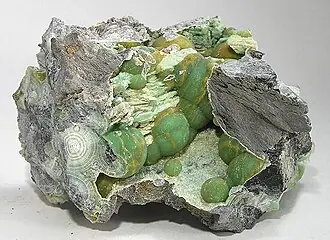
Wavellite
Radiating spheres of green needles that, when broken open, show a starburst cross-section like a cut kiwi. Arkansas material from the Ouachita Mountains is the world's best.
Mohs 3.5-4 · Apple green, Yellow-green
Silicate
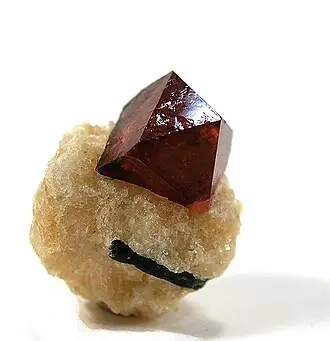
Zircon
A genuinely brilliant natural gem with dispersion approaching diamond, and quite unrelated to cubic zirconia despite the name confusion. Cambodian material is heat-treated to the familiar electric blue; natural stones run honey, red and brown.
Mohs 6-7.5 · Blue, Golden
Please noteTraditional properties, effects, and aura associations are shared for cultural, historical, and personal-interest reasons only. They are folklore, not medicine. Nothing here is medical, psychological, or financial advice, and no stone is intended to diagnose, treat, cure, or prevent any condition. Please see a qualified professional for health concerns.