Chalcedony

Mookaite

Australian radiolarite — silicified deep-sea microfossil ooze — in mustard yellow, plum and brick red. Dense, takes a glassy polish and comes from one station in the Kennedy Ranges.
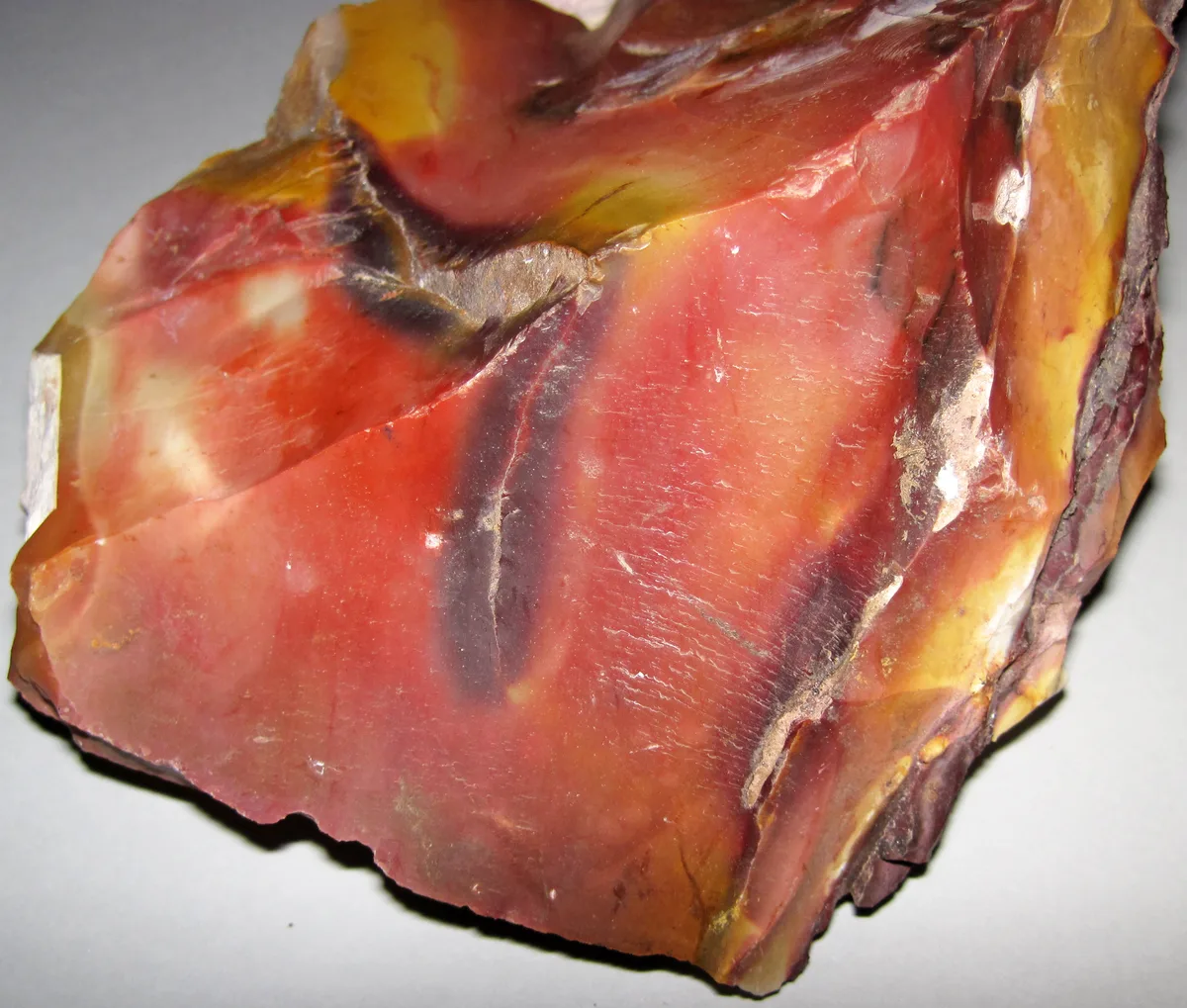
Mookaite — mineral specimen
Reference photograph: James St. John, CC BY 2.0 · source. Specimens in the shop vary.

Judging quality

Solid earthy colors in irregular patches with no banding. It is harder than it looks and rings when tapped.

Care

Durable. Water and cloth.

History & lore

The name comes from Mooka Creek; mooka is said to derive from a Wajarri word for running waters.

Cultural history, recorded as tradition rather than as medical or scientific claim.

Common questions about Mookaite

What is Mookaite?
Australian radiolarite — silicified deep-sea microfossil ooze — in mustard yellow, plum and brick red. Dense, takes a glassy polish and comes from one station in the Kennedy Ranges.
How hard is Mookaite and what is it made of?
Mookaite is a Chalcedony-family mineral with the composition SiO2 (radiolarite). It crystallizes in the trigonal system and rates 6.5-7 on the Mohs hardness scale. It occurs in red, yellow, cream, magenta.
Where does Mookaite come from?
Notable localities for Mookaite include Mooka Creek, Western Australia.
How do you tell good Mookaite from filler?
Solid earthy colors in irregular patches with no banding. It is harder than it looks and rings when tapped.
How do you care for Mookaite?
Durable. Water and cloth.

See it in person

Photographs only go so far

Both rooms are open six days a week, and there is always someone happy to pull pieces out of the case so you can compare them under the light.

Plan a visit
Share Mookaite