Judging quality
Judge by pattern quality and polish. Good jasper takes a glassy finish with no pitting; heavily stabilised or dyed material shows color pooling in cracks.
Chalcedony
Opaque microcrystalline quartz colored by iron and clay impurities. Jasper is a family rather than a single stone, and named varieties — ocean, picture, mookaite, bumblebee — often come from a single deposit.
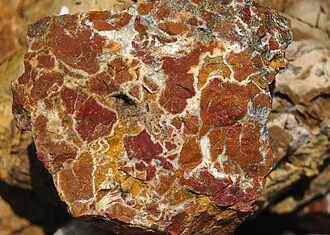
Judge by pattern quality and polish. Good jasper takes a glassy finish with no pitting; heavily stabilised or dyed material shows color pooling in cracks.
Extremely durable. Soap and water.
Jasper amulets appear in Egyptian, Minoan and Norse burials; the name descends through Latin and Greek from an older Semitic root.
Cultural history, recorded as tradition rather than as medical or scientific claim.
See it in person
Both rooms are open six days a week, and there is always someone happy to pull pieces out of the case so you can compare them under the light.