The crystal encyclopedia
53 of 218
Stones people reach for while mending—after illness, burnout or a hard season.
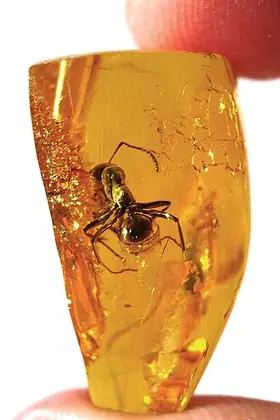
Organic
Amber
Tree resin fossilised over 30 to 100 million years. Baltic amber runs butterscotch to cognac; Dominican material can be transparent blue under daylight; Burmese burmite is the oldest at roughly 99 million years and is the amber most often carrying insect inclusions.
Mohs 2-2.5 · Amber, Honey
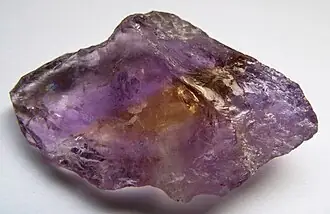
Quartz
Ametrine
A single quartz crystal zoned into amethyst purple and citrine gold, formed where differing temperatures acted on opposite ends of the same crystal. Commercially it comes essentially from one deposit in eastern Bolivia.
Mohs 7 · Purple, Yellow
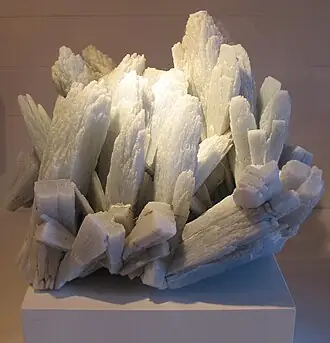
Sulfate
Angelite (Anhydrite)
Blue anhydrite — gypsum without its water. Left damp long enough it will slowly reabsorb water and revert toward gypsum.
Mohs 3.5 · Pale blue, Grey
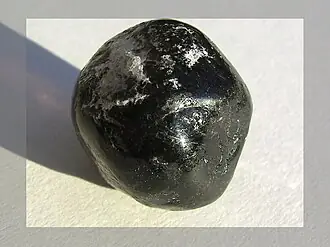
Volcanic glass
Apache Tears
Rounded nodules of obsidian weathered free from the white perlite that once enclosed them. Held to a light they glow smoky translucent brown at the edges.
Mohs 5-5.5 · Black, Brown
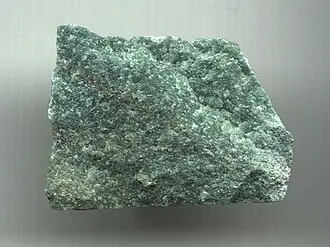
Quartz
Aventurine
Quartzite spangled with reflective mica platelets — green from fuchsite, blue from dumortierite. The shimmer is called aventurescence.
Mohs 6.5-7 · Green, Blue
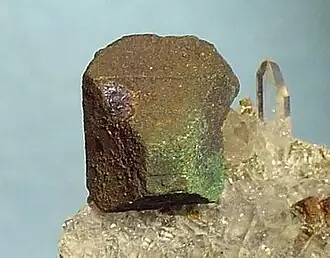
Sulfide
Bornite
Copper iron sulfide that tarnishes rapidly from bronze to deep blue and purple, giving it the same peacock nickname as chalcopyrite.
Mohs 3-3.25 · Bronze, Iridescent
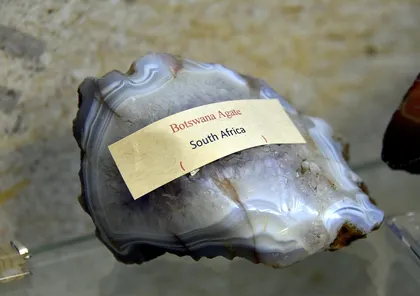
Chalcedony
Botswana Agate
Fine grey, pink and lavender banding, often with a tiny druzy quartz eye at the centre. Softer and more muted than Mexican agates, and quietly one of the most beautiful.
Mohs 6.5-7 · Grey, Blush
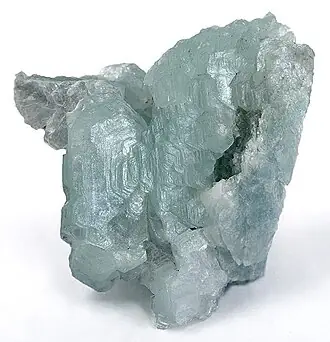
Hydroxide
Brucite
Pale golden-yellow platy crystals with a pearly, almost waxy glow, best known from Pakistani specimens where honey-colored brucite sits on grey matrix.
Mohs 2.5-3 · Yellow, Golden
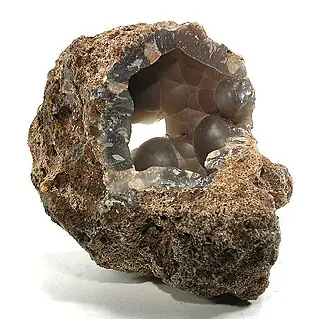
Chalcedony
Chalcedony
Microcrystalline quartz without banding — the parent material of agate, carnelian and jasper. The Turkish and Namibian blue-grey material has a milky glow like frozen smoke.
Mohs 6.5-7 · Blue, White
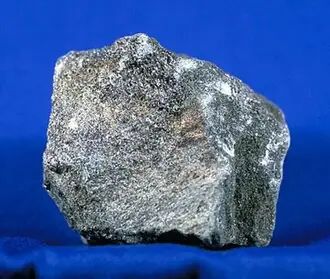
Quartz
Chlorite Quartz
Quartz with green chlorite included as clouds, phantoms or surface coatings. Himalayan chlorite quartz often pairs the green with iron staining and pristine terminations.
Mohs 7 · Green, Colorless
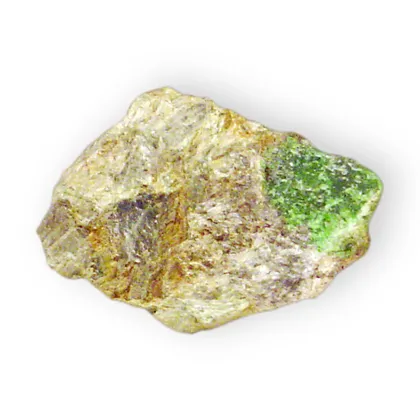
Pyroxene
Chrome Diopside
Intensely green chromium diopside from Siberia, mined in a brief window each year when the Yakutian ground is workable. Small stones are vividly green; larger ones darken toward black.
Mohs 5.5-6.5 · Emerald green, Bottle green
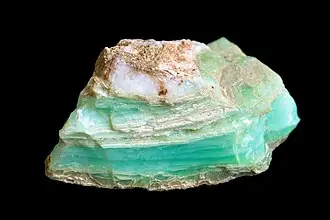
Chalcedony
Chrysoprase
Nickel-colored chalcedony in luminous apple green — the most valuable variety of chalcedony and historically the green stone of choice before emerald was widely available.
Mohs 6.5-7 · Apple green, Mint
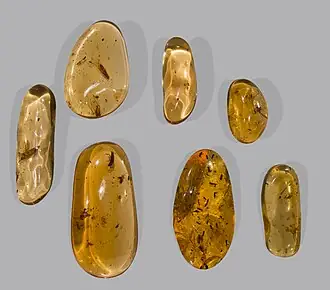
Organic
Copal
Young tree resin, typically a few thousand to a few million years old — geologically an amber in progress. Colombian copal is bright, glassy and often crowded with recent insect inclusions, which is why it is so frequently sold as amber.
Mohs 1.5-2 · Golden, Pale yellow
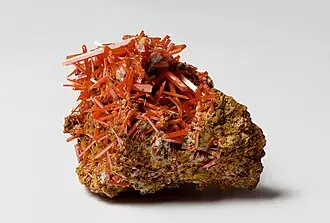
Chromate
Crocoite
Tangerine-orange lead chromate in hollow sprays of hair-fine prisms. Tasmanian Dundas material is the world standard and among the most photographed minerals in existence.
Mohs 2.5-3 · Orange, Red
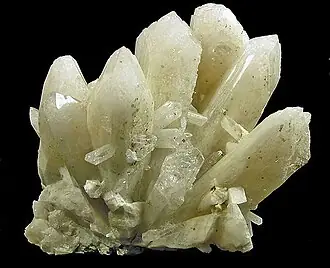
Silicate
Danburite
Chisel-tipped prisms of glassy calcium boron silicate, most familiar from the Charcas mines of San Luis Potosí where crystals grow water-clear and doubly terminated.
Mohs 7-7.5 · Colorless, Pale yellow
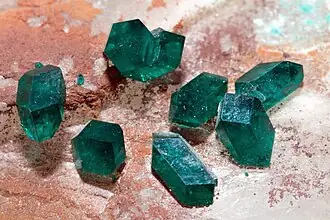
Silicate
Dioptase
Perhaps the most intensely green mineral there is — copper silicate crystals of a saturated emerald so vivid that eighteenth-century collectors assumed they had found an emerald deposit. Tsumeb specimens on white dolomite are the benchmark.
Mohs 5 · Emerald green, Green
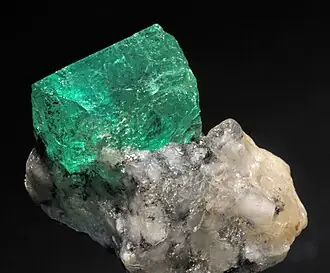
Beryl
Emerald
Chromium- or vanadium-colored green beryl and one of the four classical precious stones. Colombian material from Muzo and Chivor is the historical benchmark.
Mohs 7.5-8 · Green
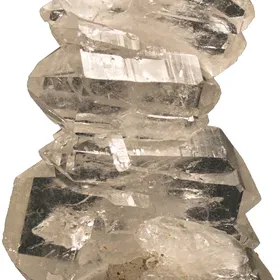
Quartz
Faden Quartz
Tabular quartz plates carrying a white thread running through the crystal — the record of a fracture that kept re-healing as the rock slowly pulled apart. Each faden line is literally a scar the crystal grew across.
Mohs 7 · Clear, Colorless
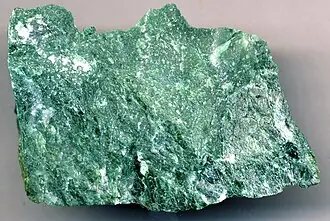
Mica
Fuchsite
Chromium-bearing muscovite mica in a glittering emerald green. Ruby in fuchsite pairs the sparkle with pink corundum crystals.
Mohs 2-3 · Emerald green, Silver-green
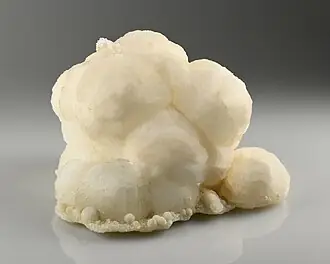
Zeolite-associated
Gyrolite
Pale spherical aggregates with a concentric internal structure, usually nested among green apophyllite and white stilbite in Indian basalt cavities.
Mohs 3-4 · White, Cream
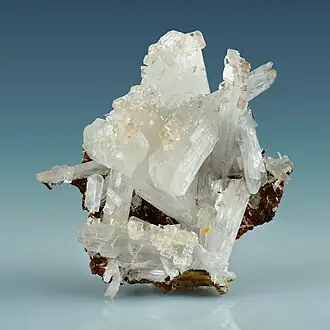
Silicate
Hemimorphite
Zinc silicate that forms both bladed crystal sprays and soft blue botryoidal crusts. The Chinese blue material is among the most beautiful secondary zinc minerals.
Mohs 4.5-5 · Blue, Colorless
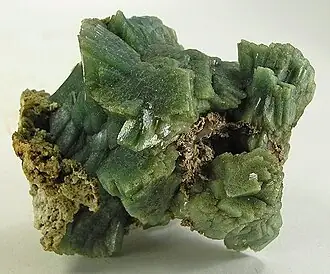
Zeolite
Heulandite
Tabular zeolite crystals in coffin-shaped plates, often orange-peach and frequently mistaken for stilbite, with which it shares its Indian localities.
Mohs 3-3.5 · Peach, White
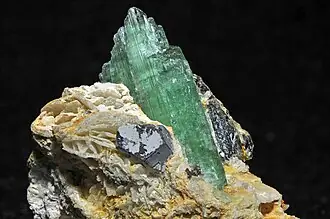
Spodumene
Hiddenite
The green chromium-bearing variety of spodumene, and one of the few significant gemstones first described from the eastern United States.
Mohs 6.5-7 · Green, Yellow-green
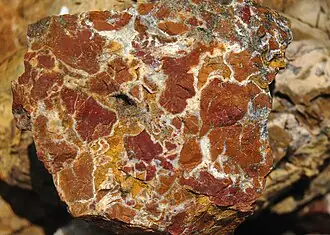
Chalcedony
Jasper
Opaque microcrystalline quartz colored by iron and clay impurities. Jasper is a family rather than a single stone, and named varieties — ocean, picture, mookaite, bumblebee — often come from a single deposit.
Mohs 6.5-7 · Red, Yellow
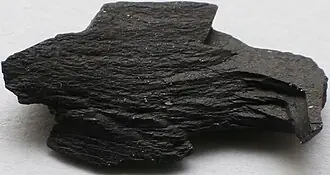
Organic
Jet
Fossilised driftwood compressed into a dense, velvet-black coal that takes a mirror polish and weighs almost nothing in the hand. Whitby jet, formed from Jurassic monkey-puzzle wood, is the historical standard and has been carved in Yorkshire for two thousand years. Hard jet is compact and glassy; soft jet cracks with age.
Mohs 2.5-4 · Black
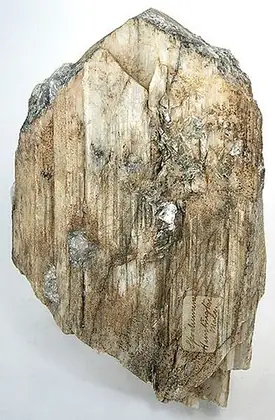
Spodumene
Kunzite
Lilac-pink spodumene, strongly pleochroic so it shifts between pink and near-colorless as it turns. Afghan crystals are famous for their size and clarity.
Mohs 6.5-7 · Pink, Lilac
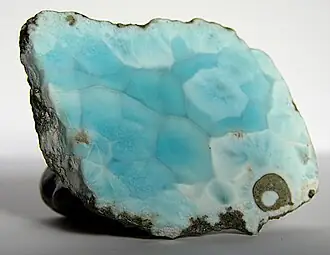
Pectolite
Larimar
Blue pectolite found in exactly one place on earth: a single mountainside in the Dominican Republic. Volcanic in origin, its patterning looks like sunlight on shallow Caribbean water.
Mohs 4.5-5 · Sky blue, White
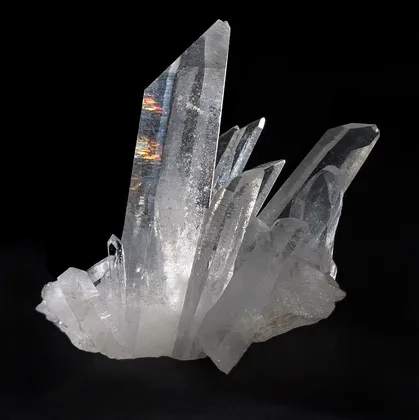
Quartz
Milky Quartz
Quartz clouded white by countless microscopic fluid inclusions trapped during growth. The most abundant form of crystalline quartz on the planet and the white vein rock of countless mountainsides.
Mohs 7 · White, Cream
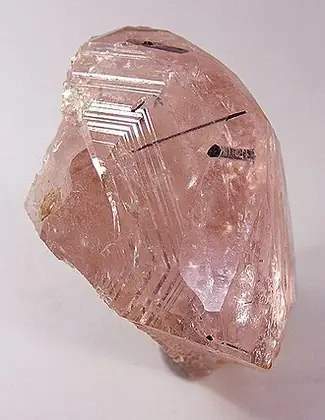
Beryl
Morganite
Pink to peach beryl colored by manganese. Crystals tend to be tabular rather than long, and the softest apricot tones are the most characteristic.
Mohs 7.5-8 · Peach, Pink
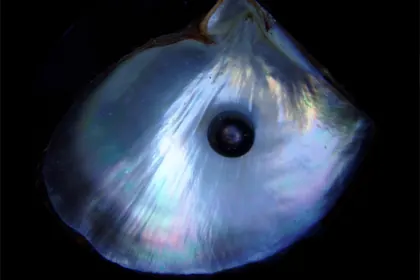
Organic
Mother of Pearl
The nacre lining of pearl oysters and freshwater mussels, cut into plates and cabochons. A soft silvery-white with a slow moving sheen rather than the hard flash of abalone.
Mohs 2.5-4 · White, Cream
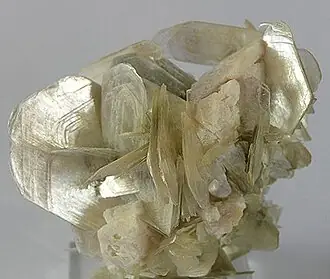
Mica
Muscovite
The common white mica, splitting into flexible transparent sheets. Star muscovite and pink Brazilian rosettes are the specimen forms.
Mohs 2-2.5 · Silver, Pink
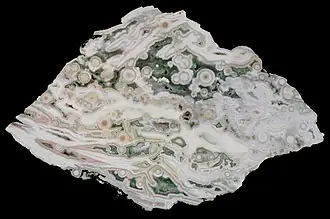
Chalcedony
Ocean Jasper
Orbicular chalcedony covered in floating spherulites like bubbles or eyes, from a tidal outcrop on the northwest coast of Madagascar reachable only at low tide. The original deposit is exhausted, so material is finite.
Mohs 6.5-7 · Green, Blush
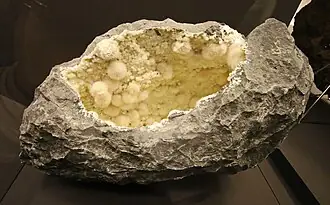
Zeolite-associated
Okenite
Puffball sprays of hair-fine white fibres sitting in basalt cavities — often described as cotton balls, and genuinely soft to the touch, since the fibres flex under a finger.
Mohs 4.5-5 · White, Cream
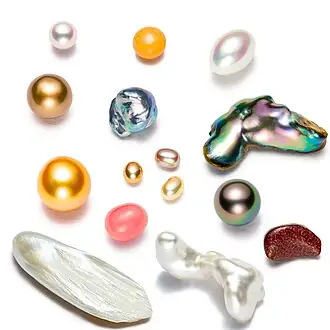
Organic
Pearl
Concentric nacre laid down by a mollusc around an irritant. Almost all pearls on the market are cultured; natural pearls are rare enough to be an auction category of their own.
Mohs 2.5-4 · White, Cream
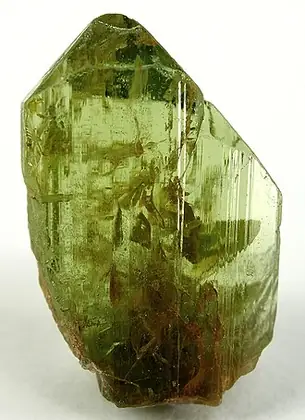
Olivine
Peridot
Gem olivine, one of very few gemstones that occurs in only one color. It arrives at the surface in basalt and, occasionally, inside pallasite meteorites.
Mohs 6.5-7 · Olive green, Lime
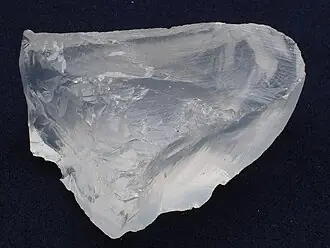
Silicate
Petalite
A lithium aluminium silicate with a soft, satiny character — usually colorless to pale pink, and one of the quiet stones people gravitate to without being able to say why.
Mohs 6-6.5 · Colorless, White
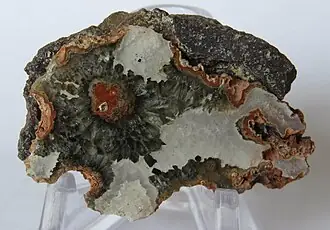
Quartz
Prasiolite
Green quartz. Almost all of it is amethyst that has been heated to about 500°C — a stable, permanent transformation, but a treatment, and any honest seller says so. Genuinely natural prasiolite is rare and paler.
Mohs 7 · Apple green, Pistachio green
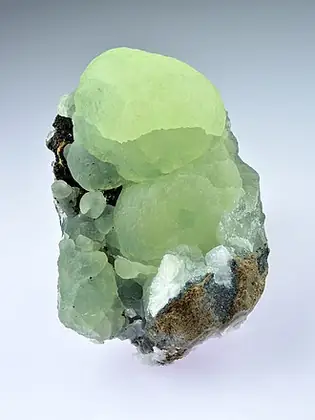
Silicate
Prehnite
Botryoidal green silicate with a soft grape-cluster surface, frequently hosting black epidote needles that make the best specimens.
Mohs 6-6.5 · Green, Yellow-green
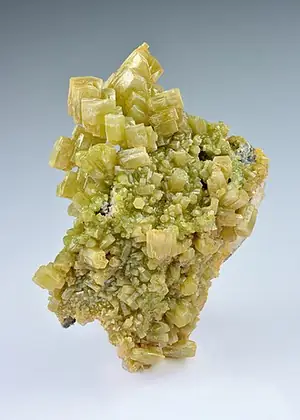
Phosphate
Pyromorphite
Barrel-shaped green hexagonal crystals with a resinous glow, forming dense druses on matrix. Chinese material from Guangxi transformed the market in the 2000s.
Mohs 3.5-4 · Green, Yellow
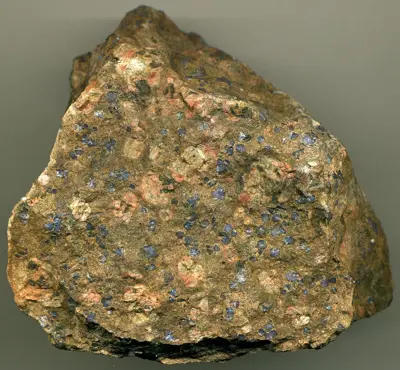
Igneous
Que Sera (Llanite)
A Brazilian rhyolitic rock in soft mottled grey, blue and rose, sold under the trade names que sera and vulcanite. Cuts into calm, cloud-like slabs and spheres.
Mohs 6-7 · Grey, Blue
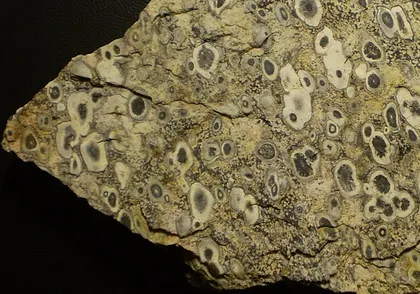
Igneous
Rainforest Rhyolite
Green and cream orbicular rhyolite, sometimes called rainforest jasper, patterned by epidote and quartz-filled gas pockets in an old lava flow.
Mohs 6-7 · Green, Olive green
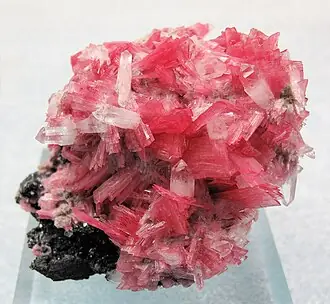
Silicate
Rhodonite
Pink manganese silicate laced with black manganese oxide veining. Harder and far more durable than rhodochrosite, which makes it the better carving stone.
Mohs 5.5-6.5 · Pink, Black
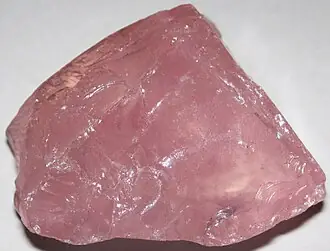
Quartz
Rose Quartz
The soft pink massive quartz that almost everyone recognises. Most rose quartz occurs as cloudy vein material rather than crystals; true terminated rose quartz crystals, mainly from Brazil, are genuinely rare and collectible.
Mohs 7 · Pink, Blush
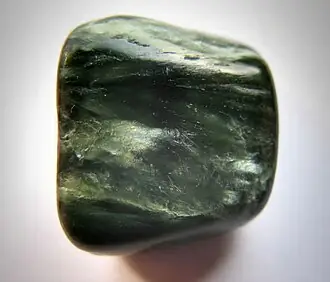
Chlorite
Seraphinite
A deep green clinochlore from one Siberian locality, shot through with silvery feather patterns that look like folded wings. Every piece comes from the Lake Baikal region; there is no second source.
Mohs 2-2.5 · Bottle green, Silver-green
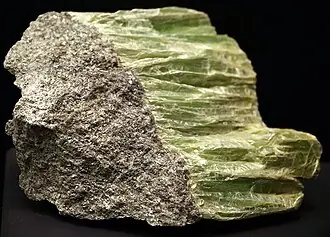
Silicate
Serpentine
A group of magnesium silicates named for their scaled, snake-like patterning. Californian serpentine is the state rock and forms the backbone of the Coast Ranges.
Mohs 3-5 · Green, Yellow-green
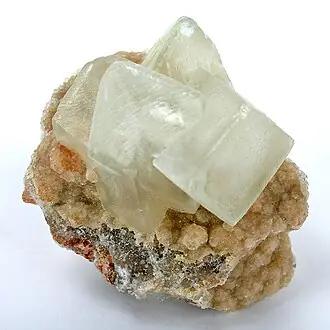
Carbonate
Smithsonite
Botryoidal zinc carbonate with a distinctive satiny lustre, appearing in gentle blue-green, lavender and pink depending on trace metals.
Mohs 4-4.5 · Blue-green, Pink
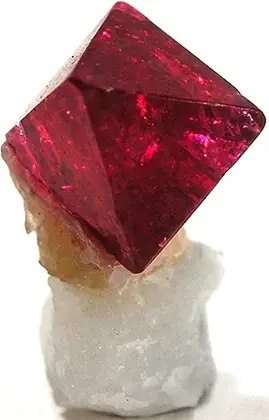
Oxide
Spinel
Long mistaken for ruby, spinel is a distinct mineral with brilliant color, excellent hardness and, crucially, almost no treatment in the trade.
Mohs 7.5-8 · Red, Pink
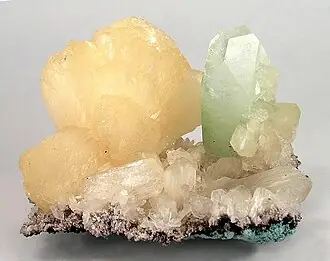
Zeolite
Stilbite
A zeolite that grows in peach-colored bowtie and sheaf-like sprays, most often alongside apophyllite in Indian basalt pockets.
Mohs 3.5-4 · Peach, White
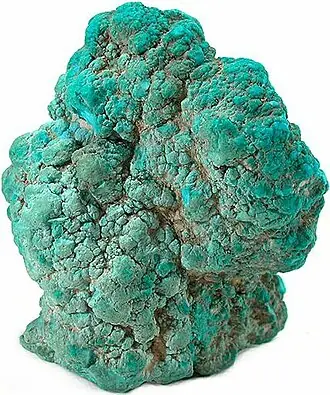
Phosphate
Turquoise
Hydrated copper aluminium phosphate, prized for six thousand years across Persia, Egypt and the American Southwest. Color ranges from Persian sky blue to Sonoran green, often webbed with matrix.
Mohs 5-6 · Blue, Green
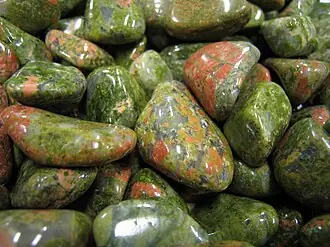
Granite
Unakite
An altered granite of pistachio epidote, salmon feldspar and clear quartz, named for the Unaka Range of the Appalachians.
Mohs 6-7 · Green, Pink
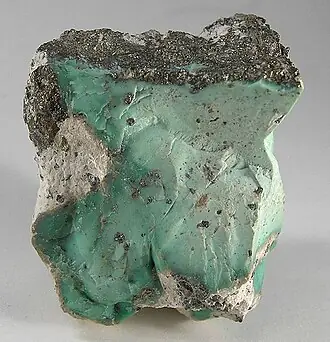
Phosphate
Variscite
A soft apple-green phosphate that looks like green turquoise and forms in the same way, by phosphate-rich water percolating through aluminous rock. Utah nodules with black spiderweb matrix are the prize material.
Mohs 3.5-4.5 · Apple green, Mint
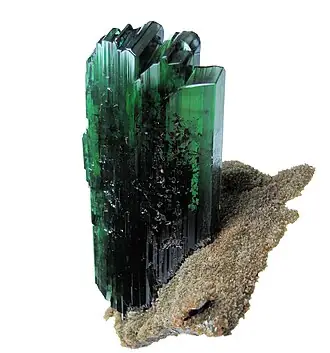
Phosphate
Vivianite
Bladed iron phosphate that grows colorless and darkens through blue-green to near-black as it oxidises in light. Bolivian crystals reach hand size and are among the most dramatic bladed specimens available.
Mohs 1.5-2 · Blue-green, Deep blue
Phosphate
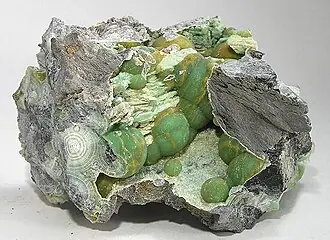
Wavellite
Radiating spheres of green needles that, when broken open, show a starburst cross-section like a cut kiwi. Arkansas material from the Ouachita Mountains is the world's best.
Mohs 3.5-4 · Apple green, Yellow-green
Please noteTraditional properties, effects, and aura associations are shared for cultural, historical, and personal-interest reasons only. They are folklore, not medicine. Nothing here is medical, psychological, or financial advice, and no stone is intended to diagnose, treat, cure, or prevent any condition. Please see a qualified professional for health concerns.