Silicate

Prehnite

Botryoidal green silicate with a soft grape-cluster surface, frequently hosting black epidote needles that make the best specimens.
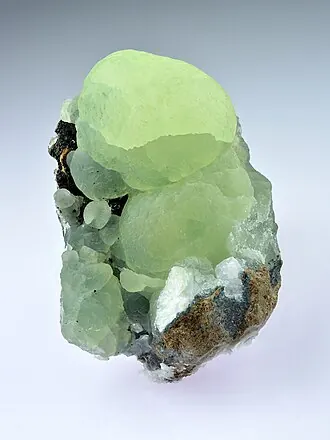
Prehnite — mineral specimen
Reference photograph: Wikimedia Commons · source. Specimens in the shop vary.

Judging quality

Look for translucent gooseberry green and a smooth undamaged botryoidal surface. Prehnite with epidote from Mali is a benchmark association.

Care

Reasonably durable. Warm soapy water is safe.

History & lore

The first mineral ever named after a person: Colonel Hendrik von Prehn, who brought it from the Cape in 1788.

Cultural history, recorded as tradition rather than as medical or scientific claim.

Common questions about Prehnite

What is Prehnite?
Botryoidal green silicate with a soft grape-cluster surface, frequently hosting black epidote needles that make the best specimens.
How hard is Prehnite and what is it made of?
Prehnite is a Silicate-family mineral with the composition Ca2Al2Si3O10(OH)2. It crystallizes in the orthorhombic system and rates 6-6.5 on the Mohs hardness scale. It occurs in green, yellow-green.
Where does Prehnite come from?
Notable localities for Prehnite include Mali, Australia, South Africa, China.
How do you tell good Prehnite from filler?
Look for translucent gooseberry green and a smooth undamaged botryoidal surface. Prehnite with epidote from Mali is a benchmark association.
How do you care for Prehnite?
Reasonably durable. Warm soapy water is safe.

See it in person

Photographs only go so far

Both rooms are open six days a week, and there is always someone happy to pull pieces out of the case so you can compare them under the light.

Plan a visit
Share Prehnite