The crystal encyclopedia
67 of 218
Growth, healing and generosity — the largest band in the shop.
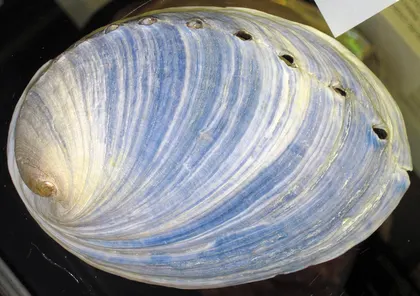
Organic
Abalone Shell
The nacreous inner shell of the abalone sea snail, layered aragonite platelets that scatter light into peacock blues and greens. New Zealand paua is the most saturated; California red abalone runs pink and silver.
Mohs 3.5-4 · Iridescent, Blue-green
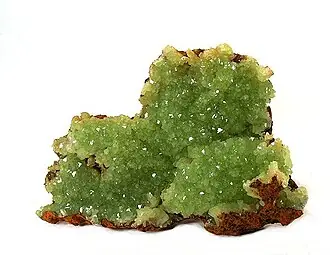
Arsenate
Adamite
Bright yellow-green zinc arsenate crusts, best known from the Ojuela mine at Mapimí where it carpets brown limonite matrix in glowing druzy sprays.
Mohs 3.5 · Yellow-green, Lime
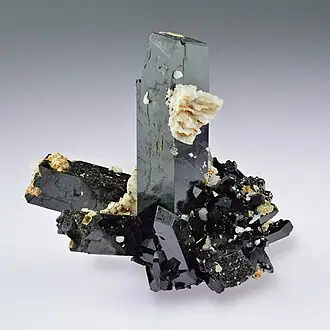
Pyroxene
Aegirine
Long, sharply striated black-green prisms, most famously from Mount Malosa in Malawi, where they grow with orange zircon and smoky quartz in some of the most photogenic combination specimens of recent decades.
Mohs 6-6.5 · Black, Black-green
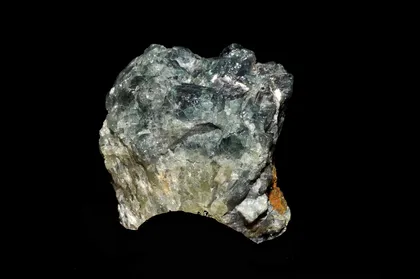
Oxide
Alexandrite
Color-change chrysoberyl: green in daylight, raspberry red under incandescent light, caused by chromium sitting in a narrow transmission window. Fine natural material above a carat is one of the most expensive colored stones on earth.
Mohs 8.5 · Emerald green, Red
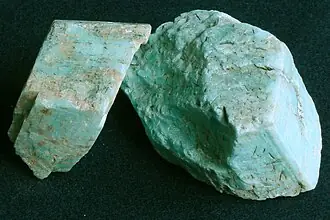
Feldspar
Amazonite
Blue-green microcline feldspar, colored by trace lead. Colorado crystals grown alongside smoky quartz are among the most striking mineral specimens produced in North America.
Mohs 6-6.5 · Turquoise, Green
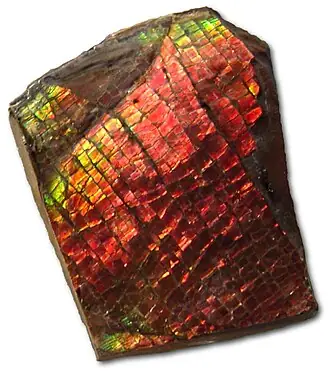
Fossil
Ammolite
The iridescent nacre of Cretaceous ammonites from a single formation in southern Alberta — one of only a handful of biogenic gemstones. Color runs from common red and green through the far rarer blue and violet, in dragon-skin, ribbon or sheet patterns.
Mohs 3.5-4.5 · Iridescent, Rainbow
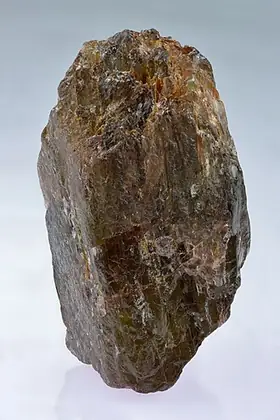
Silicate
Andalusite
A strongly pleochroic gem that shows green, gold and red-brown simultaneously from different directions — cutters deliberately orient it to display all three at once rather than trying to eliminate them.
Mohs 7-7.5 · Olive green, Brown
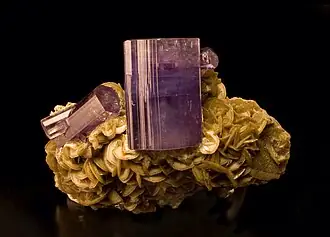
Phosphate
Apatite
The mineral of bone and tooth enamel, and a gem in its own right. Neon blue-green Madagascan apatite is one of the most electric colors in the mineral kingdom.
Mohs 5 · Blue, Green
Phyllosilicate
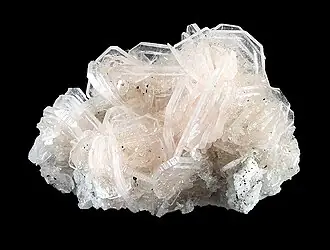
Apophyllite
Glassy pyramidal crystals that grow in the basalt cavities of the Deccan Traps, frequently perched on green stilbite or purple chalcedony.
Mohs 4.5-5 · Colorless, Green
Beryl
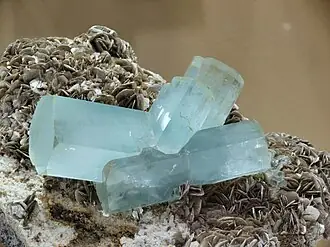
Aquamarine
Blue beryl, colored by iron, and the same mineral species as emerald and morganite. Crystals grow as long hexagonal prisms with flat terminations and can reach enormous size.
Mohs 7.5-8 · Blue, Blue-green
Quartz
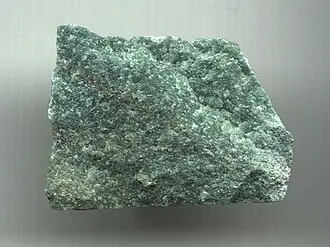
Aventurine
Quartzite spangled with reflective mica platelets — green from fuchsite, blue from dumortierite. The shimmer is called aventurescence.
Mohs 6.5-7 · Green, Blue
Chalcedony
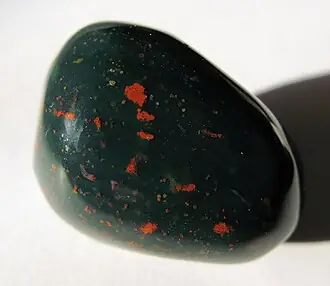
Bloodstone
Dark green chalcedony flecked with red jasper. Also called heliotrope, it is one of the traditional March birthstones.
Mohs 6.5-7 · Green, Red
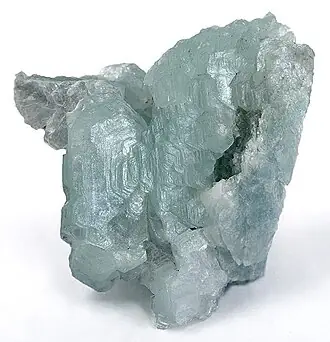
Hydroxide
Brucite
Pale golden-yellow platy crystals with a pearly, almost waxy glow, best known from Pakistani specimens where honey-colored brucite sits on grey matrix.
Mohs 2.5-3 · Yellow, Golden
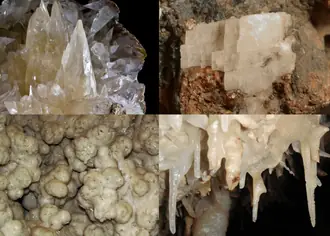
Carbonate
Calcite
One of the most polymorphic minerals known, with hundreds of crystal habits and every color of the spectrum. Optical calcite from Iceland splits an image in two through double refraction.
Mohs 3 · Orange, Honey
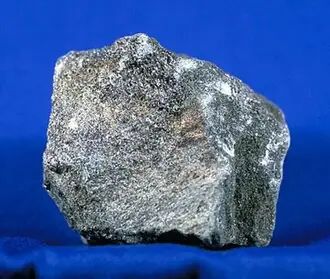
Quartz
Chlorite Quartz
Quartz with green chlorite included as clouds, phantoms or surface coatings. Himalayan chlorite quartz often pairs the green with iron staining and pristine terminations.
Mohs 7 · Green, Colorless
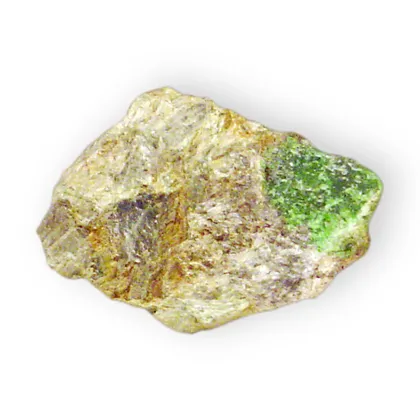
Pyroxene
Chrome Diopside
Intensely green chromium diopside from Siberia, mined in a brief window each year when the Yakutian ground is workable. Small stones are vividly green; larger ones darken toward black.
Mohs 5.5-6.5 · Emerald green, Bottle green
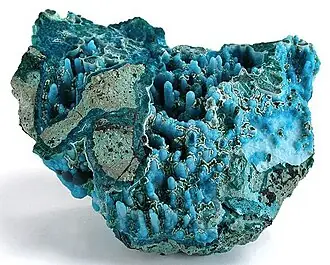
Silicate
Chrysocolla
A soft, hydrated copper silicate in vivid blue-green. On its own it is too fragile to work, so gem material is usually chrysocolla in chalcedony, called gem silica.
Mohs 2-4 · Blue-green, Cyan
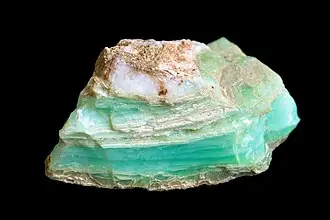
Chalcedony
Chrysoprase
Nickel-colored chalcedony in luminous apple green — the most valuable variety of chalcedony and historically the green stone of choice before emerald was widely available.
Mohs 6.5-7 · Apple green, Mint
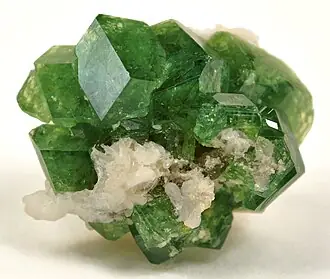
Garnet
Demantoid Garnet
Andradite garnet with dispersion higher than diamond — a green stone that throws visible rainbow fire. Russian Ural material often contains the golden 'horsetail' inclusion of byssolite fibres, which raises rather than lowers value.
Mohs 6.5-7 · Green, Apple green
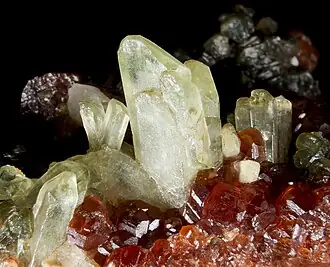
Pyroxene
Diopside
Chrome diopside from Siberia is a deep forest green rivalling emerald; star diopside from India shows a four-rayed black star.
Mohs 5.5-6.5 · Green, Black
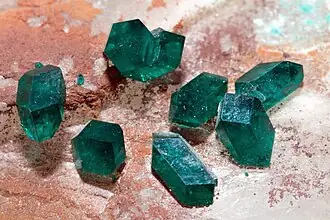
Silicate
Dioptase
Perhaps the most intensely green mineral there is — copper silicate crystals of a saturated emerald so vivid that eighteenth-century collectors assumed they had found an emerald deposit. Tsumeb specimens on white dolomite are the benchmark.
Mohs 5 · Emerald green, Green
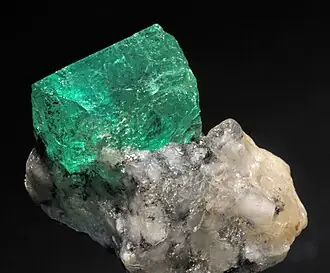
Beryl
Emerald
Chromium- or vanadium-colored green beryl and one of the four classical precious stones. Colombian material from Muzo and Chivor is the historical benchmark.
Mohs 7.5-8 · Green
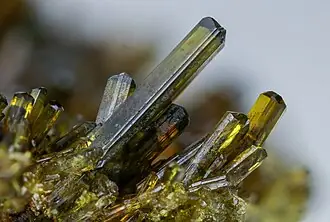
Silicate
Epidote
Distinctly pistachio-green striated crystals with a resinous lustre, often forming radiating sprays on quartz or prehnite.
Mohs 6-7 · Pistachio green, Black-green
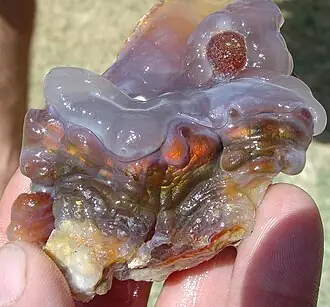
Chalcedony
Fire Agate
Chalcedony containing microscopically thin layers of iron oxide that create iridescent fire — reds, greens and golds — trapped inside the stone. Cutting it is a specialist skill: the cutter must chase the fire layer without going through it.
Mohs 6.5-7 · Brown, Red
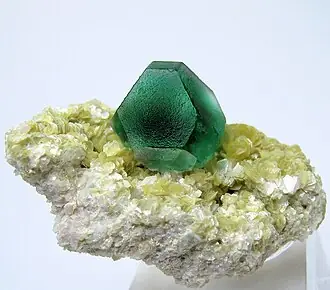
Halide
Fluorite
The most colorful mineral in the world, fluorite grows in perfect cubes and octahedra, often color-zoned in bands of green, purple and clear within a single crystal.
Mohs 4 · Green, Purple
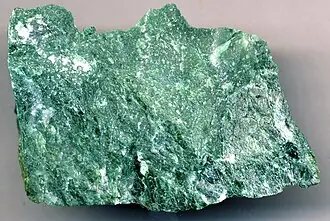
Mica
Fuchsite
Chromium-bearing muscovite mica in a glittering emerald green. Ruby in fuchsite pairs the sparkle with pink corundum crystals.
Mohs 2-3 · Emerald green, Silver-green
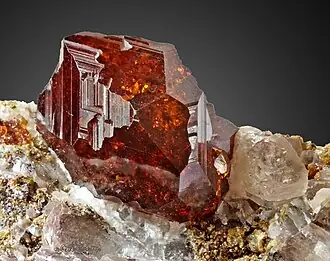
Garnet group
Garnet
A family of related silicates rather than one mineral, spanning almandine red, tsavorite green, spessartine orange and color-changing pyrope-spessartine. Crystals grow as dodecahedra with striking geometric perfection.
Mohs 6.5-7.5 · Red, Green
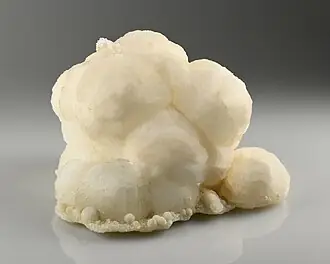
Zeolite-associated
Gyrolite
Pale spherical aggregates with a concentric internal structure, usually nested among green apophyllite and white stilbite in Indian basalt cavities.
Mohs 3-4 · White, Cream
Zeolite
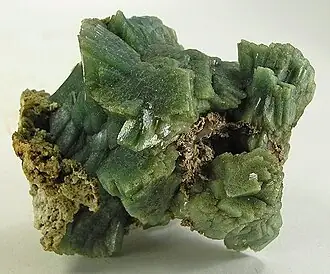
Heulandite
Tabular zeolite crystals in coffin-shaped plates, often orange-peach and frequently mistaken for stilbite, with which it shares its Indian localities.
Mohs 3-3.5 · Peach, White
Spodumene
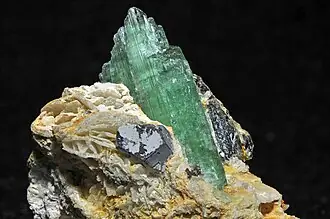
Hiddenite
The green chromium-bearing variety of spodumene, and one of the few significant gemstones first described from the eastern United States.
Mohs 6.5-7 · Green, Yellow-green
Tourmaline
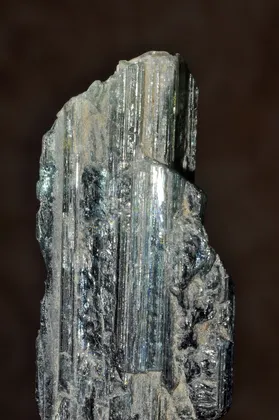
Indicolite Tourmaline
Blue elbaite, the scarcest common-market tourmaline color. Runs from a teal-leaning steel blue to a deep ink, often shading into green along the crystal.
Mohs 7-7.5 · Blue, Deep blue
Amphibole
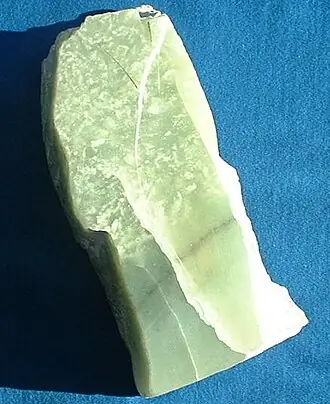
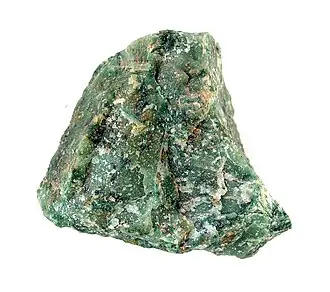
Jade (Nephrite)
One of two minerals sold as jade. Nephrite is an interlocking amphibole felt, which makes it the toughest natural stone known — far harder to break than to scratch.
Mohs 6-6.5 · Green, Cream
Pyroxene
Jadeite
The rarer, harder jade, and the source of imperial green. Nearly all top gem jadeite comes from a small region of northern Myanmar.
Mohs 6.5-7 · Green, Lavender
Sedimentary
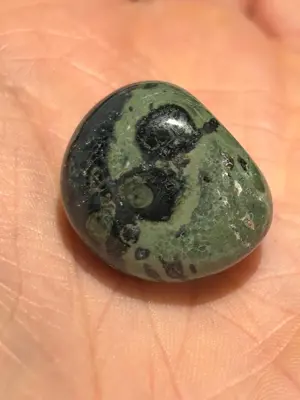
Kambaba Jasper
Dark green and black orbicular stone built from fossilised cyanobacterial colonies — technically a stromatolite rather than a jasper. The swirling eyes give it an unmistakable reptilian look.
Mohs 6-7 · Bottle green, Black
Silicate
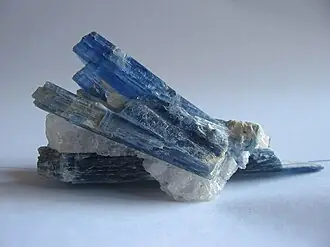
Kyanite
A remarkable mineral with two different hardnesses in one crystal: about 4.5 along the blade and 7 across it. Blue blades from Brazil and Nepal are the classic specimen.
Mohs 4.5-7 · Blue, Black
Feldspar
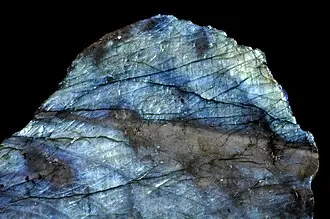
Labradorite
A plagioclase feldspar that hides fire inside dull grey stone. Light striking internal lamellae scatters into blue, gold, green and, in the best pieces, full-spectrum flash.
Mohs 6-6.5 · Grey, Blue
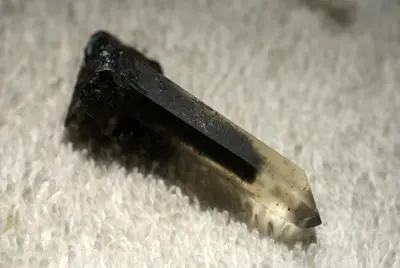
Quartz
Lodolite (Garden Quartz)
Clear quartz with mineral inclusions arranged into landscapes — mossy hills, undersea scenes, drifting clouds. Cutters orient the rough deliberately so that the interior scene reads through the polished face.
Mohs 7 · Clear, Green
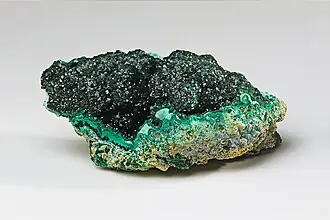
Carbonate
Malachite
Banded green copper carbonate with concentric bullseye patterning from botryoidal growth. Congolese material sets the standard for contrast and polish.
Mohs 3.5-4 · Green
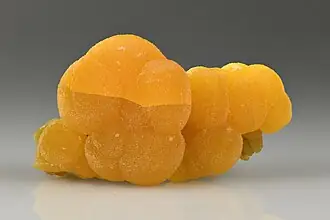
Arsenate
Mimetite
Lead arsenate that grows as glassy yellow barrel crystals or as botryoidal 'campylite' spheres. The Mexican Mapimí material, in warm marigold rounds, is the one most often seen.
Mohs 3.5-4 · Yellow, Orange
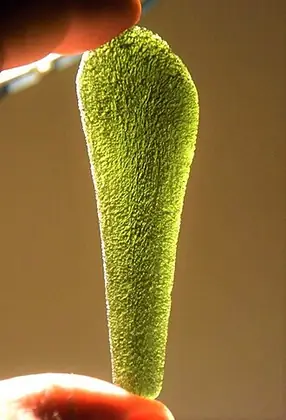
Tektite
Moldavite
A tektite: natural glass formed roughly fifteen million years ago when a meteorite struck what is now southern Germany and splashed molten crust across Bohemia.
Mohs 5.5-7 · Bottle green
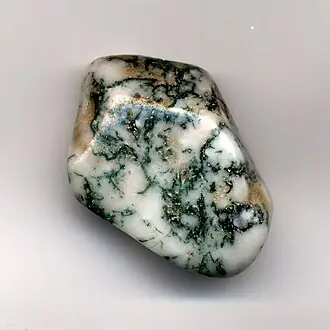
Chalcedony
Moss Agate
Translucent chalcedony filled with dendritic mineral growths that look like moss, ferns or distant trees. Not banded, so technically not a true agate.
Mohs 6.5-7 · Green, Colorless
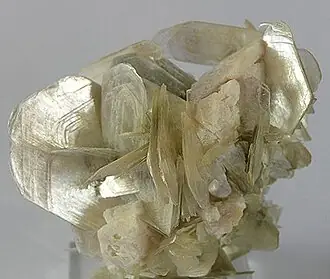
Mica
Muscovite
The common white mica, splitting into flexible transparent sheets. Star muscovite and pink Brazilian rosettes are the specimen forms.
Mohs 2-2.5 · Silver, Pink
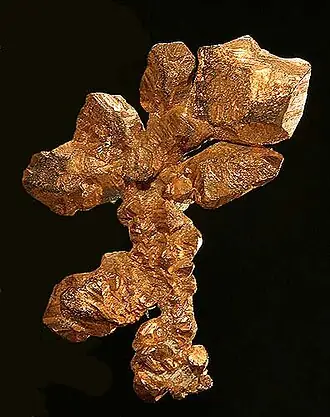
Element
Native Copper
Metallic copper that crystallised directly out of hydrothermal fluid, growing in twisted branching sprays and flattened arborescent plates. Michigan's Keweenaw deposits produced masses weighing tonnes.
Mohs 2.5-3 · Bronze, Red
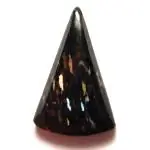
Metamorphic
Nuummite
One of the oldest gem materials on earth at roughly three billion years — a black amphibole rock threaded with iridescent gold, green and violet flash from intergrown crystal lamellae. Mined by hand from a remote Greenland site with a short seasonal window.
Mohs 5.5-6 · Black, Iridescent
Chalcedony
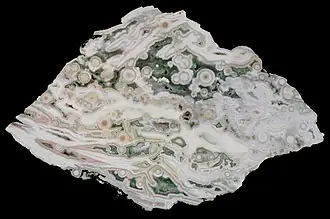
Ocean Jasper
Orbicular chalcedony covered in floating spherulites like bubbles or eyes, from a tidal outcrop on the northwest coast of Madagascar reachable only at low tide. The original deposit is exhausted, so material is finite.
Mohs 6.5-7 · Green, Blush
Meteorite
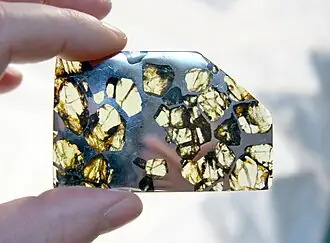
Pallasite Meteorite
The rarest class of meteorite most people ever see: olivine crystals suspended in a nickel-iron matrix, formed at the boundary between the core and mantle of a shattered planetesimal. Cut into slices, the gem olivine glows amber-green in transmitted light.
Mohs 4-6.5 · Silver, Golden
Olivine
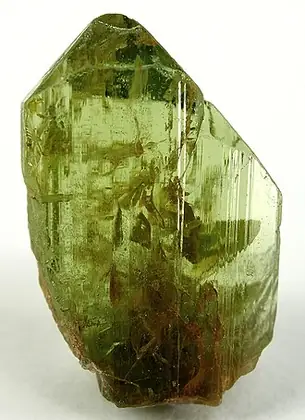
Peridot
Gem olivine, one of very few gemstones that occurs in only one color. It arrives at the surface in basalt and, occasionally, inside pallasite meteorites.
Mohs 6.5-7 · Olive green, Lime
Quartz
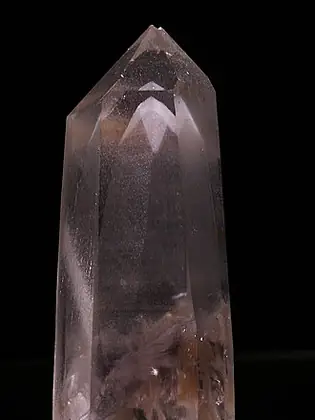
Phantom Quartz
Quartz that paused during growth long enough for a film of chlorite, hematite or clay to settle on its faces, then resumed — leaving a ghost crystal sealed inside the finished one.
Mohs 7 · Colorless, Green
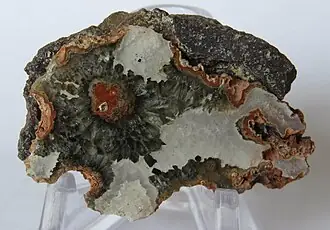
Quartz
Prasiolite
Green quartz. Almost all of it is amethyst that has been heated to about 500°C — a stable, permanent transformation, but a treatment, and any honest seller says so. Genuinely natural prasiolite is rare and paler.
Mohs 7 · Apple green, Pistachio green
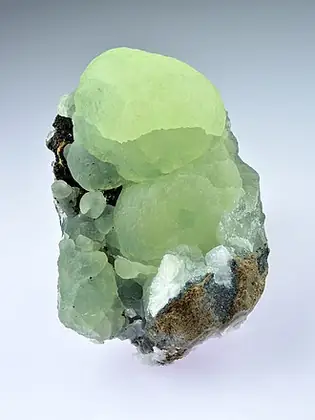
Silicate
Prehnite
Botryoidal green silicate with a soft grape-cluster surface, frequently hosting black epidote needles that make the best specimens.
Mohs 6-6.5 · Green, Yellow-green
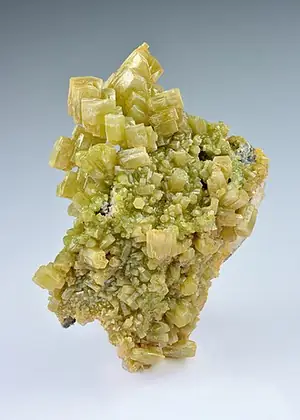
Phosphate
Pyromorphite
Barrel-shaped green hexagonal crystals with a resinous glow, forming dense druses on matrix. Chinese material from Guangxi transformed the market in the 2000s.
Mohs 3.5-4 · Green, Yellow
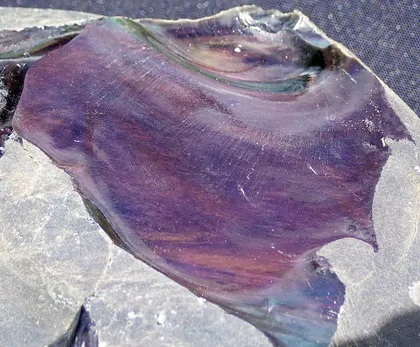
Volcanic glass
Rainbow Obsidian
Black obsidian containing aligned nanoscale magnetite crystals that throw concentric bands of green, gold and violet when the stone is oriented and polished correctly.
Mohs 5-5.5 · Black, Iridescent
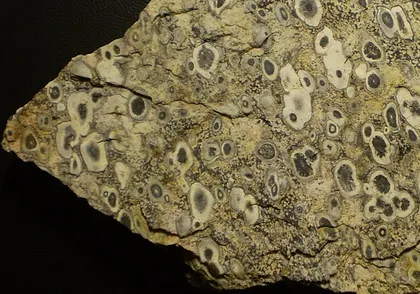
Igneous
Rainforest Rhyolite
Green and cream orbicular rhyolite, sometimes called rainforest jasper, patterned by epidote and quartz-filled gas pockets in an old lava flow.
Mohs 6-7 · Green, Olive green
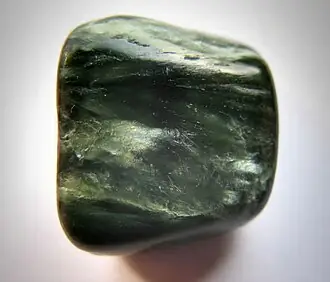
Chlorite
Seraphinite
A deep green clinochlore from one Siberian locality, shot through with silvery feather patterns that look like folded wings. Every piece comes from the Lake Baikal region; there is no second source.
Mohs 2-2.5 · Bottle green, Silver-green
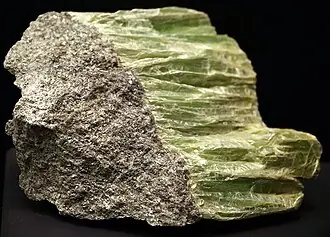
Silicate
Serpentine
A group of magnesium silicates named for their scaled, snake-like patterning. Californian serpentine is the state rock and forms the backbone of the Coast Ranges.
Mohs 3-5 · Green, Yellow-green
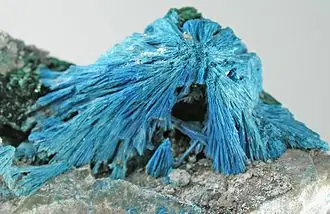
Silicate
Shattuckite
A deep denim-blue copper silicate, usually in fibrous botryoidal crusts and often intergrown with green malachite, blue-green chrysocolla and red cuprite in extraordinary Namibian combination pieces.
Mohs 3.5-4 · Deep blue, Blue
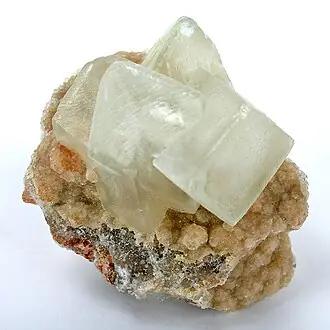
Carbonate
Smithsonite
Botryoidal zinc carbonate with a distinctive satiny lustre, appearing in gentle blue-green, lavender and pink depending on trace metals.
Mohs 4-4.5 · Blue-green, Pink
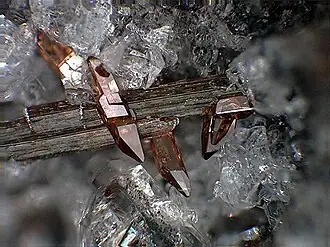
Silicate
Sphene (Titanite)
Titanite, better known as sphene, has dispersion higher than diamond, throwing intense rainbow fire from every cut surface.
Mohs 5-5.5 · Green, Yellow
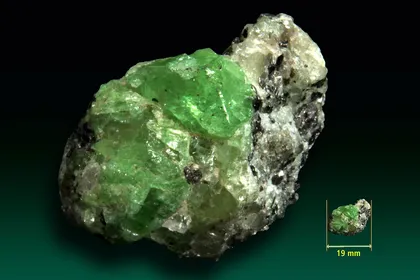
Garnet
Tsavorite Garnet
Vanadium-bearing grossular garnet with an intense, slightly warm green that rivals fine emerald — with none of emerald's fractures, because tsavorite is almost never treated.
Mohs 7-7.5 · Emerald green, Green
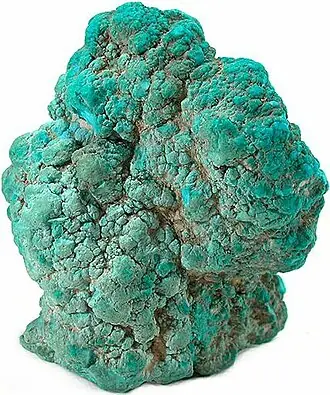
Phosphate
Turquoise
Hydrated copper aluminium phosphate, prized for six thousand years across Persia, Egypt and the American Southwest. Color ranges from Persian sky blue to Sonoran green, often webbed with matrix.
Mohs 5-6 · Blue, Green
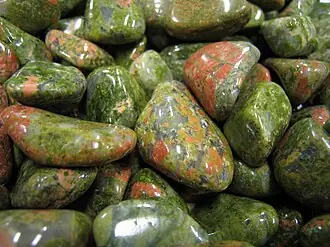
Granite
Unakite
An altered granite of pistachio epidote, salmon feldspar and clear quartz, named for the Unaka Range of the Appalachians.
Mohs 6-7 · Green, Pink
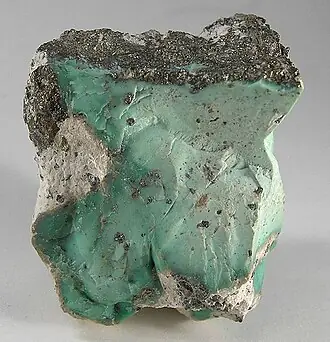
Phosphate
Variscite
A soft apple-green phosphate that looks like green turquoise and forms in the same way, by phosphate-rich water percolating through aluminous rock. Utah nodules with black spiderweb matrix are the prize material.
Mohs 3.5-4.5 · Apple green, Mint
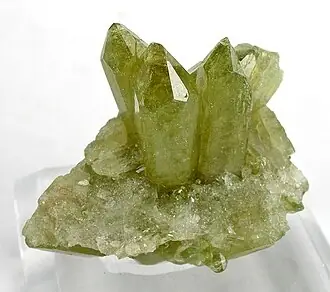
Silicate
Vesuvianite
Also called idocrase. Stubby tetragonal prisms in bottle green to olive, with a resinous lustre; the Jeffrey Mine in Quebec produced the finest gem crystals ever found before it closed.
Mohs 6-7 · Green, Olive green
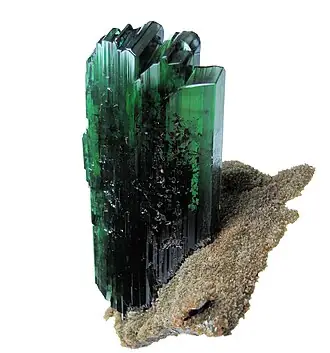
Phosphate
Vivianite
Bladed iron phosphate that grows colorless and darkens through blue-green to near-black as it oxidises in light. Bolivian crystals reach hand size and are among the most dramatic bladed specimens available.
Mohs 1.5-2 · Blue-green, Deep blue
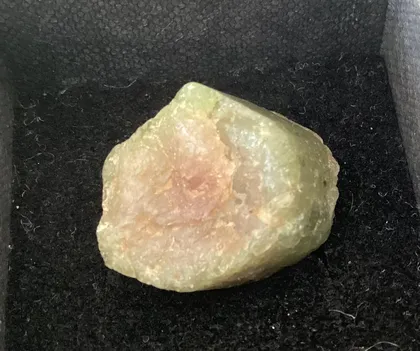
Tourmaline
Watermelon Tourmaline
Tourmaline zoned with a pink core and green rind, sliced across the prism to show the fruit-like cross-section that gives it its name.
Mohs 7-7.5 · Pink, Green
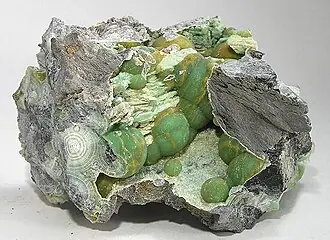
Phosphate
Wavellite
Radiating spheres of green needles that, when broken open, show a starburst cross-section like a cut kiwi. Arkansas material from the Ouachita Mountains is the world's best.
Mohs 3.5-4 · Apple green, Yellow-green
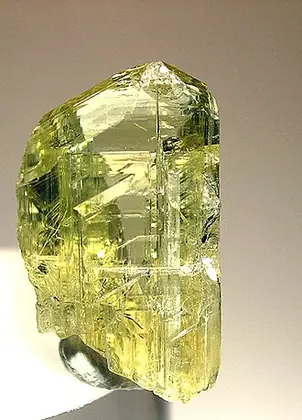
Zoisite
Zoisite (Ruby in Zoisite)
Green zoisite studded with red ruby crystals and black hornblende, sometimes called anyolite. Bold, opaque and excellent for large carvings.
Mohs 6-7 · Green, Pink
Please noteTraditional properties, effects, and aura associations are shared for cultural, historical, and personal-interest reasons only. They are folklore, not medicine. Nothing here is medical, psychological, or financial advice, and no stone is intended to diagnose, treat, cure, or prevent any condition. Please see a qualified professional for health concerns.