Tourmaline

Indicolite Tourmaline

Blue elbaite, the scarcest common-market tourmaline color. Runs from a teal-leaning steel blue to a deep ink, often shading into green along the crystal.
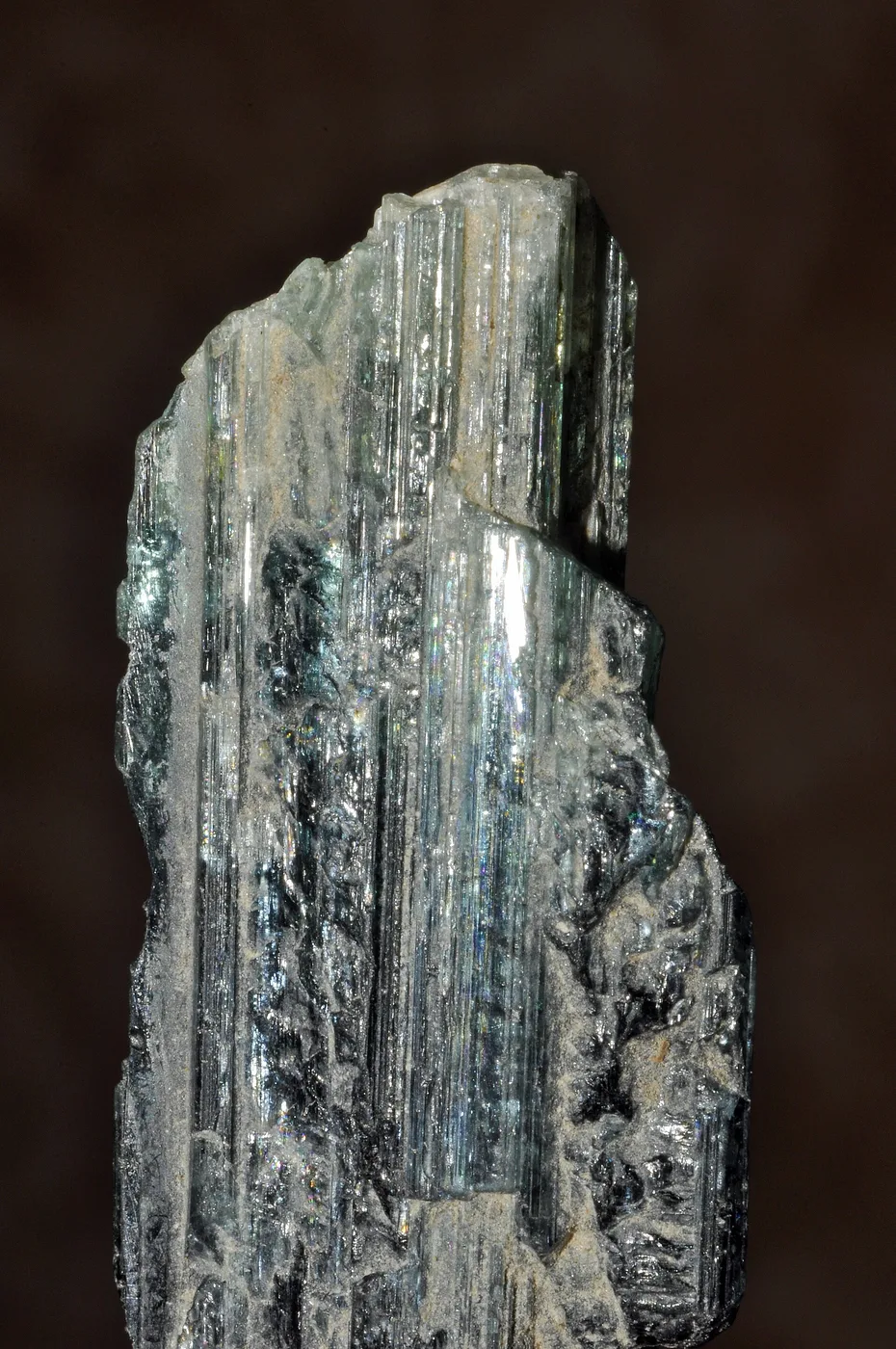
Indicolite Tourmaline — mineral specimen
Reference photograph: Parent Géry, CC0 · source. Specimens in the shop vary.

Judging quality

Strong dichroism: turning the stone shows near-black down the c-axis and blue across it. Well-cut stones are oriented to hide that dark direction.

Care

Durable in wear; avoid thermal shock.

History & lore

Afghan Paprok material of the 1970s set the standard for gem blue tourmaline and is still referenced in the trade.

Cultural history, recorded as tradition rather than as medical or scientific claim.

Common questions about Indicolite Tourmaline

What is Indicolite Tourmaline?
Blue elbaite, the scarcest common-market tourmaline color. Runs from a teal-leaning steel blue to a deep ink, often shading into green along the crystal.
How hard is Indicolite Tourmaline and what is it made of?
Indicolite Tourmaline is a Tourmaline-family mineral with the composition Na(Li,Al)3Al6(BO3)3Si6O18(OH)4. It crystallizes in the trigonal system and rates 7-7.5 on the Mohs hardness scale. It occurs in blue, deep blue, blue-green.
Where does Indicolite Tourmaline come from?
Notable localities for Indicolite Tourmaline include Brazil, Afghanistan, Namibia, Madagascar.
How do you tell good Indicolite Tourmaline from filler?
Strong dichroism: turning the stone shows near-black down the c-axis and blue across it. Well-cut stones are oriented to hide that dark direction.
How do you care for Indicolite Tourmaline?
Durable in wear; avoid thermal shock.

See it in person

Photographs only go so far

Both rooms are open six days a week, and there is always someone happy to pull pieces out of the case so you can compare them under the light.

Plan a visit
Share Indicolite Tourmaline