The crystal encyclopedia
30 of 218
Blue throat-stones and the vivid material makers keep on the bench.
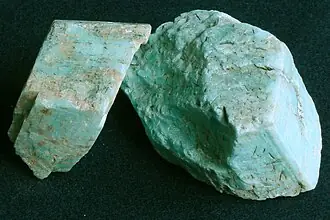
Feldspar
Amazonite
Blue-green microcline feldspar, colored by trace lead. Colorado crystals grown alongside smoky quartz are among the most striking mineral specimens produced in North America.
Mohs 6-6.5 · Turquoise, Green
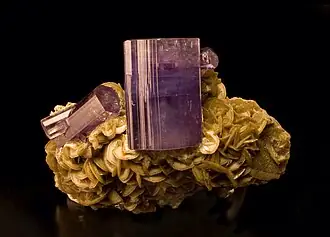
Phosphate
Apatite
The mineral of bone and tooth enamel, and a gem in its own right. Neon blue-green Madagascan apatite is one of the most electric colors in the mineral kingdom.
Mohs 5 · Blue, Green
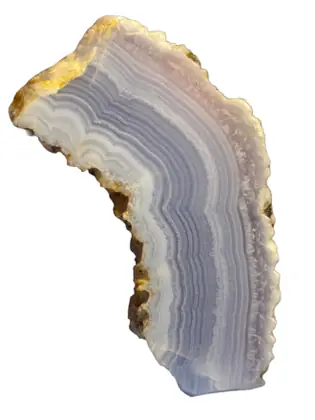
Chalcedony
Blue Lace Agate
Powder-blue banded chalcedony threaded with white lace, from a single small Namibian deposit that has been effectively mined out — which is why good material now costs multiples of what it did a decade ago.
Mohs 6.5-7 · Pale blue, Sky blue
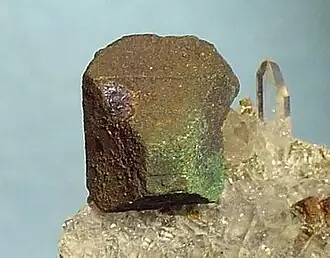
Sulfide
Bornite
Copper iron sulfide that tarnishes rapidly from bronze to deep blue and purple, giving it the same peacock nickname as chalcopyrite.
Mohs 3-3.25 · Bronze, Iridescent
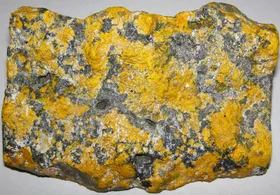
Sedimentary
Bumblebee Stone
Banded yellow, orange and black material from a live volcanic fumarole field in Java. Sold as 'bumblebee jasper', but it is not a jasper at all — it is volcanic sediment cemented with sulfur, calcite and arsenic minerals.
Mohs 4-5 · Yellow, Black
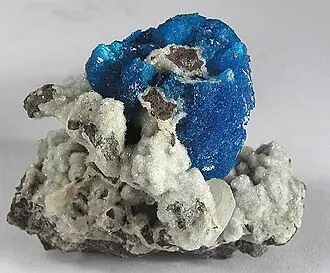
Silicate
Cavansite
Vivid blue rosettes of calcium vanadium silicate that grow in the basalt quarries near Pune, almost always perched on white stilbite or heulandite.
Mohs 3-4 · Electric blue
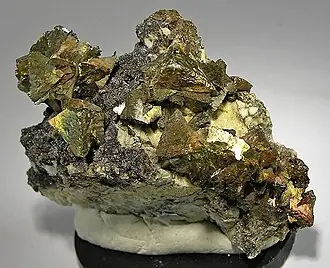
Sulfide
Chalcopyrite (Peacock Ore)
Copper iron sulfide whose tarnish film refracts into peacock blues, purples and greens. Most 'peacock ore' sold has been acid-treated to intensify the effect.
Mohs 3.5-4 · Gold, Iridescent
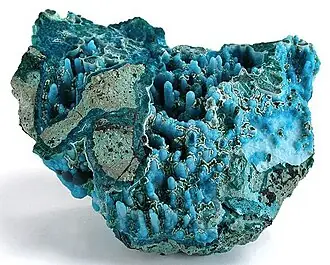
Silicate
Chrysocolla
A soft, hydrated copper silicate in vivid blue-green. On its own it is too fragile to work, so gem material is usually chrysocolla in chalcedony, called gem silica.
Mohs 2-4 · Blue-green, Cyan
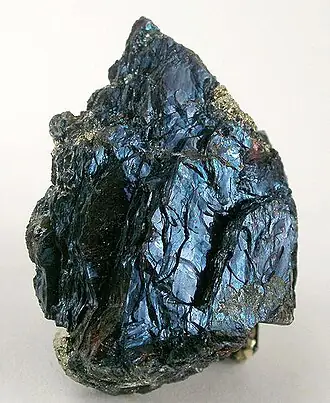
Sulfide
Covellite
Indigo copper sulfide with a peacock iridescence of purple, blue and bronze across its metallic plates. Butte, Montana produced crystallised specimens that have never been matched.
Mohs 1.5-2 · Deep blue, Iridescent
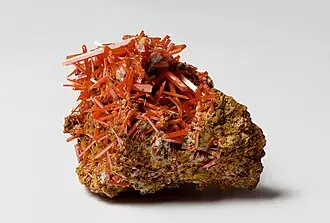
Chromate
Crocoite
Tangerine-orange lead chromate in hollow sprays of hair-fine prisms. Tasmanian Dundas material is the world standard and among the most photographed minerals in existence.
Mohs 2.5-3 · Orange, Red
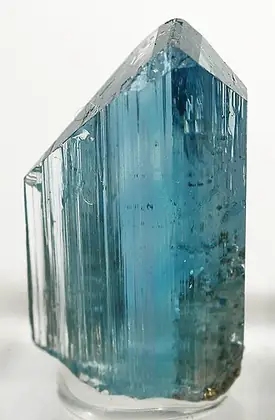
Silicate
Euclase
A collector's gem in soft aquamarine blue, notoriously difficult to cut because of perfect cleavage — the name means 'easily broken'. Colombian crystals from the emerald belt are the finest blue known.
Mohs 7.5 · Pale blue, Blue
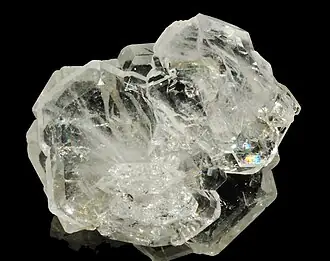
Beryl
Goshenite
Colorless beryl — the pure end member with no coloring trace elements at all. It is the parent of every other beryl variety and makes an unusually crisp, clean faceted stone.
Mohs 7.5-8 · Colorless, Clear
Silicate
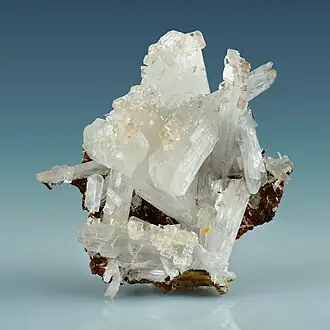
Hemimorphite
Zinc silicate that forms both bladed crystal sprays and soft blue botryoidal crusts. The Chinese blue material is among the most beautiful secondary zinc minerals.
Mohs 4.5-5 · Blue, Colorless
Tourmaline
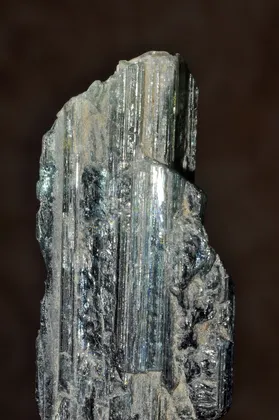
Indicolite Tourmaline
Blue elbaite, the scarcest common-market tourmaline color. Runs from a teal-leaning steel blue to a deep ink, often shading into green along the crystal.
Mohs 7-7.5 · Blue, Deep blue
Silicate
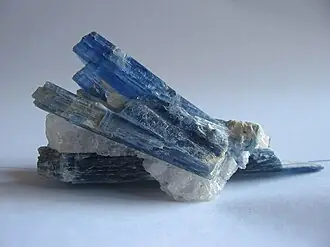
Kyanite
A remarkable mineral with two different hardnesses in one crystal: about 4.5 along the blade and 7 across it. Blue blades from Brazil and Nepal are the classic specimen.
Mohs 4.5-7 · Blue, Black
Rock (lazurite)
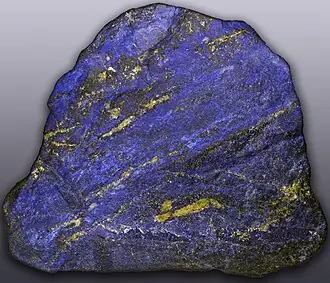
Lapis Lazuli
A rock rather than a single mineral: deep blue lazurite with white calcite and flecks of golden pyrite. The Sar-e-Sang mines of Badakhshan have supplied the world for over six thousand years.
Mohs 5-5.5 · Blue, Gold
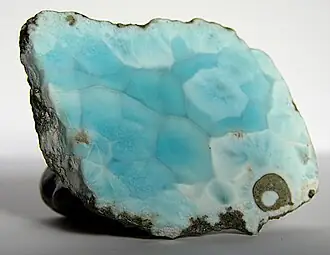
Pectolite
Larimar
Blue pectolite found in exactly one place on earth: a single mountainside in the Dominican Republic. Volcanic in origin, its patterning looks like sunlight on shallow Caribbean water.
Mohs 4.5-5 · Sky blue, White
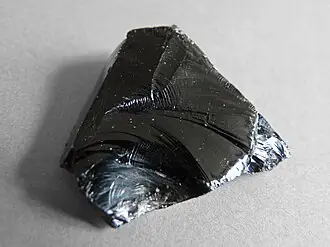
Volcanic glass
Obsidian
Not a mineral at all but volcanic glass, cooled too quickly for crystals to form. Varieties include snowflake, mahogany, sheen, rainbow and the translucent Apache tear.
Mohs 5-5.5 · Black, Mahogany
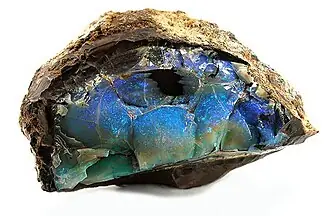
Mineraloid
Opal
Hydrated silica whose spheres diffract light into shifting play-of-color. Black opal from Lightning Ridge is the most valuable; Ethiopian Welo opal is the great recent discovery.
Mohs 5.5-6.5 · Play-of-color, White
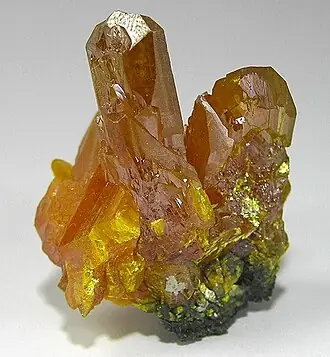
Sulfide
Orpiment
Arsenic trisulfide in sheaves of golden foliated blades with a resinous to pearly flash. It usually grows alongside realgar, the pair making one of the most striking red-and-gold associations in mineralogy.
Mohs 1.5-2 · Golden, Yellow
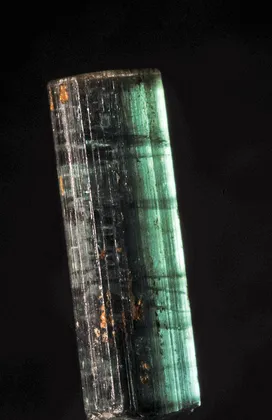
Tourmaline
Paraíba Tourmaline
Copper-bearing tourmaline with a neon blue-green glow unlike any other gem. Brazilian material from the original 1980s Paraíba workings commands a substantial premium over the chemically identical African stones.
Mohs 7-7.5 · Cyan, Turquoise
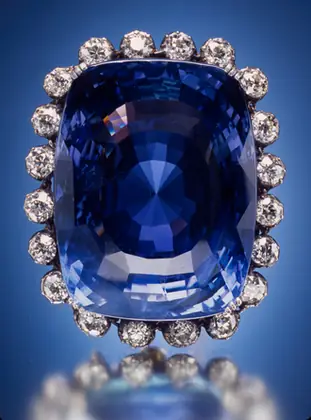
Corundum
Sapphire
Every color of gem corundum other than red. Blue comes from iron and titanium; the pink-orange padparadscha is the rarest and most coveted.
Mohs 9 · Blue, Yellow
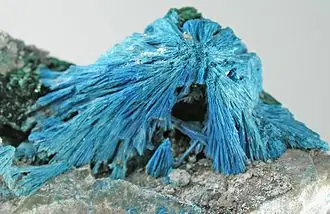
Silicate
Shattuckite
A deep denim-blue copper silicate, usually in fibrous botryoidal crusts and often intergrown with green malachite, blue-green chrysocolla and red cuprite in extraordinary Namibian combination pieces.
Mohs 3.5-4 · Deep blue, Blue
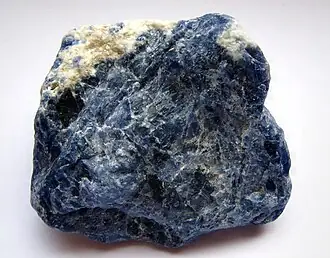
Feldspathoid
Sodalite
Royal blue feldspathoid streaked with white calcite veining. Often confused with lapis, but sodalite lacks pyrite and reads more violet.
Mohs 5.5-6 · Blue, White
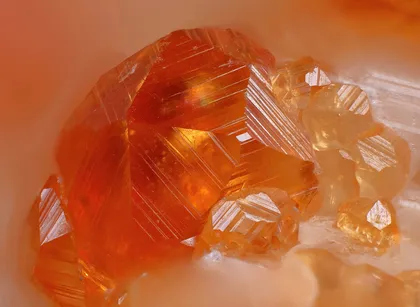
Garnet
Spessartine Garnet
Manganese garnet in a vivid mandarin orange. Namibian material from the Kunene River gave the trade name 'mandarin garnet' in the 1990s; Chinese crystals from Fujian are collectors' pieces on smoky quartz matrix.
Mohs 7-7.5 · Orange, Amber
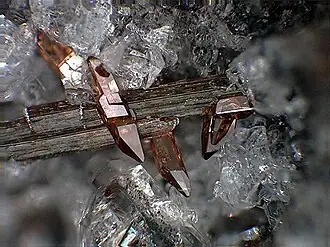
Silicate
Sphene (Titanite)
Titanite, better known as sphene, has dispersion higher than diamond, throwing intense rainbow fire from every cut surface.
Mohs 5-5.5 · Green, Yellow
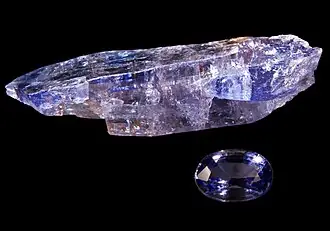
Zoisite
Tanzanite
Blue-violet zoisite found in a single four-square-mile stretch of northern Tanzania. Almost all material is heat-treated to convert brownish rough into blue.
Mohs 6-7 · Violet, Blue
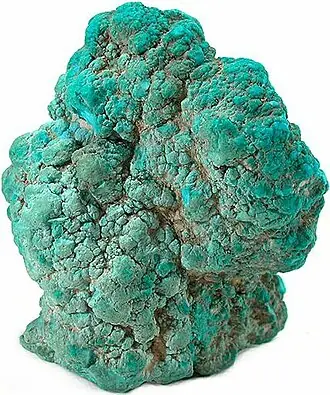
Phosphate
Turquoise
Hydrated copper aluminium phosphate, prized for six thousand years across Persia, Egypt and the American Southwest. Color ranges from Persian sky blue to Sonoran green, often webbed with matrix.
Mohs 5-6 · Blue, Green
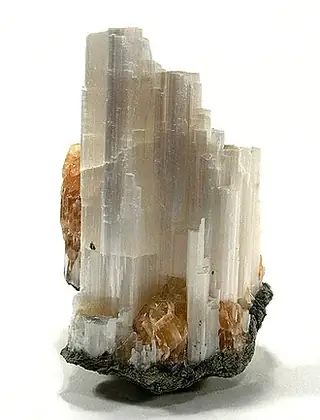
Borate
Ulexite
'TV rock' — parallel fibres act as natural optical fibres and project an image from the base of a cut slab to its polished top, so text under the stone appears to float on its surface.
Mohs 2-2.5 · White, Colorless
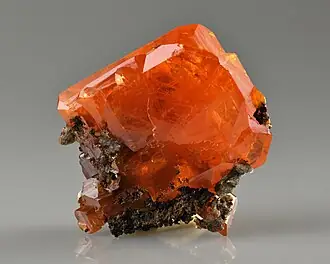
Molybdate
Wulfenite
Thin tabular crystals like stained glass windows, ranging from butterscotch yellow to the legendary deep red of Arizona's Red Cloud Mine.
Mohs 2.75-3 · Orange, Yellow
Please noteTraditional properties, effects, and aura associations are shared for cultural, historical, and personal-interest reasons only. They are folklore, not medicine. Nothing here is medical, psychological, or financial advice, and no stone is intended to diagnose, treat, cure, or prevent any condition. Please see a qualified professional for health concerns.