Silicate

Euclase

A collector's gem in soft aquamarine blue, notoriously difficult to cut because of perfect cleavage — the name means 'easily broken'. Colombian crystals from the emerald belt are the finest blue known.
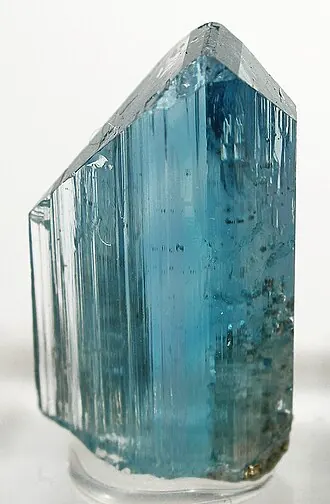
Euclase — mineral specimen
Reference photograph: Robert M. Lavinsky, CC BY-SA 3.0 · source. Specimens in the shop vary.

Judging quality

Slender monoclinic prisms with brilliant faces; cleavage flashes show as internal mirror planes. Any faceted stone is the work of a specialist.

Care

Cleavage is perfect and unforgiving. Store padded and alone; never ultrasonic.

History & lore

René Just Haüy named it in 1792 after breaking a crystal while examining it.

Cultural history, recorded as tradition rather than as medical or scientific claim.

Common questions about Euclase

What is Euclase?
A collector's gem in soft aquamarine blue, notoriously difficult to cut because of perfect cleavage — the name means 'easily broken'. Colombian crystals from the emerald belt are the finest blue known.
How hard is Euclase and what is it made of?
Euclase is a Silicate-family mineral with the composition BeAlSiO4(OH). It crystallizes in the monoclinic system and rates 7.5 on the Mohs hardness scale. It occurs in pale blue, blue, colorless.
Where does Euclase come from?
Notable localities for Euclase include Colombia (Chivor), Brazil (Ouro Preto), Zimbabwe, Tanzania.
How do you tell good Euclase from filler?
Slender monoclinic prisms with brilliant faces; cleavage flashes show as internal mirror planes. Any faceted stone is the work of a specialist.
How do you care for Euclase?
Cleavage is perfect and unforgiving. Store padded and alone; never ultrasonic.

See it in person

Photographs only go so far

Both rooms are open six days a week, and there is always someone happy to pull pieces out of the case so you can compare them under the light.

Plan a visit
Share Euclase