Judging quality
Fine obsidian is free of gas bubbles and takes a flawless mirror polish. Rainbow obsidian must be cut at the correct angle to reveal its sheen — badly oriented cuts show nothing.
Volcanic glass
Not a mineral at all but volcanic glass, cooled too quickly for crystals to form. Varieties include snowflake, mahogany, sheen, rainbow and the translucent Apache tear.
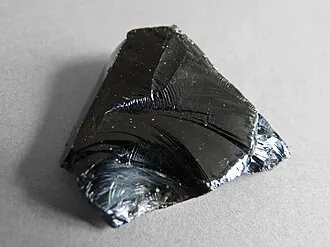
Fine obsidian is free of gas bubbles and takes a flawless mirror polish. Rainbow obsidian must be cut at the correct angle to reveal its sheen — badly oriented cuts show nothing.
Softer than quartz and will scratch. Store separately and clean with a soft cloth.
Obsidian blades from Mesoamerica and Anatolia are among the sharpest edges ever produced by hand, and obsidian mirrors were used for divination in Aztec practice.
Cultural history, recorded as tradition rather than as medical or scientific claim.
See it in person
Both rooms are open six days a week, and there is always someone happy to pull pieces out of the case so you can compare them under the light.