The crystal encyclopedia
71 of 218
Shielding stones — obsidian, tourmaline, hematite and the grey metals.
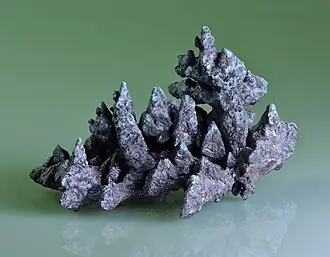
Sulfide
Acanthite
Silver sulfide, the principal ore of silver, in sooty black crystals with a metallic sheen. Mexican specimens often intergrow with native silver wires.
Mohs 2-2.5 · Black, Lead grey
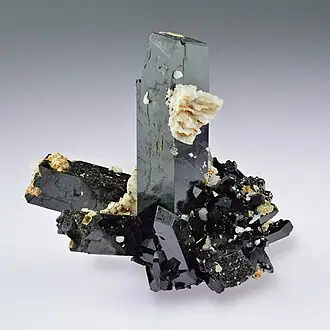
Pyroxene
Aegirine
Long, sharply striated black-green prisms, most famously from Mount Malosa in Malawi, where they grow with orange zircon and smoky quartz in some of the most photogenic combination specimens of recent decades.
Mohs 6-6.5 · Black, Black-green
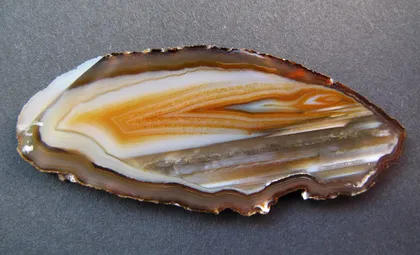
Chalcedony
Agate
Banded chalcedony, formed as silica-rich fluid seeped in layers into volcanic cavities. Every agate is a cross-section of its own slow filling, which is why no two slices repeat.
Mohs 6.5-7 · Banded, Grey
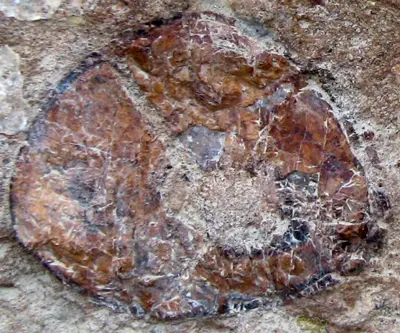
Fossil
Agatised Dinosaur Bone
Jurassic sauropod bone in which the marrow cells have been replaced cell by cell with agate and jasper — 'gembone'. The best Utah material shows red and yellow cells outlined in black, holding a mirror polish.
Mohs 6.5-7 · Red, Yellow
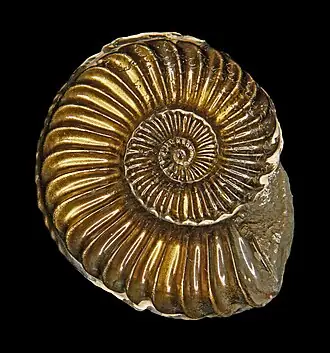
Fossil
Ammonite
The coiled shells of cephalopods that vanished with the dinosaurs. Ammolite, the iridescent Albertan variety, is one of only a handful of organic gemstones.
Mohs 3.5-4 · Brown, Iridescent
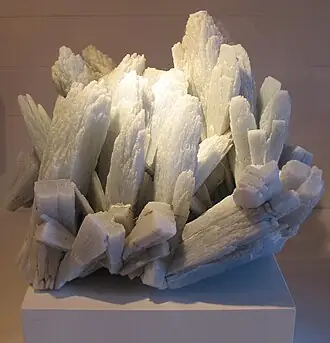
Sulfate
Angelite (Anhydrite)
Blue anhydrite — gypsum without its water. Left damp long enough it will slowly reabsorb water and revert toward gypsum.
Mohs 3.5 · Pale blue, Grey
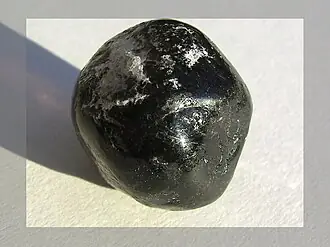
Volcanic glass
Apache Tears
Rounded nodules of obsidian weathered free from the white perlite that once enclosed them. Held to a light they glow smoky translucent brown at the edges.
Mohs 5-5.5 · Black, Brown
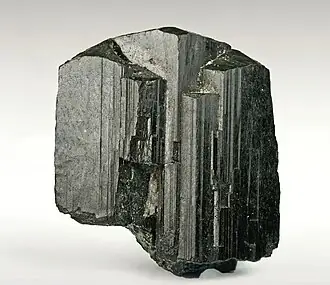
Amphibole
Arfvedsonite
A dark sodium amphibole that carries a startling blue-to-gold flash along its cleavage — sold widely and inaccurately as 'nuummite', which it superficially resembles.
Mohs 5-6 · Black, Iridescent
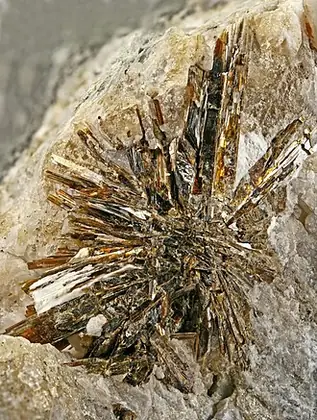
Silicate
Astrophyllite
Bronze-gold blades radiating in star-bursts through dark nepheline syenite. The name means star leaf, and a good slab looks like a night sky of gold flares.
Mohs 3-4 · Bronze, Golden
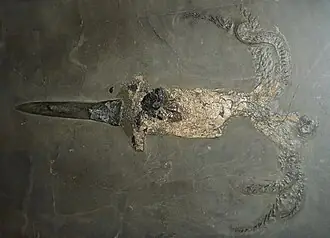
Fossil
Belemnite
The bullet-shaped internal skeleton of an extinct squid relative. Cut and polished, the calcite shows a radiating fibrous structure from a central apical line.
Mohs 3-4 · Brown, Amber
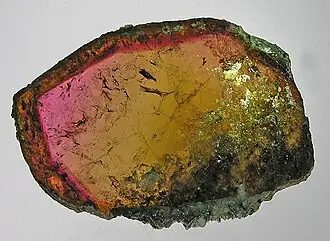
Tourmaline
Black Tourmaline (Schorl)
Schorl, the iron-rich end of the tourmaline family, grows in deeply striated black prisms with a distinctive rounded-triangular cross-section.
Mohs 7-7.5 · Black
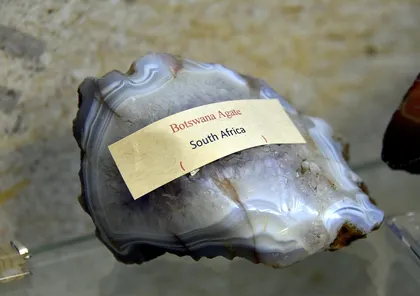
Chalcedony
Botswana Agate
Fine grey, pink and lavender banding, often with a tiny druzy quartz eye at the centre. Softer and more muted than Mexican agates, and quietly one of the most beautiful.
Mohs 6.5-7 · Grey, Blush
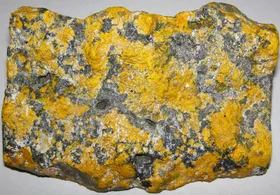
Sedimentary
Bumblebee Stone
Banded yellow, orange and black material from a live volcanic fumarole field in Java. Sold as 'bumblebee jasper', but it is not a jasper at all — it is volcanic sediment cemented with sulfur, calcite and arsenic minerals.
Mohs 4-5 · Yellow, Black
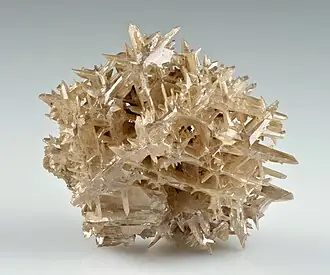
Carbonate
Cerussite
Lead carbonate with adamantine, almost diamond-like lustre, forming twinned snowflake and reticulated networks. Tsumeb specimens are legendary.
Mohs 3-3.5 · Colorless, White
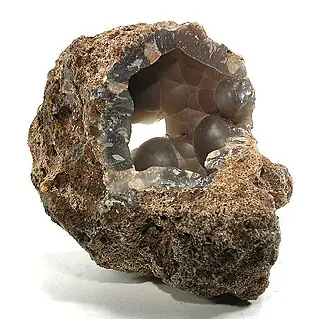
Chalcedony
Chalcedony
Microcrystalline quartz without banding — the parent material of agate, carnelian and jasper. The Turkish and Namibian blue-grey material has a milky glow like frozen smoke.
Mohs 6.5-7 · Blue, White
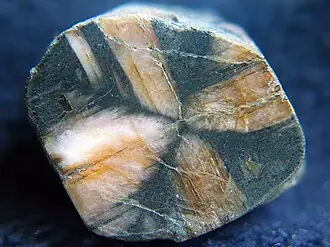
Silicate
Chiastolite
Andalusite grown with graphite inclusions arranged in a dark cross that appears when the crystal is sliced across. Every cross is slightly different, and the best show four crisp arms with no smearing.
Mohs 6.5-7.5 · Brown, Black
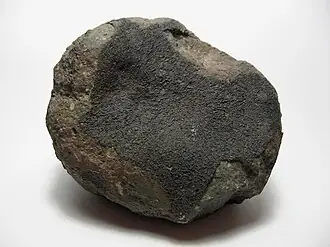
Meteorite
Chondrite Meteorite
The most common meteorite type and the oldest rock anyone can hold: stony material containing chondrules, millimetre droplets of melt that condensed 4.56 billion years ago before the planets existed.
Mohs 5-6 · Grey, Brown
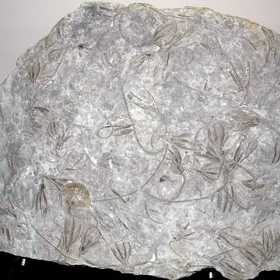
Fossil
Crinoid
Sea lilies — stalked echinoderms that carpeted Palaeozoic sea beds. Most material is disarticulated stem segments in limestone; complete crowns with the feeding arms intact are dramatically rarer and prepared over many hours.
Mohs 3-4 · Cream, Tan
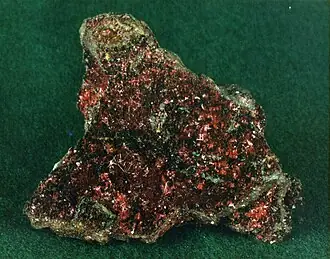
Oxide
Cuprite
Copper oxide in deep garnet-red cubes and octahedra that glow ruby when back-lit. Namibian Onganja crystals from the 1970s are legendary; the hair-like variety chalcotrichite forms scarlet velvet mats.
Mohs 3.5-4 · Red, Pink-red
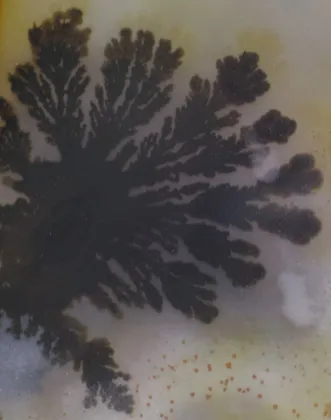
Chalcedony
Dendritic Agate
Translucent chalcedony containing black fern-like dendrites of manganese oxide that look exactly like plants but are pure mineral growth along fractures.
Mohs 6.5-7 · White, Colorless
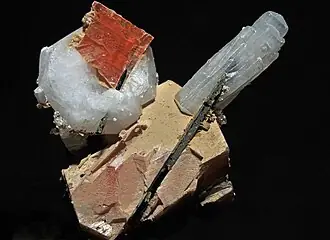
Mineraloid
Dendritic Opal
Common opal without play-of-color, patterned instead by black manganese dendrites branching through pale cream host — sometimes called Merlinite in the trade.
Mohs 5.5-6.5 · Cream, Black
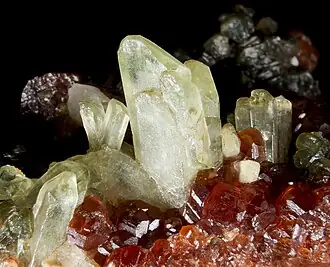
Pyroxene
Diopside
Chrome diopside from Siberia is a deep forest green rivalling emerald; star diopside from India shows a four-rayed black star.
Mohs 5.5-6.5 · Green, Black
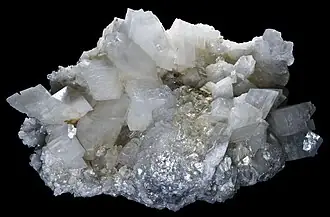
Carbonate
Dolomite
A calcium magnesium carbonate that grows in saddle-shaped curved rhombs, often forming the sparkling white matrix beneath more colorful minerals.
Mohs 3.5-4 · White, Pink
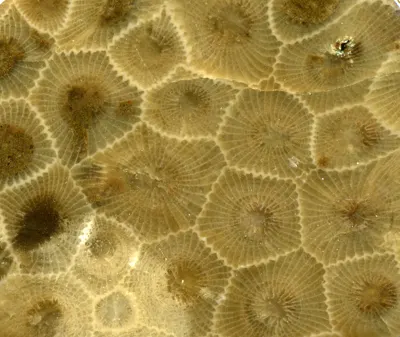
Fossil
Fossil Coral
Colonial coral replaced by agate or chalcedony, preserving the flower-like corallite pattern as a permanent stone. Florida agatised coral shows crisp white florets in grey; Petoskey stone from Michigan is a Devonian rugose coral polished to a honeycomb.
Mohs 6.5-7 · Tan, Grey
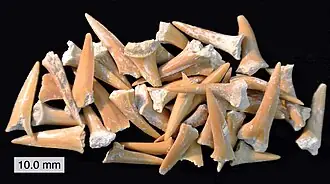
Fossil
Fossil Shark Tooth
Sharks shed teeth continuously, which is why they are the most abundant vertebrate fossil on earth. Color comes from the minerals in the burial sediment — river-tumbled Florida teeth run jet black, Moroccan phosphate teeth tan and grey.
Mohs 4.5-5 · Black, Grey
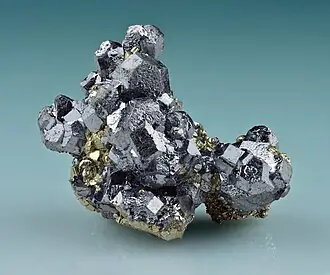
Sulfide
Galena
Lead sulfide that grows in flawless silver-grey cubes with a bright metallic lustre and remarkable weight.
Mohs 2.5-2.75 · Lead grey
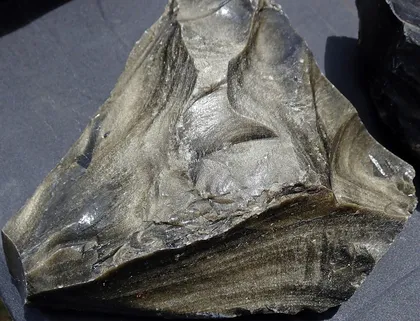
Volcanic glass
Gold & Silver Sheen Obsidian
Obsidian with a metallic golden or silver shimmer produced by a layer of aligned microscopic gas bubbles reflecting light in unison.
Mohs 5-5.5 · Black, Golden
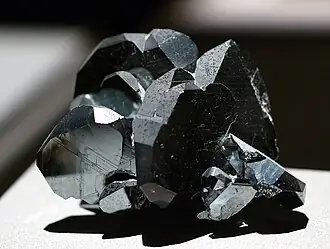
Oxide
Hematite
Iron oxide with a metallic mirror surface and a signature red-brown streak. Botryoidal 'kidney ore' from Cumbria and iridescent rainbow hematite from Brazil are the collector forms.
Mohs 5-6.5 · Silver, Black
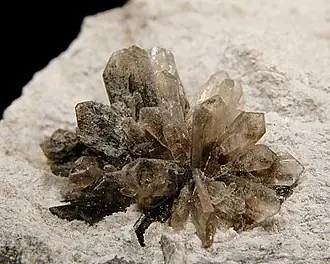
Borate
Howlite
Chalky white borate with grey webbing, porous enough to take dye perfectly — which is why most fake turquoise on the market is dyed howlite.
Mohs 3.5 · White, Grey
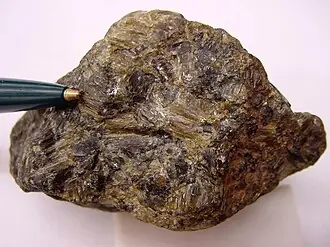
Pyroxene
Hypersthene
A dark orthopyroxene with a metallic bronze-to-silver sheen from fine exsolution lamellae. Polished Madagascan cabochons show a moving silvery streak against near-black.
Mohs 5-6 · Black, Bronze
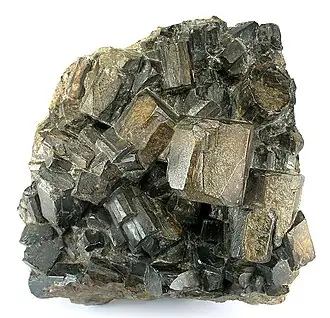
Cordierite
Iolite
Strongly pleochroic cordierite that reads violet-blue from one direction and pale yellow-grey from another, all within a single crystal.
Mohs 7-7.5 · Violet-blue, Grey
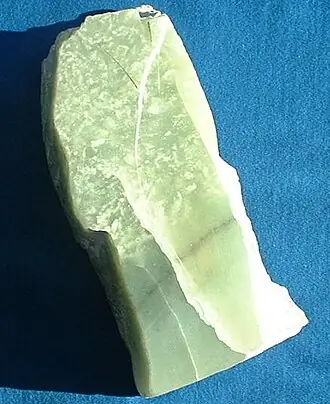
Amphibole
Jade (Nephrite)
One of two minerals sold as jade. Nephrite is an interlocking amphibole felt, which makes it the toughest natural stone known — far harder to break than to scratch.
Mohs 6-6.5 · Green, Cream
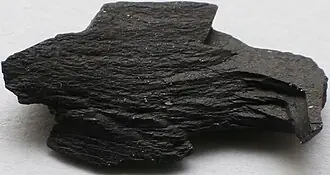
Organic
Jet
Fossilised driftwood compressed into a dense, velvet-black coal that takes a mirror polish and weighs almost nothing in the hand. Whitby jet, formed from Jurassic monkey-puzzle wood, is the historical standard and has been carved in Yorkshire for two thousand years. Hard jet is compact and glassy; soft jet cracks with age.
Mohs 2.5-4 · Black
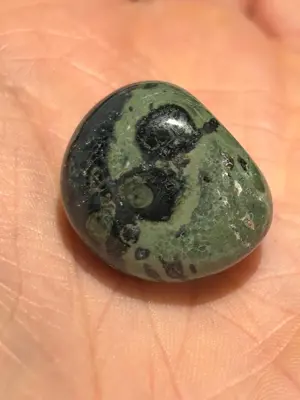
Sedimentary
Kambaba Jasper
Dark green and black orbicular stone built from fossilised cyanobacterial colonies — technically a stromatolite rather than a jasper. The swirling eyes give it an unmistakable reptilian look.
Mohs 6-7 · Bottle green, Black
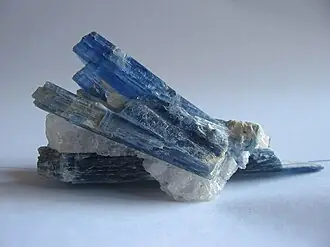
Silicate
Kyanite
A remarkable mineral with two different hardnesses in one crystal: about 4.5 along the blade and 7 across it. Blue blades from Brazil and Nepal are the classic specimen.
Mohs 4.5-7 · Blue, Black
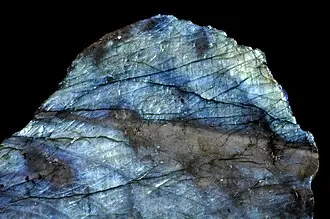
Feldspar
Labradorite
A plagioclase feldspar that hides fire inside dull grey stone. Light striking internal lamellae scatters into blue, gold, green and, in the best pieces, full-spectrum flash.
Mohs 6-6.5 · Grey, Blue
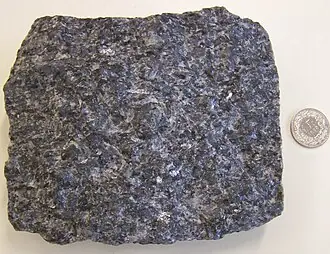
Igneous
Larvikite
Norwegian building stone shot with silvery-blue schiller from feldspar exsolution lamellae — labradorescence in a dark grey rock. Widely used as facade cladding, and quietly one of the most beautiful stones in any city.
Mohs 6-6.5 · Grey, Steel grey
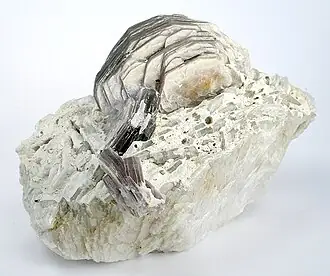
Mica
Lepidolite
Lithium-bearing mica in soft lilac, splitting into flexible sheets. Often intergrown with pink tourmaline in pegmatite pockets.
Mohs 2.5-3 · Lilac, Pink
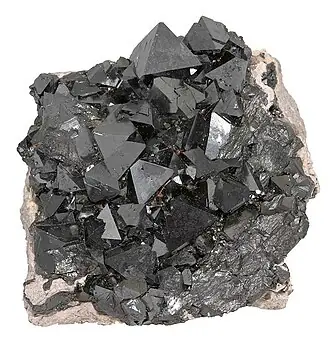
Oxide
Magnetite
The most magnetic naturally occurring mineral. Strongly magnetic pieces are called lodestone and will pick up iron filings unaided.
Mohs 5.5-6.5 · Black
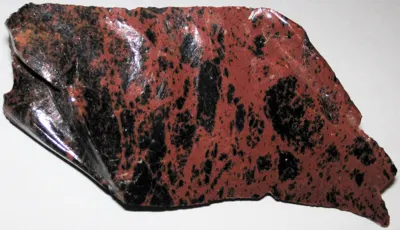
Volcanic glass
Mahogany Obsidian
Obsidian streaked with red-brown iron oxide bands, giving a marbled timber-like figure through the black glass.
Mohs 5-5.5 · Mahogany, Black
Fossil
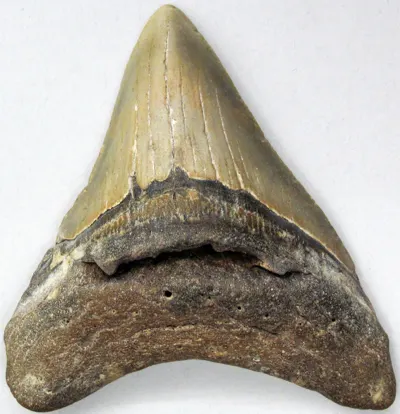
Megalodon Tooth
The tooth of Otodus megalodon, the largest shark that ever lived, extinct around 3.6 million years ago. Teeth run from palm-sized to over seven inches; every extra half inch above five is a substantial jump in rarity and price.
Mohs 4.5-5 · Black, Grey
Feldspar
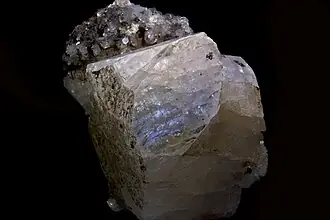
Moonstone
Orthoclase feldspar with a floating blue-white sheen called adularescence, caused by light scattering between microscopic layers of two feldspars.
Mohs 6-6.5 · White, Peach
Fossil
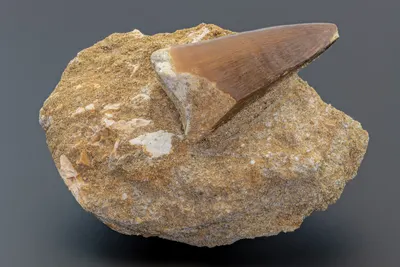
Mosasaur Tooth
The conical, ridged tooth of a Cretaceous marine reptile — a lizard that returned to the sea and grew to seventeen metres. Moroccan phosphate beds supply most of the market, often with root and jaw section intact.
Mohs 4.5-5 · Brown, Black
Element
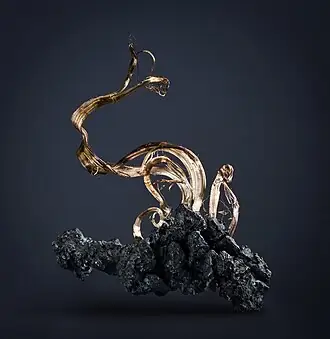
Native Silver
Silver in wires, ropes and herringbone crystal groups. Kongsberg produced the finest wire silver ever mined, and specimens from its 340-year run are museum currency.
Mohs 2.5-3 · Silver, Grey
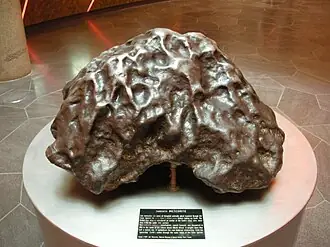
Meteorite
Nickel-Iron Meteorite
Fragments of the shattered cores of early planetesimals: solid iron-nickel that cooled over millions of years, producing the interlocking Widmanstatten pattern revealed by etching.
Mohs 4-5 · Silver, Grey
Metamorphic
Nuummite
One of the oldest gem materials on earth at roughly three billion years — a black amphibole rock threaded with iridescent gold, green and violet flash from intergrown crystal lamellae. Mined by hand from a remote Greenland site with a short seasonal window.
Mohs 5.5-6 · Black, Iridescent
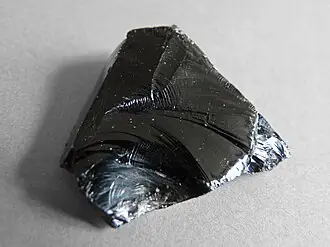
Volcanic glass
Obsidian
Not a mineral at all but volcanic glass, cooled too quickly for crystals to form. Varieties include snowflake, mahogany, sheen, rainbow and the translucent Apache tear.
Mohs 5-5.5 · Black, Mahogany
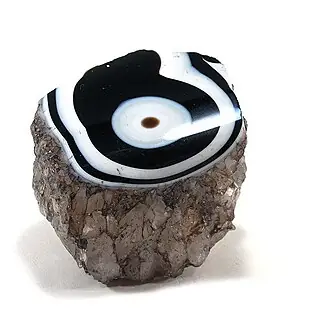
Chalcedony
Onyx
Chalcedony with straight parallel banding. Most 'black onyx' on the market is grey chalcedony dyed black, a practice so old and so standard that it is not considered a deception.
Mohs 6.5-7 · Black, White
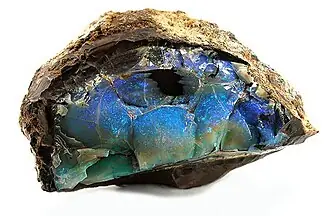
Mineraloid
Opal
Hydrated silica whose spheres diffract light into shifting play-of-color. Black opal from Lightning Ridge is the most valuable; Ethiopian Welo opal is the great recent discovery.
Mohs 5.5-6.5 · Play-of-color, White
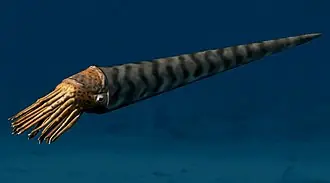
Fossil
Orthoceras
Straight-shelled cephalopods from the Devonian seas, now polished into black limestone plates that read like ink drawings.
Mohs 3-4 · Black, Grey
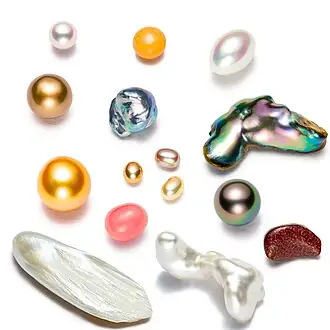
Organic
Pearl
Concentric nacre laid down by a mollusc around an irritant. Almost all pearls on the market are cultured; natural pearls are rare enough to be an auction category of their own.
Mohs 2.5-4 · White, Cream
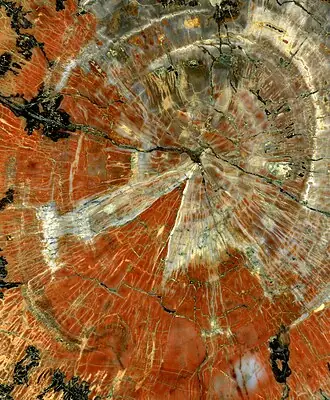
Fossil
Petrified Wood
Ancient wood in which every cell was replaced by silica, preserving growth rings, bark and even insect galleries in solid quartz.
Mohs 6.5-7 · Brown, Red
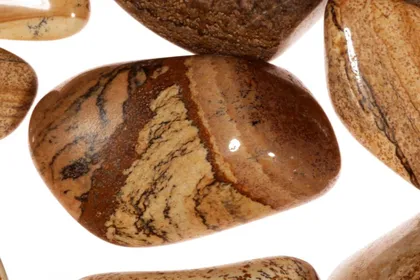
Chalcedony
Picture Jasper
Jasper whose iron staining and sediment layering read as desert landscapes — mesas, dunes, storm skies. Biggs and Bruneau material from the Pacific Northwest are the classics of the type.
Mohs 6.5-7 · Tan, Brown
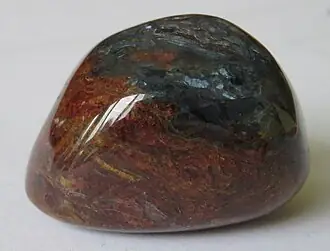
Quartz
Pietersite
A brecciated chatoyant quartz in which fragments of tiger's eye and hawk's eye were shattered and recemented, producing swirling storm-like chatoyancy.
Mohs 6.5-7 · Blue, Gold
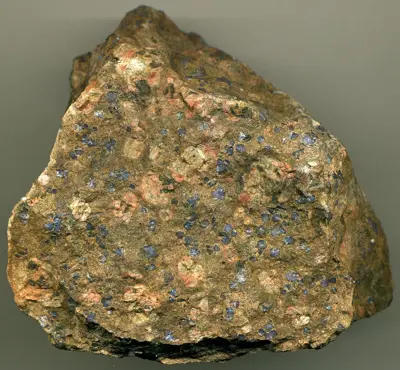
Igneous
Que Sera (Llanite)
A Brazilian rhyolitic rock in soft mottled grey, blue and rose, sold under the trade names que sera and vulcanite. Cuts into calm, cloud-like slabs and spheres.
Mohs 6-7 · Grey, Blue
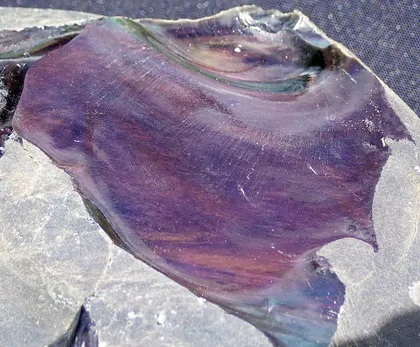
Volcanic glass
Rainbow Obsidian
Black obsidian containing aligned nanoscale magnetite crystals that throw concentric bands of green, gold and violet when the stone is oriented and polished correctly.
Mohs 5-5.5 · Black, Iridescent
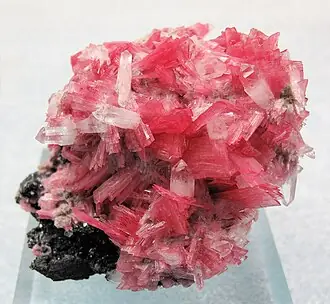
Silicate
Rhodonite
Pink manganese silicate laced with black manganese oxide veining. Harder and far more durable than rhodochrosite, which makes it the better carving stone.
Mohs 5.5-6.5 · Pink, Black
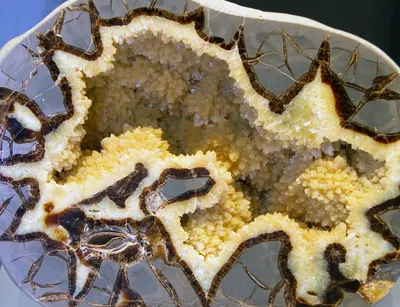
Concretion
Septarian Nodule
Mud concretions that dried and cracked internally, then had the cracks filled with golden calcite and brown aragonite — a fossil record of shrinkage roughly fifty million years old.
Mohs 3-4 · Yellow, Brown
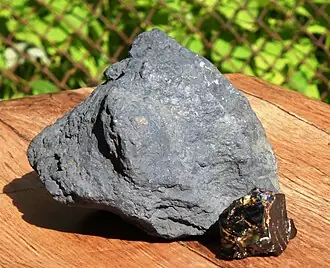
Carbon
Shungite
A non-crystalline carbon rock, roughly two billion years old, found principally around Lake Onega in Russian Karelia. Elite or noble shungite is over ninety percent carbon and has a bright metallic lustre.
Mohs 3.5-4 · Black
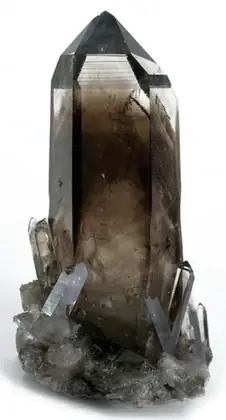
Quartz
Smoky Quartz
Quartz darkened from grey to near-black by natural irradiation of aluminium impurities. Alpine smoky quartz from Swiss and Austrian clefts is among the most sought-after crystal in the world; Scottish cairngorm has been set into ceremonial dress for centuries.
Mohs 7 · Brown, Grey
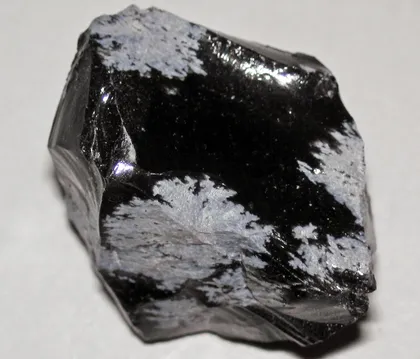
Volcanic glass
Snowflake Obsidian
Black volcanic glass in which grey-white cristobalite spherulites have begun to crystallise out — the first stage of the glass slowly devitrifying over geological time.
Mohs 5-5.5 · Black, White
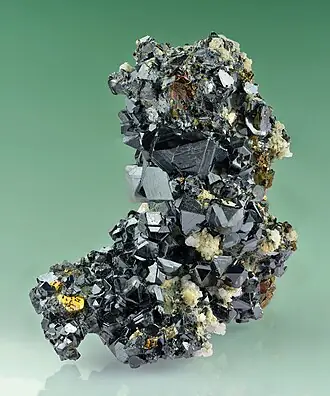
Sulfide
Sphalerite
Zinc sulfide with a dispersion three times higher than diamond, which makes cut honey-colored Spanish sphalerite one of the most fiery gemstones that exists.
Mohs 3.5-4 · Honey, Red
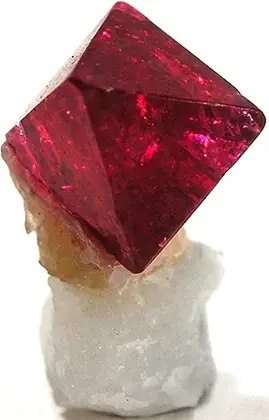
Oxide
Spinel
Long mistaken for ruby, spinel is a distinct mineral with brilliant color, excellent hardness and, crucially, almost no treatment in the trade.
Mohs 7.5-8 · Red, Pink
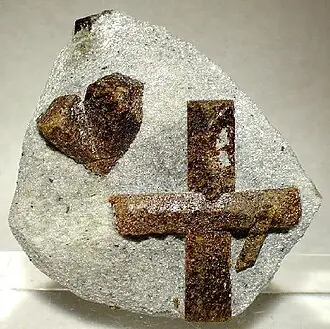
Silicate
Staurolite
Iron aluminium silicate famous for twinning into natural crosses — some at ninety degrees, some at sixty. Russian Kola material gives the crispest right-angle crosses.
Mohs 7-7.5 · Brown, Clove brown
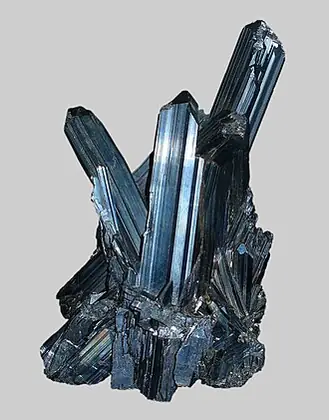
Sulfide
Stibnite
Long steel-grey blades with a brilliant metallic lustre, growing in dramatic radiating sprays. Chinese specimens from Wuning are among the most spectacular mineral objects ever mined.
Mohs 2 · Steel grey
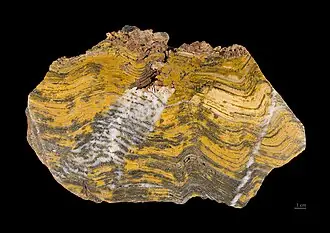
Fossil
Stromatolite
Layered structures built by cyanobacterial mats — the oldest evidence of life on earth, with examples running back 3.5 billion years. The wavy laminations polish into striking banded slabs.
Mohs 3-7 · Banded, Grey
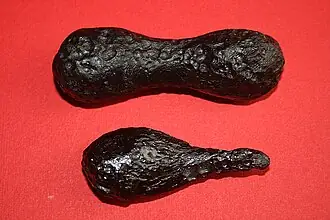
Impactite
Tektite
Terrestrial rock melted and flung into the atmosphere by a large impact, then frozen into glass as it fell. Indochinite tektites carry deep sculpted grooves; australites can retain aerodynamic flanges from atmospheric re-entry.
Mohs 5-6 · Black, Brown
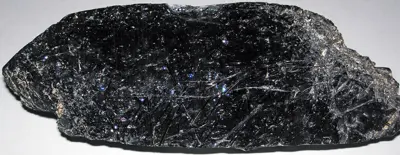
Quartz
Tourmalinated Quartz
Clear quartz shot through with black schorl tourmaline, producing graphic ink-on-glass patterns. Slabs and spheres show the composition best.
Mohs 7 · Colorless, Black
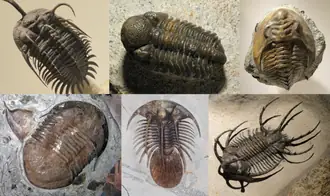
Fossil
Trilobite
Arthropods that ruled the sea floor for nearly 300 million years and left one of the best fossil records on earth. Moroccan Devonian species carry extravagant spines; Russian material from the Baltic is famously three-dimensional and glossy.
Mohs 3-6 · Brown, Black
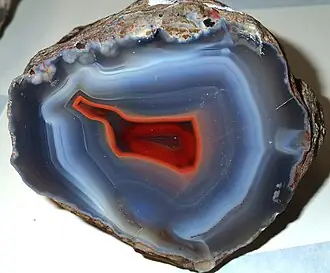
Chalcedony
Turritella Agate
Dark brown agate packed with the spiral shells of freshwater snails — properly Elimia tenera, not Turritella, but the trade name stuck a century ago. Cut faces show the spirals in cross-section like a mosaic.
Mohs 6.5-7 · Brown, Black
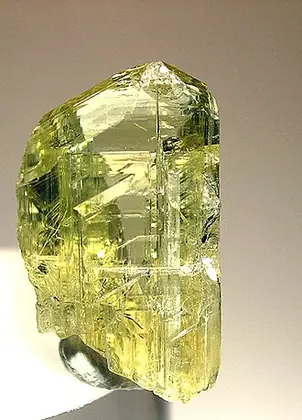
Zoisite
Zoisite (Ruby in Zoisite)
Green zoisite studded with red ruby crystals and black hornblende, sometimes called anyolite. Bold, opaque and excellent for large carvings.
Mohs 6-7 · Green, Pink
Please noteTraditional properties, effects, and aura associations are shared for cultural, historical, and personal-interest reasons only. They are folklore, not medicine. Nothing here is medical, psychological, or financial advice, and no stone is intended to diagnose, treat, cure, or prevent any condition. Please see a qualified professional for health concerns.