Judging quality
Elite shungite is shiny, brittle and light; common black shungite is matte and denser. Both leave a black mark on the hands when raw.
Carbon
A non-crystalline carbon rock, roughly two billion years old, found principally around Lake Onega in Russian Karelia. Elite or noble shungite is over ninety percent carbon and has a bright metallic lustre.
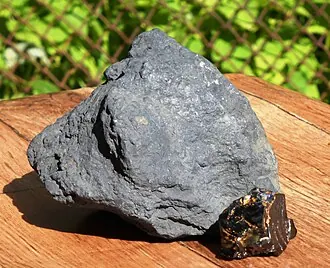
Elite shungite is shiny, brittle and light; common black shungite is matte and denser. Both leave a black mark on the hands when raw.
Sooty when raw. Handle with care around fabric; rinse polished pieces only.
Peter the Great established a spa at the Karelian springs in 1719 on the strength of the local shungite-filtered water.
Cultural history, recorded as tradition rather than as medical or scientific claim.
See it in person
Both rooms are open six days a week, and there is always someone happy to pull pieces out of the case so you can compare them under the light.