Judging quality
Real hematite is heavy, cold and leaves a rust-red line when scraped on unglazed porcelain. Magnetic 'hematite' beads are a manufactured ferrite composite, not the mineral.
Oxide
Iron oxide with a metallic mirror surface and a signature red-brown streak. Botryoidal 'kidney ore' from Cumbria and iridescent rainbow hematite from Brazil are the collector forms.
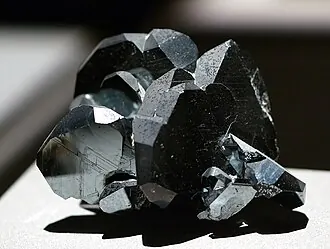
Real hematite is heavy, cold and leaves a rust-red line when scraped on unglazed porcelain. Magnetic 'hematite' beads are a manufactured ferrite composite, not the mineral.
Will rust if left wet. Dry immediately after handling; avoid humidity.
Ground hematite is the red ochre of prehistoric cave painting, used continuously for at least forty thousand years.
Cultural history, recorded as tradition rather than as medical or scientific claim.
See it in person
Both rooms are open six days a week, and there is always someone happy to pull pieces out of the case so you can compare them under the light.