Judging quality
Natural Spanish cubes sit in a marl matrix with mirror-bright faces and fine striations. Beware brassy plated fakes and heavily oiled specimens. Pyrite suns from Illinois are flat radial discs, not cubes.
Sulfide
Iron sulfide that grows in astonishingly perfect cubes, dodecahedra and radiating suns. The Navajun mine in Spain produces cubes so sharp they look machined.
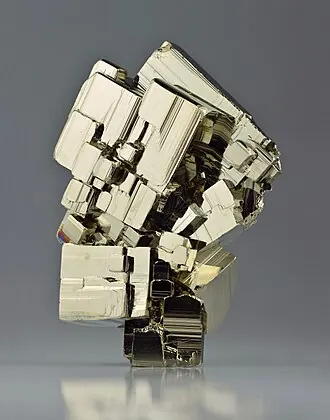
Natural Spanish cubes sit in a marl matrix with mirror-bright faces and fine striations. Beware brassy plated fakes and heavily oiled specimens. Pyrite suns from Illinois are flat radial discs, not cubes.
Can oxidise in humid air, developing a white sulfate bloom. Keep dry, and never store in a sealed damp case.
Its name is from Greek pyr, fire — pyrite struck against steel throws sparks, a use that predates matches by millennia.
Cultural history, recorded as tradition rather than as medical or scientific claim.
See it in person
Both rooms are open six days a week, and there is always someone happy to pull pieces out of the case so you can compare them under the light.