The crystal encyclopedia
36 of 218
Red and iron stones traditionally carried before something difficult.
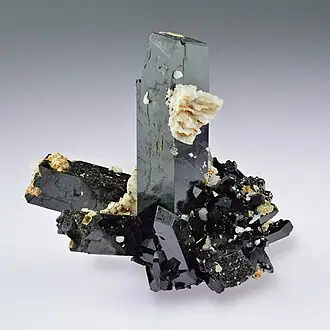
Pyroxene
Aegirine
Long, sharply striated black-green prisms, most famously from Mount Malosa in Malawi, where they grow with orange zircon and smoky quartz in some of the most photogenic combination specimens of recent decades.
Mohs 6-6.5 · Black, Black-green
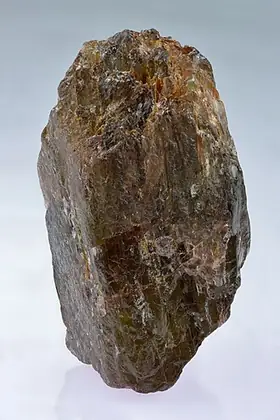
Silicate
Andalusite
A strongly pleochroic gem that shows green, gold and red-brown simultaneously from different directions — cutters deliberately orient it to display all three at once rather than trying to eliminate them.
Mohs 7-7.5 · Olive green, Brown
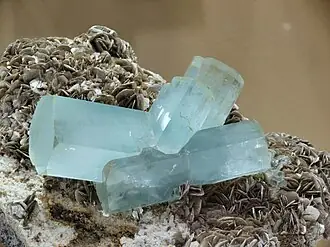
Beryl
Aquamarine
Blue beryl, colored by iron, and the same mineral species as emerald and morganite. Crystals grow as long hexagonal prisms with flat terminations and can reach enormous size.
Mohs 7.5-8 · Blue, Blue-green
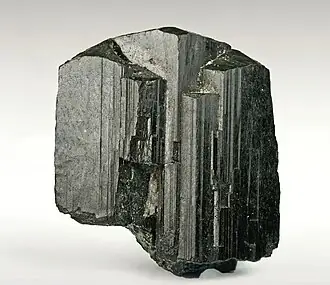
Amphibole
Arfvedsonite
A dark sodium amphibole that carries a startling blue-to-gold flash along its cleavage — sold widely and inaccurately as 'nuummite', which it superficially resembles.
Mohs 5-6 · Black, Iridescent
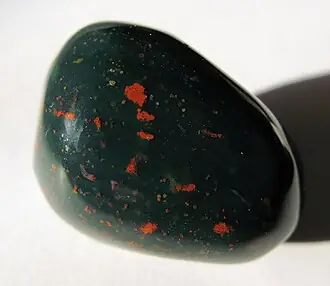
Chalcedony
Bloodstone
Dark green chalcedony flecked with red jasper. Also called heliotrope, it is one of the traditional March birthstones.
Mohs 6.5-7 · Green, Red
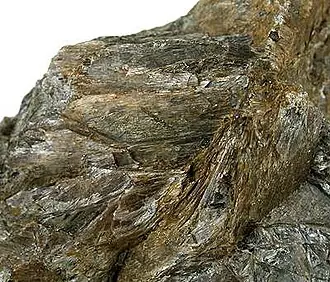
Pyroxene
Bronzite
Enstatite with enough iron to develop a warm metallic bronze sheen across the cleavage planes. Usually cut as cabochons or beads, sometimes intergrown with green serpentine.
Mohs 5-6 · Bronze, Brown
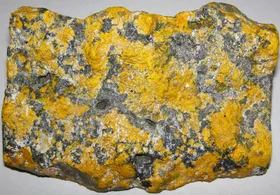
Sedimentary
Bumblebee Stone
Banded yellow, orange and black material from a live volcanic fumarole field in Java. Sold as 'bumblebee jasper', but it is not a jasper at all — it is volcanic sediment cemented with sulfur, calcite and arsenic minerals.
Mohs 4-5 · Yellow, Black
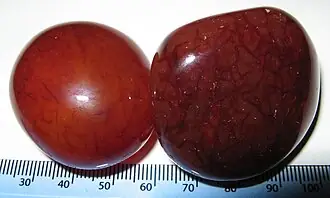
Chalcedony
Carnelian
Translucent orange to deep red chalcedony colored by iron oxide. Warm, glowing and tough, it has been one of the world's favourite carving stones for millennia.
Mohs 6.5-7 · Orange, Red
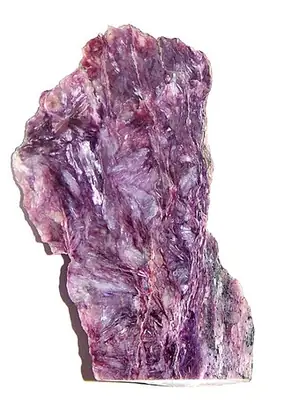
Silicate
Charoite
Swirling fibrous violet silicate found only along the Chara River in Siberia. The chatoyant feathered patterning is unmistakable.
Mohs 5-6 · Violet, Purple
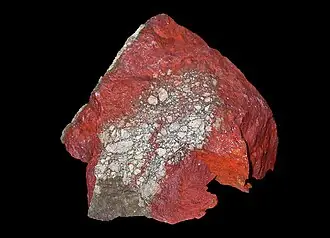
Sulfide
Cinnabar
Mercury sulfide, and the most saturated natural red in the mineral kingdom. Chinese crystals on white dolomite are the specimens collectors want; the massive ore was the world's source of mercury and of vermilion pigment.
Mohs 2-2.5 · Red, Pink-red
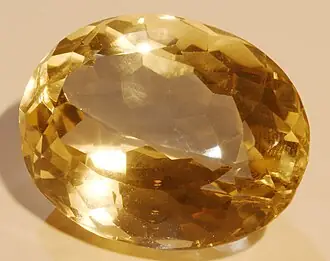
Quartz
Citrine
Yellow to golden quartz. Genuinely natural citrine is uncommon and tends toward a smoky lemon or champagne tone; the vivid orange 'burnt' material widely sold is heat-treated amethyst, which is a legitimate product but a different thing entirely.
Mohs 7 · Yellow, Golden
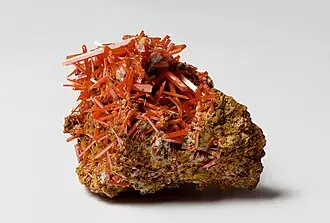
Chromate
Crocoite
Tangerine-orange lead chromate in hollow sprays of hair-fine prisms. Tasmanian Dundas material is the world standard and among the most photographed minerals in existence.
Mohs 2.5-3 · Orange, Red
Oxide
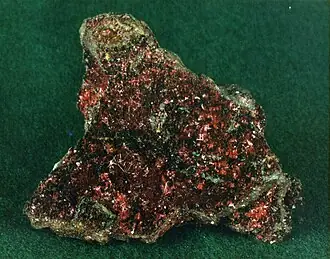
Cuprite
Copper oxide in deep garnet-red cubes and octahedra that glow ruby when back-lit. Namibian Onganja crystals from the 1970s are legendary; the hair-like variety chalcotrichite forms scarlet velvet mats.
Mohs 3.5-4 · Red, Pink-red
Silicate
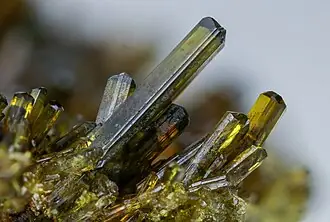
Epidote
Distinctly pistachio-green striated crystals with a resinous lustre, often forming radiating sprays on quartz or prehnite.
Mohs 6-7 · Pistachio green, Black-green
Arsenate
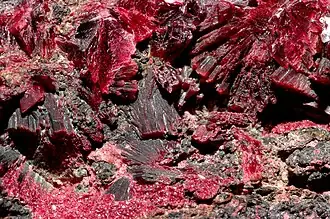
Erythrite
Cobalt bloom — brilliant magenta needles and crusts that form where cobalt ores weather. Moroccan Bou Azzer specimens with radiating crimson sprays are the classic.
Mohs 1.5-2.5 · Magenta, Pink-red
Silicate
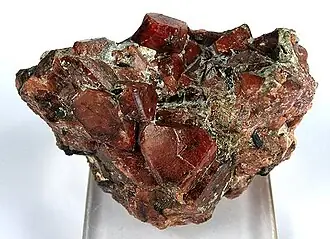
Eudialyte
Raspberry-red zirconium silicate scattered through dark alkaline rock with black aegirine and white feldspar — a striking three-color combination unique to a handful of peralkaline intrusions.
Mohs 5-6 · Magenta, Pink-red
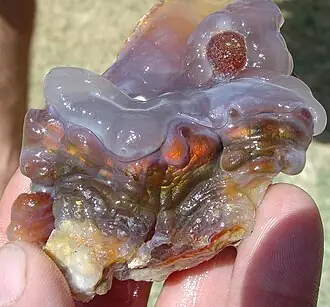
Chalcedony
Fire Agate
Chalcedony containing microscopically thin layers of iron oxide that create iridescent fire — reds, greens and golds — trapped inside the stone. Cutting it is a specialist skill: the cutter must chase the fire layer without going through it.
Mohs 6.5-7 · Brown, Red
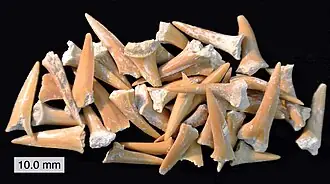
Fossil
Fossil Shark Tooth
Sharks shed teeth continuously, which is why they are the most abundant vertebrate fossil on earth. Color comes from the minerals in the burial sediment — river-tumbled Florida teeth run jet black, Moroccan phosphate teeth tan and grey.
Mohs 4.5-5 · Black, Grey
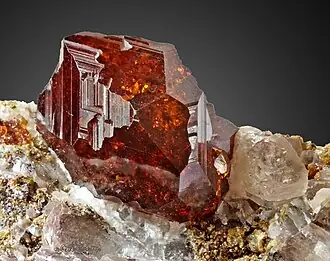
Garnet group
Garnet
A family of related silicates rather than one mineral, spanning almandine red, tsavorite green, spessartine orange and color-changing pyrope-spessartine. Crystals grow as dodecahedra with striking geometric perfection.
Mohs 6.5-7.5 · Red, Green
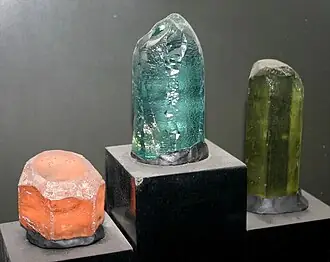
Beryl
Heliodor
Golden beryl, colored by iron — the sunlit member of the family that also gives emerald, aquamarine and morganite. Ukrainian Volyn crystals are the classic: sharp hexagonal prisms in champagne to deep gold.
Mohs 7.5-8 · Golden, Yellow
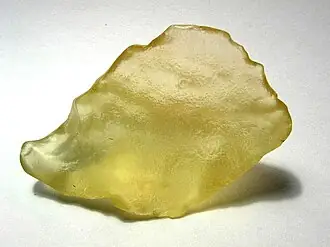
Impactite
Libyan Desert Glass
Almost pure silica glass, twenty-nine million years old, scattered across a remote corner of the Sahara by an impact event that has never been fully resolved.
Mohs 6-7 · Pale yellow, Clear
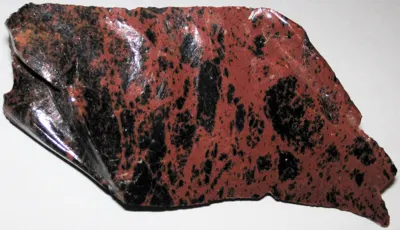
Volcanic glass
Mahogany Obsidian
Obsidian streaked with red-brown iron oxide bands, giving a marbled timber-like figure through the black glass.
Mohs 5-5.5 · Mahogany, Black
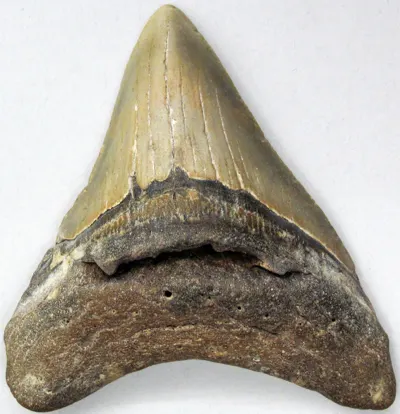
Fossil
Megalodon Tooth
The tooth of Otodus megalodon, the largest shark that ever lived, extinct around 3.6 million years ago. Teeth run from palm-sized to over seven inches; every extra half inch above five is a substantial jump in rarity and price.
Mohs 4.5-5 · Black, Grey
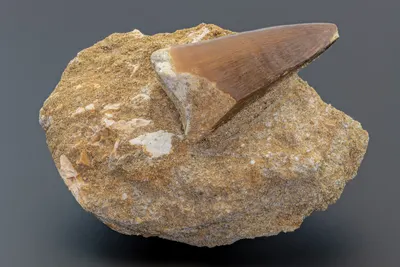
Fossil
Mosasaur Tooth
The conical, ridged tooth of a Cretaceous marine reptile — a lizard that returned to the sea and grew to seventeen metres. Moroccan phosphate beds supply most of the market, often with root and jaw section intact.
Mohs 4.5-5 · Brown, Black
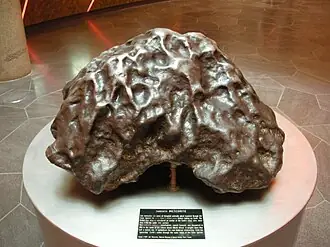
Meteorite
Nickel-Iron Meteorite
Fragments of the shattered cores of early planetesimals: solid iron-nickel that cooled over millions of years, producing the interlocking Widmanstatten pattern revealed by etching.
Mohs 4-5 · Silver, Grey
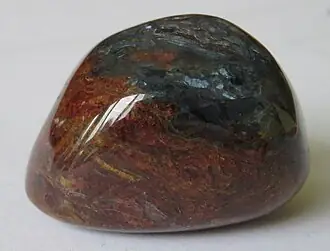
Quartz
Pietersite
A brecciated chatoyant quartz in which fragments of tiger's eye and hawk's eye were shattered and recemented, producing swirling storm-like chatoyancy.
Mohs 6.5-7 · Blue, Gold
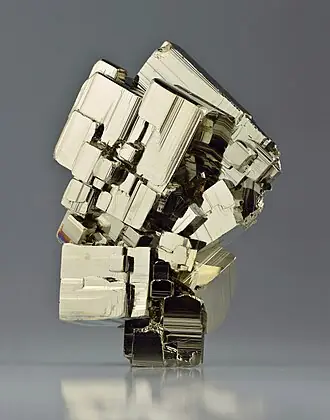
Sulfide
Pyrite
Iron sulfide that grows in astonishingly perfect cubes, dodecahedra and radiating suns. The Navajun mine in Spain produces cubes so sharp they look machined.
Mohs 6-6.5 · Brass, Gold
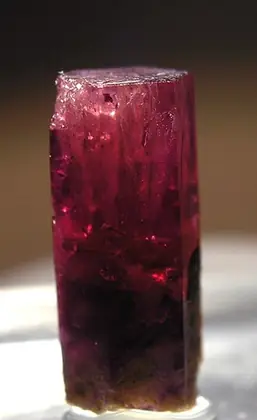
Beryl
Red Beryl
One of the rarest gem minerals in existence, found in commercial quantity at a single Utah locality. Manganese gives it a raspberry red no other beryl reaches, and faceted stones over a carat are counted in the low hundreds worldwide.
Mohs 7.5-8 · Red, Pink-red
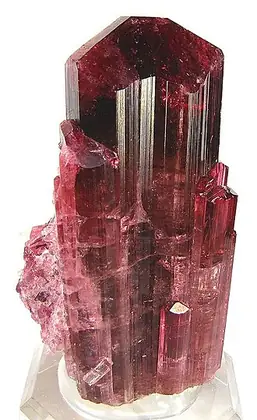
Tourmaline
Rubellite Tourmaline
The deep red to hot magenta end of elbaite tourmaline. True rubellite holds its color under both daylight and lamplight rather than going brown, which is the trade's dividing line from ordinary pink tourmaline.
Mohs 7-7.5 · Pink-red, Magenta
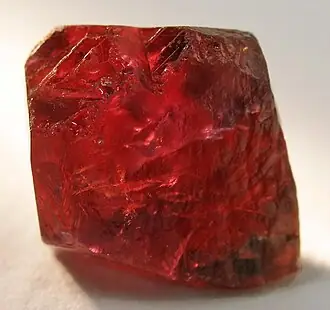
Corundum
Ruby
Red corundum, colored by chromium, and the hardest gem material after diamond. Ruby in zoisite and ruby in fuchsite are the common specimen forms; gem crystals from Mogok are the historic ideal.
Mohs 9 · Red, Pink-red
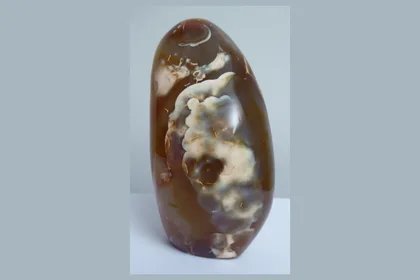
Chalcedony
Sardonyx
Straight-banded chalcedony alternating reddish-brown sard with white — the classic cameo material, because a carver can cut through the pale layer to reveal the dark one beneath.
Mohs 6.5-7 · Red, White
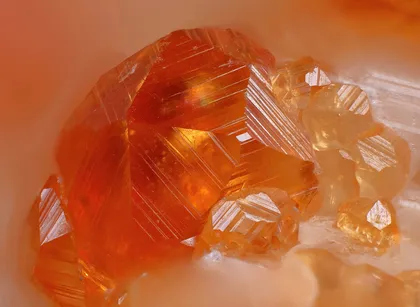
Garnet
Spessartine Garnet
Manganese garnet in a vivid mandarin orange. Namibian material from the Kunene River gave the trade name 'mandarin garnet' in the 1990s; Chinese crystals from Fujian are collectors' pieces on smoky quartz matrix.
Mohs 7-7.5 · Orange, Amber
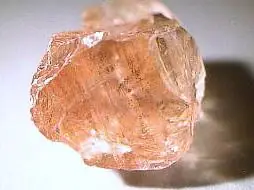
Feldspar
Sunstone
Feldspar with a glittering aventurescence from platelets of copper or hematite. Oregon sunstone is unusual in being colored by native copper, producing transparent red and green gems.
Mohs 6-6.5 · Orange, Red
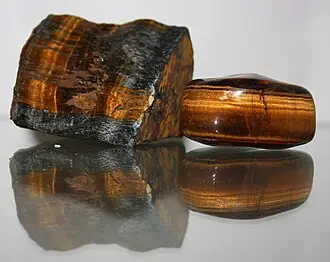
Quartz
Tiger's Eye
Quartz that replaced fibrous crocidolite, inheriting its parallel structure and producing a rolling band of light called chatoyancy. Blue hawk's eye is the unoxidised form.
Mohs 6.5-7 · Gold, Brown
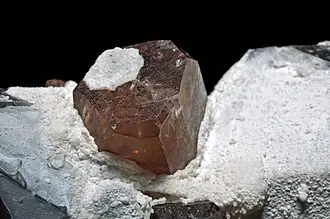
Silicate
Topaz
A very hard silicate that grows in glassy prismatic crystals. Imperial topaz, the sherry-orange to pink material from Ouro Preto, is the aristocrat of the family.
Mohs 8 · Colorless, Blue
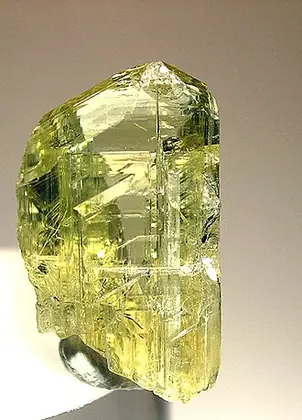
Zoisite
Zoisite (Ruby in Zoisite)
Green zoisite studded with red ruby crystals and black hornblende, sometimes called anyolite. Bold, opaque and excellent for large carvings.
Mohs 6-7 · Green, Pink
Please noteTraditional properties, effects, and aura associations are shared for cultural, historical, and personal-interest reasons only. They are folklore, not medicine. Nothing here is medical, psychological, or financial advice, and no stone is intended to diagnose, treat, cure, or prevent any condition. Please see a qualified professional for health concerns.