Judging quality
Look for strong purple with silky chatoyance and contrasting black aegirine or orange tinaksite inclusions. There is a single source, so any other claimed origin is wrong.
Silicate
Swirling fibrous violet silicate found only along the Chara River in Siberia. The chatoyant feathered patterning is unmistakable.
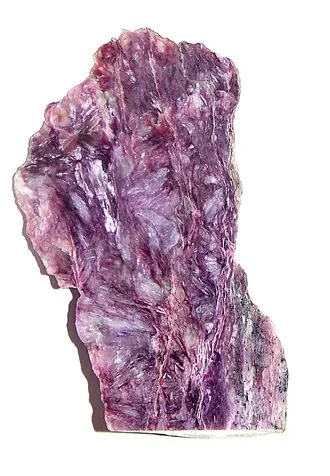
Look for strong purple with silky chatoyance and contrasting black aegirine or orange tinaksite inclusions. There is a single source, so any other claimed origin is wrong.
Moderately soft and fibrous. Wipe dry; avoid abrasives.
Only recognised as a new mineral species in 1978, making it one of the most recently discovered ornamental stones.
Cultural history, recorded as tradition rather than as medical or scientific claim.
See it in person
Both rooms are open six days a week, and there is always someone happy to pull pieces out of the case so you can compare them under the light.