The crystal encyclopedia
24 of 218
Intuition and inner sight — amethyst country.
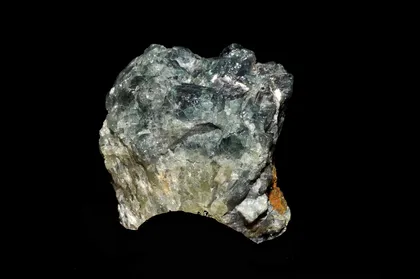
Oxide
Alexandrite
Color-change chrysoberyl: green in daylight, raspberry red under incandescent light, caused by chromium sitting in a narrow transmission window. Fine natural material above a carat is one of the most expensive colored stones on earth.
Mohs 8.5 · Emerald green, Red
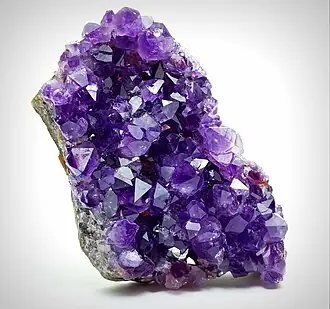
Quartz
Amethyst
Purple quartz, colored by trace iron and natural irradiation. Amethyst forms the great cathedral geodes of Brazil and Uruguay, the deep royal 'Zambian' crystals of Africa, and the delicate pale wands of Vera Cruz. The largest pieces in our collection are geodes taller than a person.
Mohs 7 · Purple, Violet
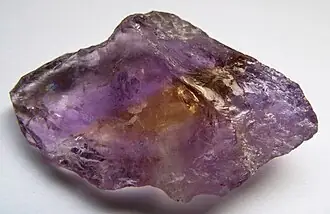
Quartz
Ametrine
A single quartz crystal zoned into amethyst purple and citrine gold, formed where differing temperatures acted on opposite ends of the same crystal. Commercially it comes essentially from one deposit in eastern Bolivia.
Mohs 7 · Purple, Yellow
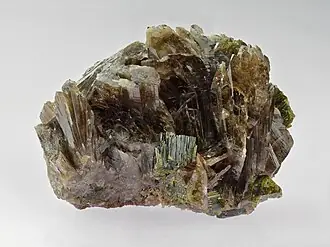
Silicate
Axinite
Sharp axe-blade crystals in clove brown with violet flashes, strongly pleochroic and unmistakable once seen.
Mohs 6.5-7 · Clove brown, Violet
Silicate
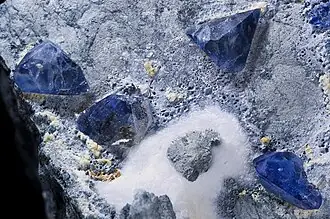
Benitoite
California's state gemstone and a genuine local rarity: sapphire-blue triangular crystals in white natrolite, from one small serpentinite body in San Benito County. The mine is effectively worked out, which makes every good specimen finite.
Mohs 6-6.5 · Blue, Deep blue
Chalcedony
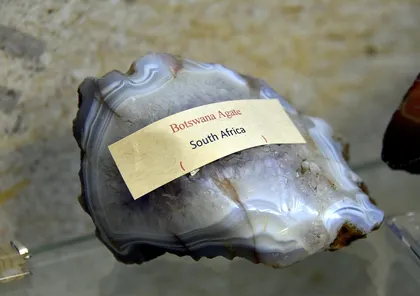
Botswana Agate
Fine grey, pink and lavender banding, often with a tiny druzy quartz eye at the centre. Softer and more muted than Mexican agates, and quietly one of the most beautiful.
Mohs 6.5-7 · Grey, Blush
Chalcedony
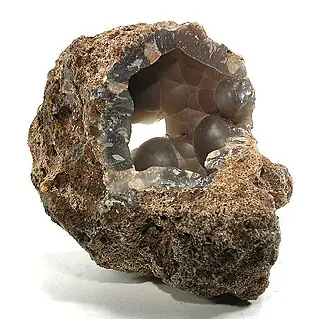
Chalcedony
Microcrystalline quartz without banding — the parent material of agate, carnelian and jasper. The Turkish and Namibian blue-grey material has a milky glow like frozen smoke.
Mohs 6.5-7 · Blue, White
Silicate
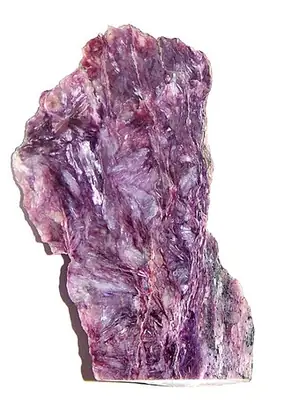
Charoite
Swirling fibrous violet silicate found only along the Chara River in Siberia. The chatoyant feathered patterning is unmistakable.
Mohs 5-6 · Violet, Purple
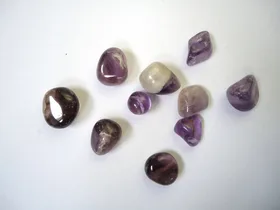
Quartz
Chevron Amethyst
Banded amethyst in which purple and milky white quartz alternate in sharp V-shaped chevrons, recording rhythmic growth along the vein.
Mohs 7 · Purple, White
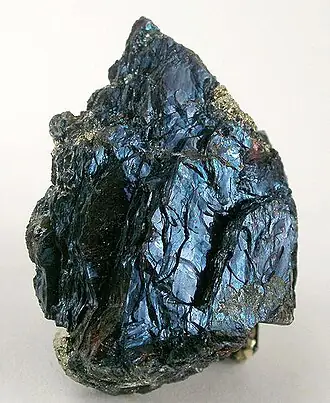
Sulfide
Covellite
Indigo copper sulfide with a peacock iridescence of purple, blue and bronze across its metallic plates. Butte, Montana produced crystallised specimens that have never been matched.
Mohs 1.5-2 · Deep blue, Iridescent
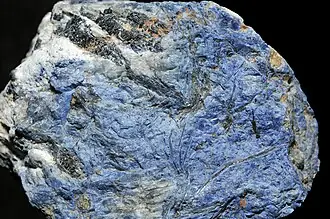
Silicate
Dumortierite
Dense blue borosilicate, usually massive or as fibrous inclusions in quartz. Hard, deeply colored and often mistaken for sodalite or lapis.
Mohs 7-8.5 · Blue, Violet
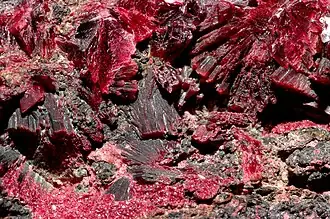
Arsenate
Erythrite
Cobalt bloom — brilliant magenta needles and crusts that form where cobalt ores weather. Moroccan Bou Azzer specimens with radiating crimson sprays are the classic.
Mohs 1.5-2.5 · Magenta, Pink-red
Halide
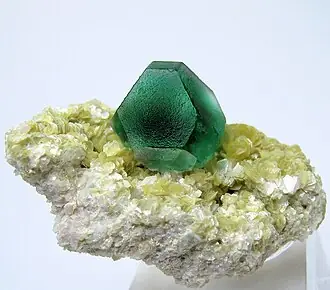
Fluorite
The most colorful mineral in the world, fluorite grows in perfect cubes and octahedra, often color-zoned in bands of green, purple and clear within a single crystal.
Mohs 4 · Green, Purple
Garnet group
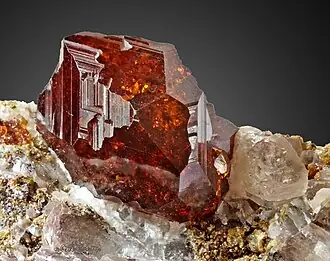
Garnet
A family of related silicates rather than one mineral, spanning almandine red, tsavorite green, spessartine orange and color-changing pyrope-spessartine. Crystals grow as dodecahedra with striking geometric perfection.
Mohs 6.5-7.5 · Red, Green
Cordierite
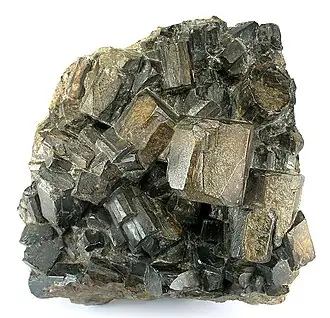
Iolite
Strongly pleochroic cordierite that reads violet-blue from one direction and pale yellow-grey from another, all within a single crystal.
Mohs 7-7.5 · Violet-blue, Grey
Pyroxene
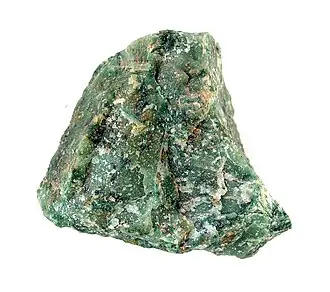
Jadeite
The rarer, harder jade, and the source of imperial green. Nearly all top gem jadeite comes from a small region of northern Myanmar.
Mohs 6.5-7 · Green, Lavender
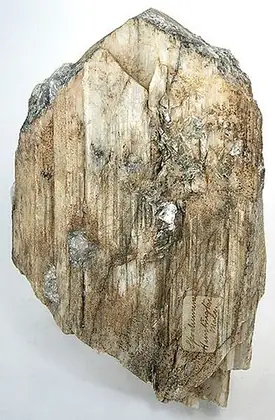
Spodumene
Kunzite
Lilac-pink spodumene, strongly pleochroic so it shifts between pink and near-colorless as it turns. Afghan crystals are famous for their size and clarity.
Mohs 6.5-7 · Pink, Lilac
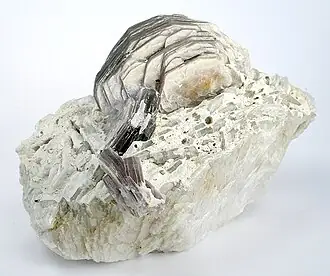
Mica
Lepidolite
Lithium-bearing mica in soft lilac, splitting into flexible sheets. Often intergrown with pink tourmaline in pegmatite pockets.
Mohs 2.5-3 · Lilac, Pink
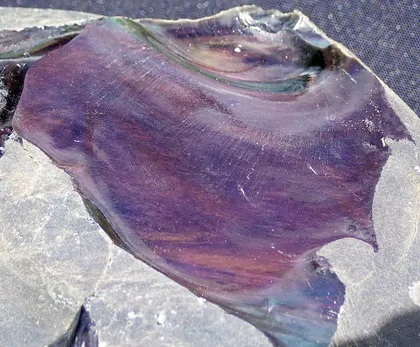
Volcanic glass
Rainbow Obsidian
Black obsidian containing aligned nanoscale magnetite crystals that throw concentric bands of green, gold and violet when the stone is oriented and polished correctly.
Mohs 5-5.5 · Black, Iridescent
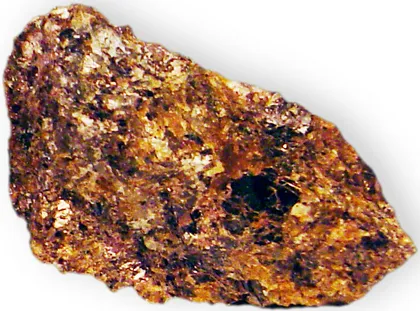
Garnet
Rhodolite Garnet
A pyrope-almandine blend with a raspberry to grape color that is lighter and more purple than common red garnet, and reads far livelier in a faceted stone.
Mohs 7-7.5 · Pink-red, Magenta
Silicate
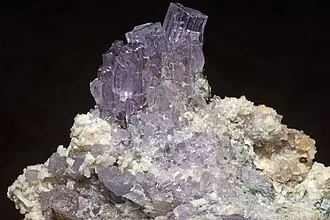
Scapolite
An under-known gem that comes in lilac, honey yellow and pink, sometimes with a strong cat's eye from parallel tube inclusions. Tanzanian violet material is the most sought.
Mohs 5.5-6 · Violet, Yellow
Quartz
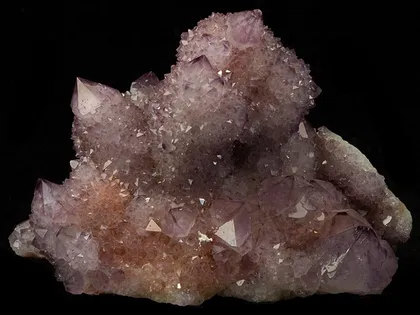
Spirit Quartz
Amethyst or citrine points entirely encrusted with a coat of tiny second-generation crystals, so the wand bristles like frost. Found in commercial quantity in one district of South Africa.
Mohs 7 · Lavender, Violet
Cyclosilicate
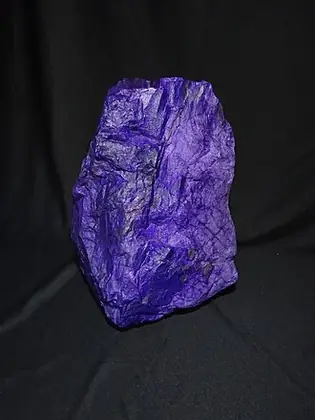
Sugilite
Deep violet manganese silicate, effectively a single-deposit stone: virtually all gem sugilite comes from the Wessels Mine in the Kalahari manganese field.
Mohs 5.5-6.5 · Violet, Magenta
Zoisite
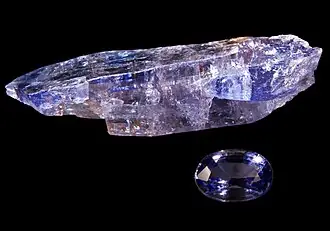
Tanzanite
Blue-violet zoisite found in a single four-square-mile stretch of northern Tanzania. Almost all material is heat-treated to convert brownish rough into blue.
Mohs 6-7 · Violet, Blue
Please noteTraditional properties, effects, and aura associations are shared for cultural, historical, and personal-interest reasons only. They are folklore, not medicine. Nothing here is medical, psychological, or financial advice, and no stone is intended to diagnose, treat, cure, or prevent any condition. Please see a qualified professional for health concerns.