Judging quality
Rotate the stone: dramatic color change confirms the identification. Cutters must orient carefully, so well-cut iolite showing full blue face-up is worth seeking.
Cordierite
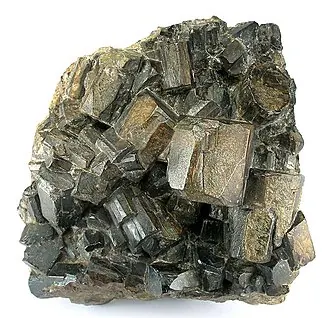
Strongly pleochroic cordierite that reads violet-blue from one direction and pale yellow-grey from another, all within a single crystal.
Rotate the stone: dramatic color change confirms the identification. Cutters must orient carefully, so well-cut iolite showing full blue face-up is worth seeking.
Reasonably hard but cleaves. Warm soapy water.
Often called the Viking compass stone, on the hypothesis that its polarising behaviour helped locate the sun under cloud.
Cultural history, recorded as tradition rather than as medical or scientific claim.
See it in person
Both rooms are open six days a week, and there is always someone happy to pull pieces out of the case so you can compare them under the light.