Judging quality
Judge blue on saturation without over-darkening. Heat treatment is near-universal and accepted; diffusion treatment, which colors only the surface, is not equivalent and must be disclosed.
Corundum
Every color of gem corundum other than red. Blue comes from iron and titanium; the pink-orange padparadscha is the rarest and most coveted.
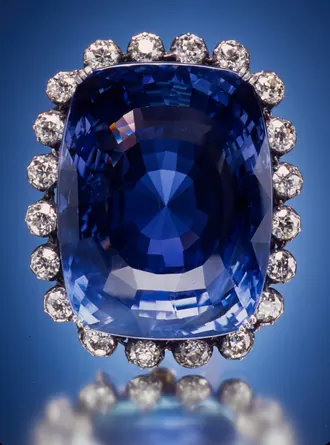
Judge blue on saturation without over-darkening. Heat treatment is near-universal and accepted; diffusion treatment, which colors only the surface, is not equivalent and must be disclosed.
Extremely durable. Warm soapy water is safe for untreated and heated stones.
Sri Lankan sapphire has been traded since antiquity; Marco Polo described the island's stones in the thirteenth century.
Cultural history, recorded as tradition rather than as medical or scientific claim.
See it in person
Both rooms are open six days a week, and there is always someone happy to pull pieces out of the case so you can compare them under the light.