The crystal encyclopedia
33 of 218
The soft side of the heart band: affection, care, self-kindness.
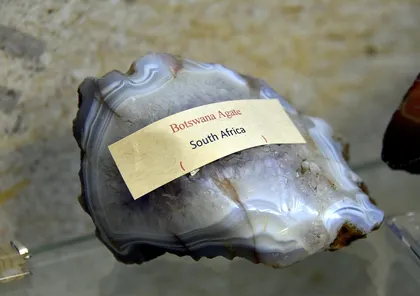
Chalcedony
Botswana Agate
Fine grey, pink and lavender banding, often with a tiny druzy quartz eye at the centre. Softer and more muted than Mexican agates, and quietly one of the most beautiful.
Mohs 6.5-7 · Grey, Blush
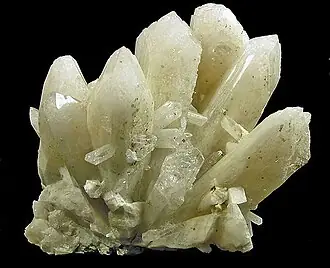
Silicate
Danburite
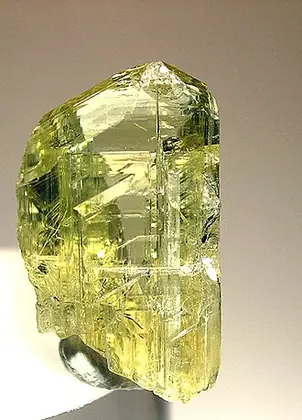
Chisel-tipped prisms of glassy calcium boron silicate, most familiar from the Charcas mines of San Luis Potosí where crystals grow water-clear and doubly terminated.
Mohs 7-7.5 · Colorless, Pale yellow
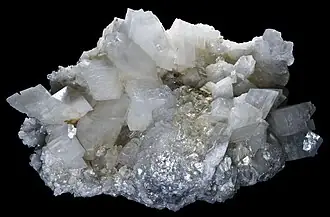
Carbonate
Dolomite
A calcium magnesium carbonate that grows in saddle-shaped curved rhombs, often forming the sparkling white matrix beneath more colorful minerals.
Mohs 3.5-4 · White, Pink
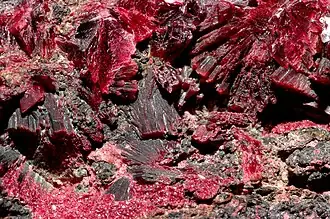
Arsenate
Erythrite
Cobalt bloom — brilliant magenta needles and crusts that form where cobalt ores weather. Moroccan Bou Azzer specimens with radiating crimson sprays are the classic.
Mohs 1.5-2.5 · Magenta, Pink-red
Silicate
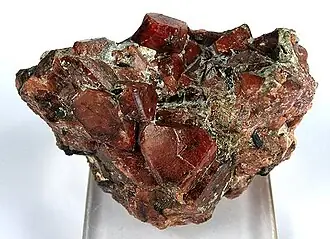
Eudialyte
Raspberry-red zirconium silicate scattered through dark alkaline rock with black aegirine and white feldspar — a striking three-color combination unique to a handful of peralkaline intrusions.
Mohs 5-6 · Magenta, Pink-red
Halide
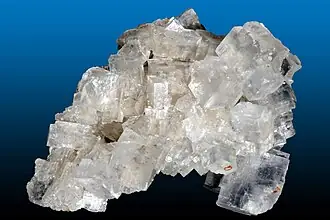
Halite
Rock salt, crystallising in perfect cubes — sometimes hopper-shaped with stepped hollow faces. Rare blue halite from German potash mines gets its color from lattice defects, not impurities.
Mohs 2-2.5 · Colorless, Pink
Spodumene
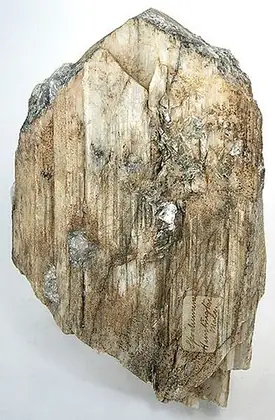
Kunzite
Lilac-pink spodumene, strongly pleochroic so it shifts between pink and near-colorless as it turns. Afghan crystals are famous for their size and clarity.
Mohs 6.5-7 · Pink, Lilac
Quartz
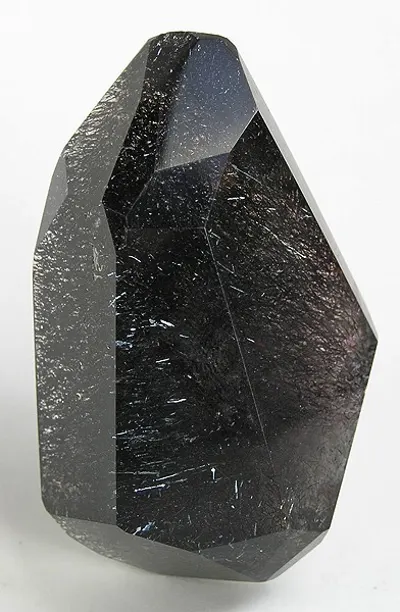
Lepidocrocite in Quartz
Clear or amethystine quartz hosting fans of red-orange lepidocrocite blades, often in super-seven and 'harlequin' combinations from Madagascar.
Mohs 7 · Red, Orange
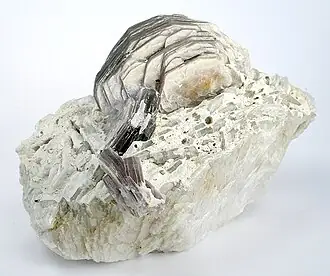
Mica
Lepidolite
Lithium-bearing mica in soft lilac, splitting into flexible sheets. Often intergrown with pink tourmaline in pegmatite pockets.
Mohs 2.5-3 · Lilac, Pink
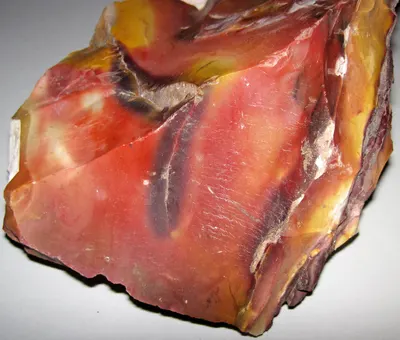
Chalcedony
Mookaite
Australian radiolarite — silicified deep-sea microfossil ooze — in mustard yellow, plum and brick red. Dense, takes a glassy polish and comes from one station in the Kennedy Ranges.
Mohs 6.5-7 · Red, Yellow
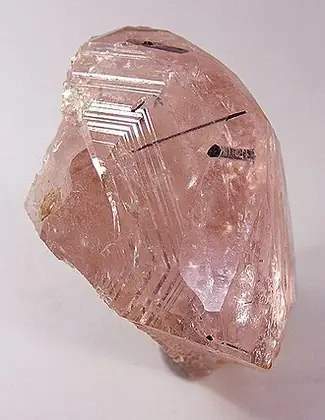
Beryl
Morganite
Pink to peach beryl colored by manganese. Crystals tend to be tabular rather than long, and the softest apricot tones are the most characteristic.
Mohs 7.5-8 · Peach, Pink
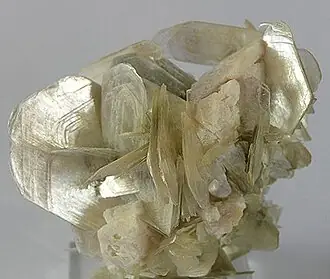
Mica
Muscovite
The common white mica, splitting into flexible transparent sheets. Star muscovite and pink Brazilian rosettes are the specimen forms.
Mohs 2-2.5 · Silver, Pink
Chalcedony
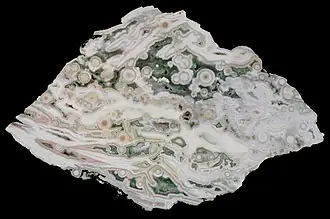
Ocean Jasper
Orbicular chalcedony covered in floating spherulites like bubbles or eyes, from a tidal outcrop on the northwest coast of Madagascar reachable only at low tide. The original deposit is exhausted, so material is finite.
Mohs 6.5-7 · Green, Blush
Silicate
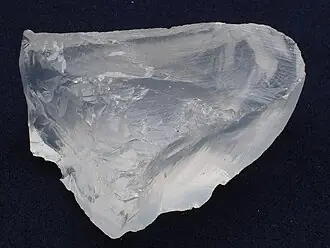
Petalite
A lithium aluminium silicate with a soft, satiny character — usually colorless to pale pink, and one of the quiet stones people gravitate to without being able to say why.
Mohs 6-6.5 · Colorless, White
Tourmaline
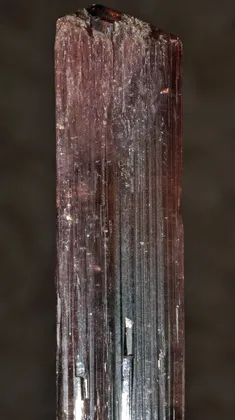
Pink Tourmaline (Rubellite)
Lithium tourmaline in pink to raspberry red. Rubellite proper keeps its color under both daylight and artificial light, which is what separates it from lighter pink material.
Mohs 7-7.5 · Pink, Red
Igneous
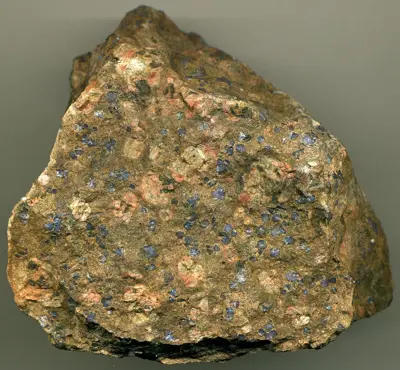
Que Sera (Llanite)
A Brazilian rhyolitic rock in soft mottled grey, blue and rose, sold under the trade names que sera and vulcanite. Cuts into calm, cloud-like slabs and spheres.
Mohs 6-7 · Grey, Blue
Beryl
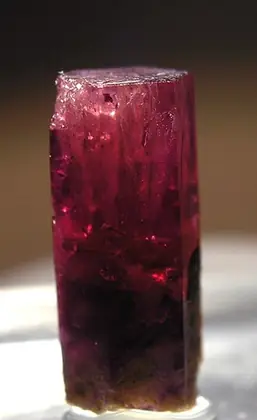
Red Beryl
One of the rarest gem minerals in existence, found in commercial quantity at a single Utah locality. Manganese gives it a raspberry red no other beryl reaches, and faceted stones over a carat are counted in the low hundreds worldwide.
Mohs 7.5-8 · Red, Pink-red
Carbonate
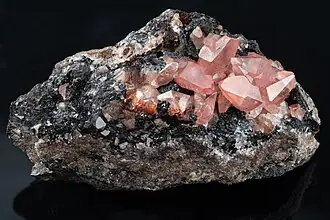
Rhodochrosite
Manganese carbonate in rose pink, occurring both as banded stalactitic material from Argentina and as vivid transparent rhombs from Colorado's Sweet Home Mine.
Mohs 3.5-4 · Rose pink, Red
Garnet
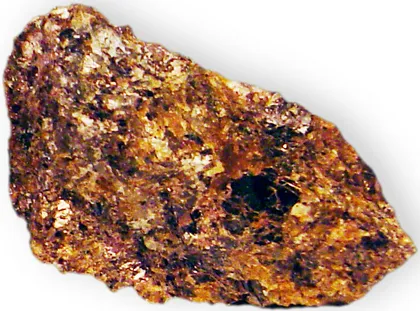
Rhodolite Garnet
A pyrope-almandine blend with a raspberry to grape color that is lighter and more purple than common red garnet, and reads far livelier in a faceted stone.
Mohs 7-7.5 · Pink-red, Magenta
Silicate
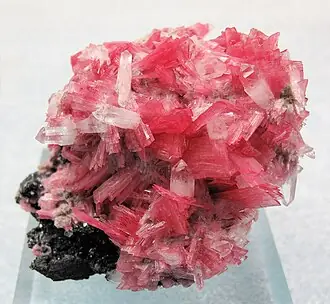
Rhodonite
Pink manganese silicate laced with black manganese oxide veining. Harder and far more durable than rhodochrosite, which makes it the better carving stone.
Mohs 5.5-6.5 · Pink, Black
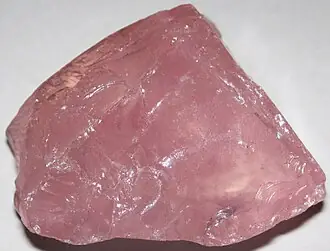
Quartz
Rose Quartz
The soft pink massive quartz that almost everyone recognises. Most rose quartz occurs as cloudy vein material rather than crystals; true terminated rose quartz crystals, mainly from Brazil, are genuinely rare and collectible.
Mohs 7 · Pink, Blush
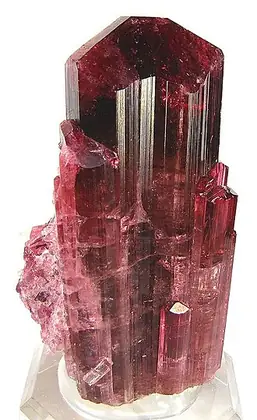
Tourmaline
Rubellite Tourmaline
The deep red to hot magenta end of elbaite tourmaline. True rubellite holds its color under both daylight and lamplight rather than going brown, which is the trade's dividing line from ordinary pink tourmaline.
Mohs 7-7.5 · Pink-red, Magenta
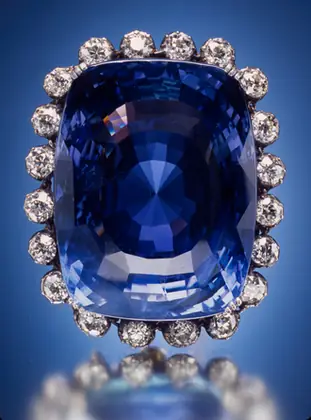
Corundum
Sapphire
Every color of gem corundum other than red. Blue comes from iron and titanium; the pink-orange padparadscha is the rarest and most coveted.
Mohs 9 · Blue, Yellow
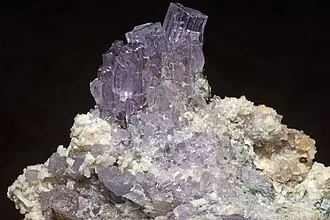
Silicate
Scapolite
An under-known gem that comes in lilac, honey yellow and pink, sometimes with a strong cat's eye from parallel tube inclusions. Tanzanian violet material is the most sought.
Mohs 5.5-6 · Violet, Yellow
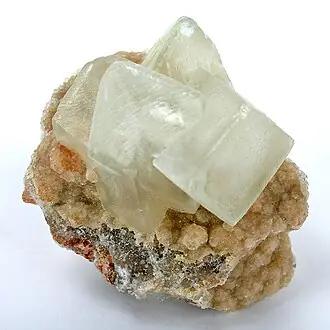
Carbonate
Smithsonite
Botryoidal zinc carbonate with a distinctive satiny lustre, appearing in gentle blue-green, lavender and pink depending on trace metals.
Mohs 4-4.5 · Blue-green, Pink
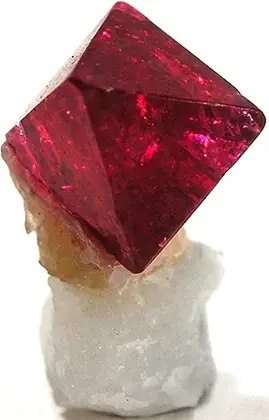
Oxide
Spinel
Long mistaken for ruby, spinel is a distinct mineral with brilliant color, excellent hardness and, crucially, almost no treatment in the trade.
Mohs 7.5-8 · Red, Pink
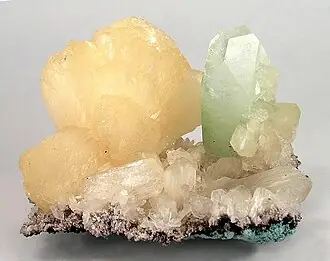
Zeolite
Stilbite
A zeolite that grows in peach-colored bowtie and sheaf-like sprays, most often alongside apophyllite in Indian basalt pockets.
Mohs 3.5-4 · Peach, White
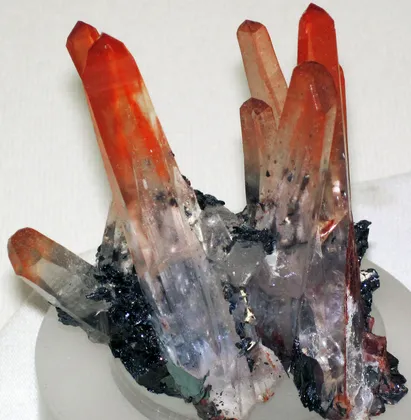
Quartz
Strawberry Quartz
Quartz filled with tiny red platelets of hematite or lepidocrocite that give a strawberry-seed sparkle through a pink body.
Mohs 7 · Pink-red, Red
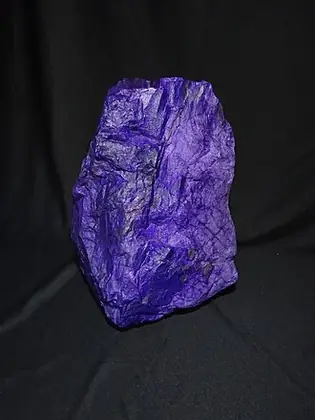
Cyclosilicate
Sugilite
Deep violet manganese silicate, effectively a single-deposit stone: virtually all gem sugilite comes from the Wessels Mine in the Kalahari manganese field.
Mohs 5.5-6.5 · Violet, Magenta
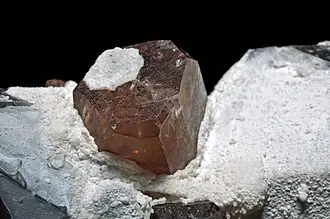
Silicate
Topaz
A very hard silicate that grows in glassy prismatic crystals. Imperial topaz, the sherry-orange to pink material from Ouro Preto, is the aristocrat of the family.
Mohs 8 · Colorless, Blue
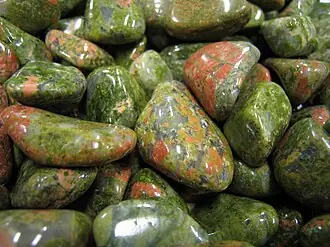
Granite
Unakite
An altered granite of pistachio epidote, salmon feldspar and clear quartz, named for the Unaka Range of the Appalachians.
Mohs 6-7 · Green, Pink
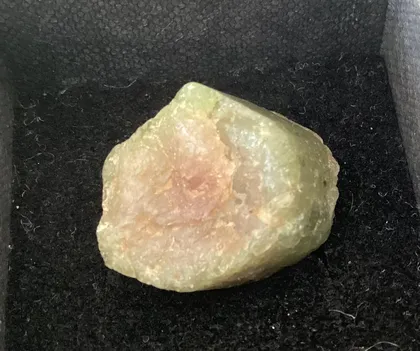
Tourmaline
Watermelon Tourmaline
Tourmaline zoned with a pink core and green rind, sliced across the prism to show the fruit-like cross-section that gives it its name.
Mohs 7-7.5 · Pink, Green
Zoisite
Zoisite (Ruby in Zoisite)
Green zoisite studded with red ruby crystals and black hornblende, sometimes called anyolite. Bold, opaque and excellent for large carvings.
Mohs 6-7 · Green, Pink
Please noteTraditional properties, effects, and aura associations are shared for cultural, historical, and personal-interest reasons only. They are folklore, not medicine. Nothing here is medical, psychological, or financial advice, and no stone is intended to diagnose, treat, cure, or prevent any condition. Please see a qualified professional for health concerns.