Garnet

Rhodolite Garnet

A pyrope-almandine blend with a raspberry to grape color that is lighter and more purple than common red garnet, and reads far livelier in a faceted stone.
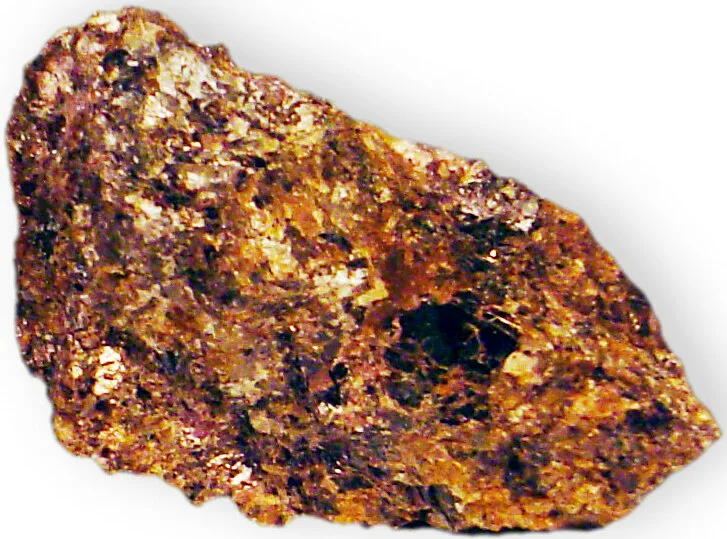
Rhodolite Garnet — mineral specimen
Reference photograph: Dave Dyet http://www.shutterstone.com http://www.dyet.com, Public domain · source. Specimens in the shop vary.

Judging quality

Rhodolite is transparent, clean and never dark-toned; heavy inky red material is almandine sold up. Singly refractive, with no doubling under a loupe.

Care

Durable; ordinary care.

History & lore

First described from Cowee Valley, North Carolina, in the 1890s and named from the Greek for rose stone.

Cultural history, recorded as tradition rather than as medical or scientific claim.

Common questions about Rhodolite Garnet

What is Rhodolite Garnet?
A pyrope-almandine blend with a raspberry to grape color that is lighter and more purple than common red garnet, and reads far livelier in a faceted stone.
How hard is Rhodolite Garnet and what is it made of?
Rhodolite Garnet is a Garnet-family mineral with the composition (Mg,Fe)3Al2(SiO4)3. It crystallizes in the cubic system and rates 7-7.5 on the Mohs hardness scale. It occurs in pink-red, magenta, purple.
Where does Rhodolite Garnet come from?
Notable localities for Rhodolite Garnet include Tanzania, Mozambique, Sri Lanka, North Carolina, USA.
How do you tell good Rhodolite Garnet from filler?
Rhodolite is transparent, clean and never dark-toned; heavy inky red material is almandine sold up. Singly refractive, with no doubling under a loupe.
How do you care for Rhodolite Garnet?
Durable; ordinary care.

See it in person

Photographs only go so far

Both rooms are open six days a week, and there is always someone happy to pull pieces out of the case so you can compare them under the light.

Plan a visit
Share Rhodolite Garnet