The crystal encyclopedia
50 of 218
Bright, high-saturation stones for low days and long weeks.
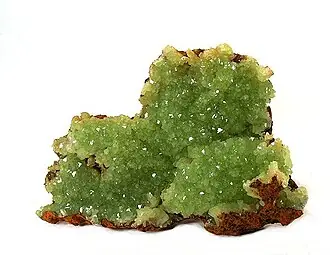
Arsenate
Adamite
Bright yellow-green zinc arsenate crusts, best known from the Ojuela mine at Mapimí where it carpets brown limonite matrix in glowing druzy sprays.
Mohs 3.5 · Yellow-green, Lime
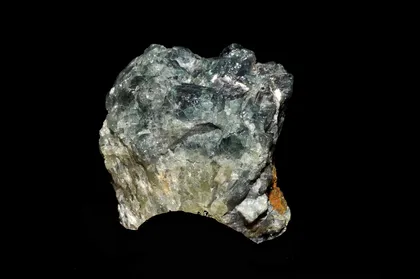
Oxide
Alexandrite
Color-change chrysoberyl: green in daylight, raspberry red under incandescent light, caused by chromium sitting in a narrow transmission window. Fine natural material above a carat is one of the most expensive colored stones on earth.
Mohs 8.5 · Emerald green, Red
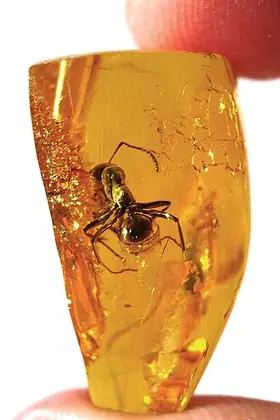
Organic
Amber
Tree resin fossilised over 30 to 100 million years. Baltic amber runs butterscotch to cognac; Dominican material can be transparent blue under daylight; Burmese burmite is the oldest at roughly 99 million years and is the amber most often carrying insect inclusions.
Mohs 2-2.5 · Amber, Honey
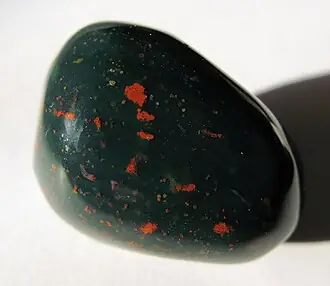
Chalcedony
Bloodstone
Dark green chalcedony flecked with red jasper. Also called heliotrope, it is one of the traditional March birthstones.
Mohs 6.5-7 · Green, Red
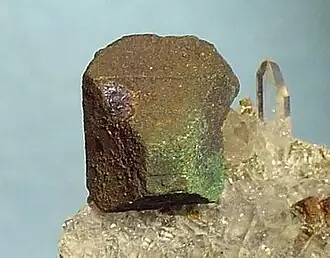
Sulfide
Bornite
Copper iron sulfide that tarnishes rapidly from bronze to deep blue and purple, giving it the same peacock nickname as chalcopyrite.
Mohs 3-3.25 · Bronze, Iridescent
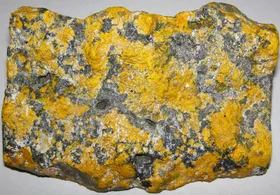
Sedimentary
Bumblebee Stone
Banded yellow, orange and black material from a live volcanic fumarole field in Java. Sold as 'bumblebee jasper', but it is not a jasper at all — it is volcanic sediment cemented with sulfur, calcite and arsenic minerals.
Mohs 4-5 · Yellow, Black
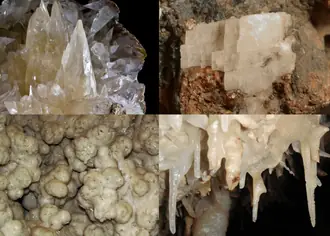
Carbonate
Calcite
One of the most polymorphic minerals known, with hundreds of crystal habits and every color of the spectrum. Optical calcite from Iceland splits an image in two through double refraction.
Mohs 3 · Orange, Honey
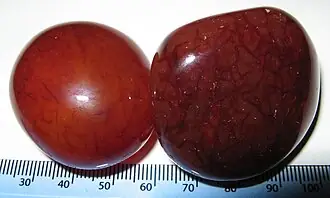
Chalcedony
Carnelian
Translucent orange to deep red chalcedony colored by iron oxide. Warm, glowing and tough, it has been one of the world's favourite carving stones for millennia.
Mohs 6.5-7 · Orange, Red
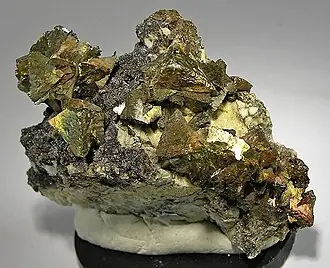
Sulfide
Chalcopyrite (Peacock Ore)
Copper iron sulfide whose tarnish film refracts into peacock blues, purples and greens. Most 'peacock ore' sold has been acid-treated to intensify the effect.
Mohs 3.5-4 · Gold, Iridescent
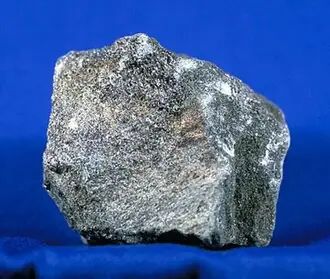
Quartz
Chlorite Quartz
Quartz with green chlorite included as clouds, phantoms or surface coatings. Himalayan chlorite quartz often pairs the green with iron staining and pristine terminations.
Mohs 7 · Green, Colorless
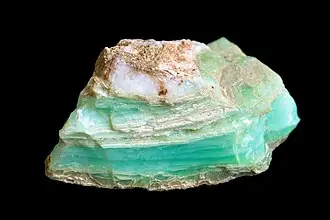
Chalcedony
Chrysoprase
Nickel-colored chalcedony in luminous apple green — the most valuable variety of chalcedony and historically the green stone of choice before emerald was widely available.
Mohs 6.5-7 · Apple green, Mint
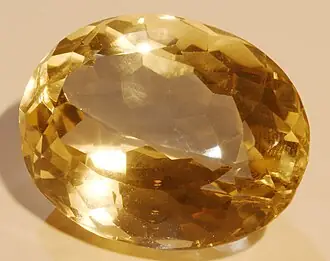
Quartz
Citrine
Yellow to golden quartz. Genuinely natural citrine is uncommon and tends toward a smoky lemon or champagne tone; the vivid orange 'burnt' material widely sold is heat-treated amethyst, which is a legitimate product but a different thing entirely.
Mohs 7 · Yellow, Golden
Chalcedony
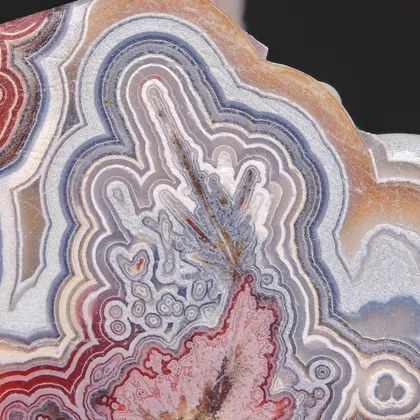
Crazy Lace Agate
Chaotic swirling agate in cream, butterscotch and brick red, formed in Cretaceous limestone in northern Mexico. Sometimes called the laughter stone for how busy and cheerful the pattern reads.
Mohs 6.5-7 · Red, Cream
Oxide
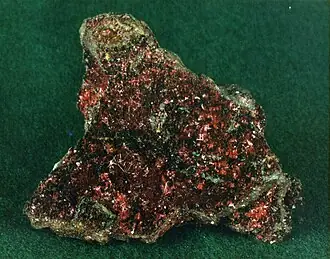
Cuprite
Copper oxide in deep garnet-red cubes and octahedra that glow ruby when back-lit. Namibian Onganja crystals from the 1970s are legendary; the hair-like variety chalcotrichite forms scarlet velvet mats.
Mohs 3.5-4 · Red, Pink-red
Garnet
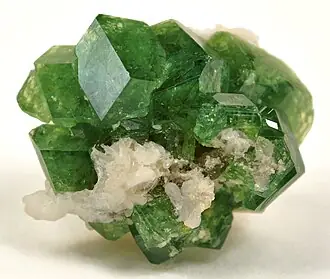
Demantoid Garnet
Andradite garnet with dispersion higher than diamond — a green stone that throws visible rainbow fire. Russian Ural material often contains the golden 'horsetail' inclusion of byssolite fibres, which raises rather than lowers value.
Mohs 6.5-7 · Green, Apple green
Chalcedony
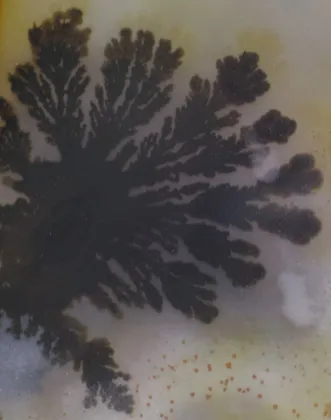
Dendritic Agate
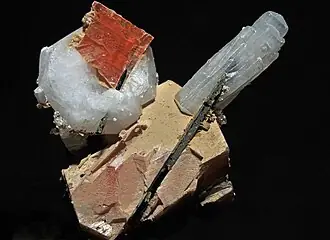
Translucent chalcedony containing black fern-like dendrites of manganese oxide that look exactly like plants but are pure mineral growth along fractures.
Mohs 6.5-7 · White, Colorless
Mineraloid
Dendritic Opal
Common opal without play-of-color, patterned instead by black manganese dendrites branching through pale cream host — sometimes called Merlinite in the trade.
Mohs 5.5-6.5 · Cream, Black
Silicate
Eudialyte
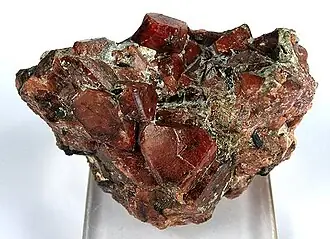
Raspberry-red zirconium silicate scattered through dark alkaline rock with black aegirine and white feldspar — a striking three-color combination unique to a handful of peralkaline intrusions.
Mohs 5-6 · Magenta, Pink-red
Chalcedony
Fire Agate
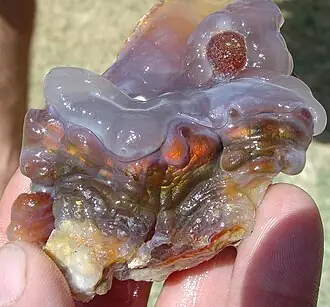
Chalcedony containing microscopically thin layers of iron oxide that create iridescent fire — reds, greens and golds — trapped inside the stone. Cutting it is a specialist skill: the cutter must chase the fire layer without going through it.
Mohs 6.5-7 · Brown, Red
Garnet group
Garnet
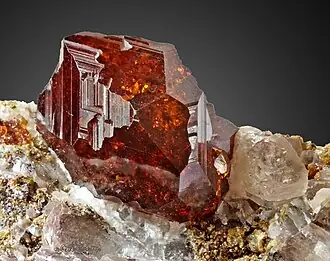
A family of related silicates rather than one mineral, spanning almandine red, tsavorite green, spessartine orange and color-changing pyrope-spessartine. Crystals grow as dodecahedra with striking geometric perfection.
Mohs 6.5-7.5 · Red, Green
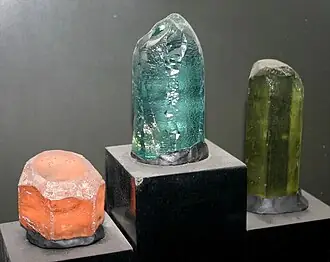
Beryl
Heliodor
Golden beryl, colored by iron — the sunlit member of the family that also gives emerald, aquamarine and morganite. Ukrainian Volyn crystals are the classic: sharp hexagonal prisms in champagne to deep gold.
Mohs 7.5-8 · Golden, Yellow
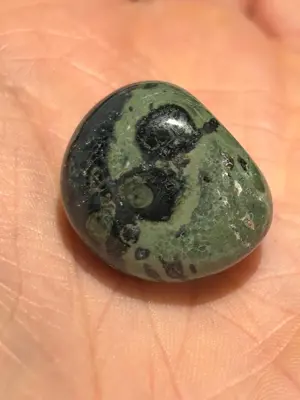
Sedimentary
Kambaba Jasper
Dark green and black orbicular stone built from fossilised cyanobacterial colonies — technically a stromatolite rather than a jasper. The swirling eyes give it an unmistakable reptilian look.
Mohs 6-7 · Bottle green, Black
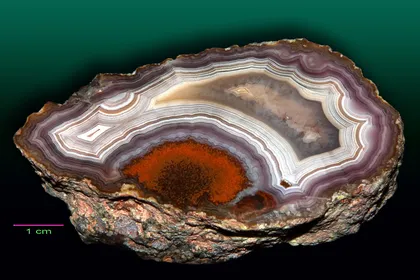
Chalcedony
Laguna Agate
Widely considered the finest banded agate on earth: tight, high-contrast red and white fortification banding from one ranch in Chihuahua. Collector-grade nodules are sold by name and by pattern.
Mohs 6.5-7 · Red, Orange
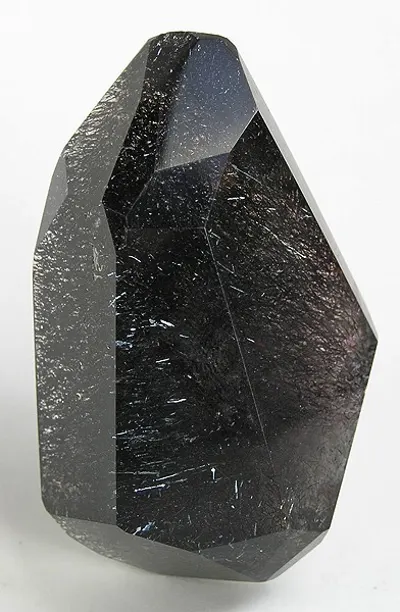
Quartz
Lepidocrocite in Quartz
Clear or amethystine quartz hosting fans of red-orange lepidocrocite blades, often in super-seven and 'harlequin' combinations from Madagascar.
Mohs 7 · Red, Orange
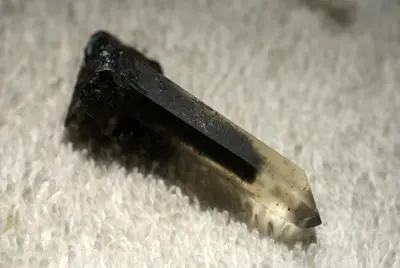
Quartz
Lodolite (Garden Quartz)
Clear quartz with mineral inclusions arranged into landscapes — mossy hills, undersea scenes, drifting clouds. Cutters orient the rough deliberately so that the interior scene reads through the polished face.
Mohs 7 · Clear, Green
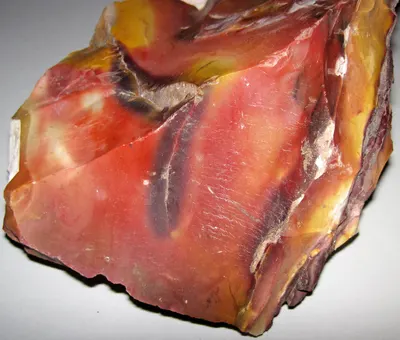
Chalcedony
Mookaite
Australian radiolarite — silicified deep-sea microfossil ooze — in mustard yellow, plum and brick red. Dense, takes a glassy polish and comes from one station in the Kennedy Ranges.
Mohs 6.5-7 · Red, Yellow
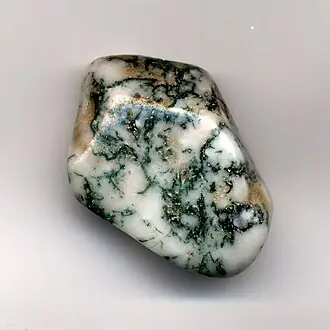
Chalcedony
Moss Agate
Translucent chalcedony filled with dendritic mineral growths that look like moss, ferns or distant trees. Not banded, so technically not a true agate.
Mohs 6.5-7 · Green, Colorless
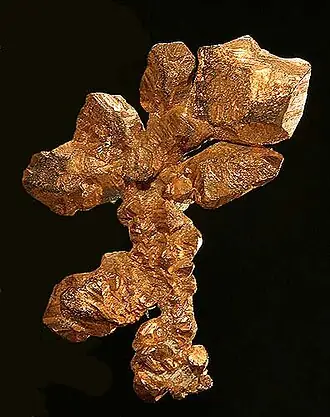
Element
Native Copper
Metallic copper that crystallised directly out of hydrothermal fluid, growing in twisted branching sprays and flattened arborescent plates. Michigan's Keweenaw deposits produced masses weighing tonnes.
Mohs 2.5-3 · Bronze, Red
Chalcedony
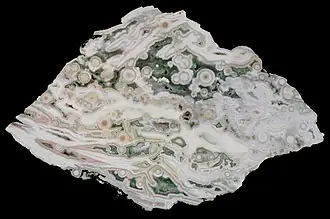
Ocean Jasper
Orbicular chalcedony covered in floating spherulites like bubbles or eyes, from a tidal outcrop on the northwest coast of Madagascar reachable only at low tide. The original deposit is exhausted, so material is finite.
Mohs 6.5-7 · Green, Blush
Mineraloid
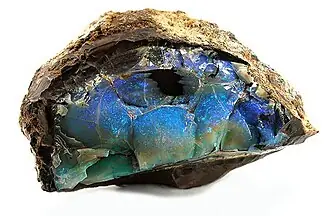
Opal
Hydrated silica whose spheres diffract light into shifting play-of-color. Black opal from Lightning Ridge is the most valuable; Ethiopian Welo opal is the great recent discovery.
Mohs 5.5-6.5 · Play-of-color, White
Tourmaline
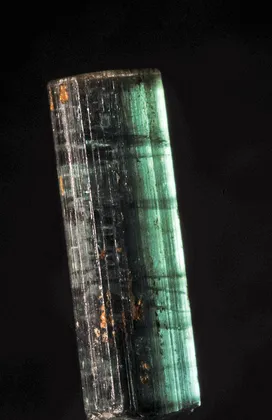
Paraíba Tourmaline
Copper-bearing tourmaline with a neon blue-green glow unlike any other gem. Brazilian material from the original 1980s Paraíba workings commands a substantial premium over the chemically identical African stones.
Mohs 7-7.5 · Cyan, Turquoise
Olivine
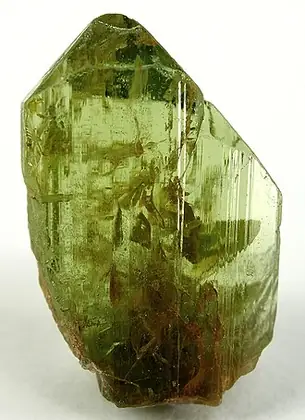
Peridot
Gem olivine, one of very few gemstones that occurs in only one color. It arrives at the surface in basalt and, occasionally, inside pallasite meteorites.
Mohs 6.5-7 · Olive green, Lime
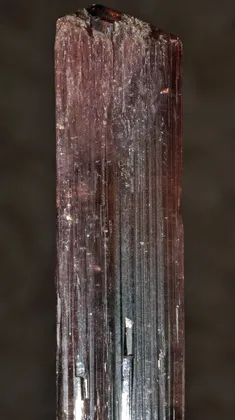
Tourmaline
Pink Tourmaline (Rubellite)
Lithium tourmaline in pink to raspberry red. Rubellite proper keeps its color under both daylight and artificial light, which is what separates it from lighter pink material.
Mohs 7-7.5 · Pink, Red
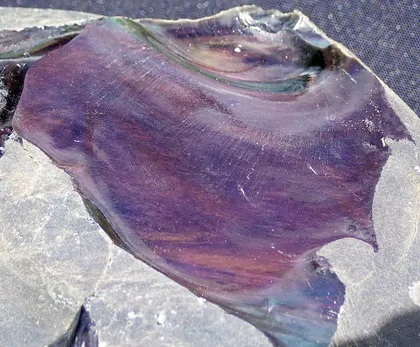
Volcanic glass
Rainbow Obsidian
Black obsidian containing aligned nanoscale magnetite crystals that throw concentric bands of green, gold and violet when the stone is oriented and polished correctly.
Mohs 5-5.5 · Black, Iridescent
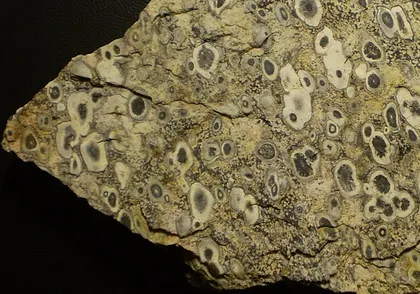
Igneous
Rainforest Rhyolite
Green and cream orbicular rhyolite, sometimes called rainforest jasper, patterned by epidote and quartz-filled gas pockets in an old lava flow.
Mohs 6-7 · Green, Olive green
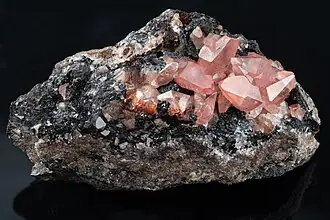
Carbonate
Rhodochrosite
Manganese carbonate in rose pink, occurring both as banded stalactitic material from Argentina and as vivid transparent rhombs from Colorado's Sweet Home Mine.
Mohs 3.5-4 · Rose pink, Red
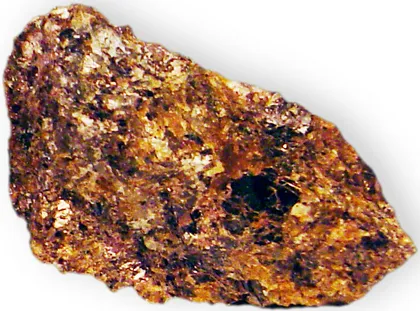
Garnet
Rhodolite Garnet
A pyrope-almandine blend with a raspberry to grape color that is lighter and more purple than common red garnet, and reads far livelier in a faceted stone.
Mohs 7-7.5 · Pink-red, Magenta
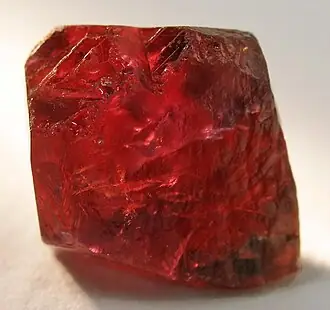
Corundum
Ruby
Red corundum, colored by chromium, and the hardest gem material after diamond. Ruby in zoisite and ruby in fuchsite are the common specimen forms; gem crystals from Mogok are the historic ideal.
Mohs 9 · Red, Pink-red
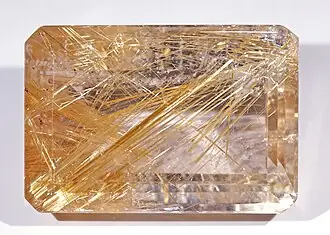
Quartz
Rutilated Quartz
Clear or smoky quartz threaded with needles of rutile, a titanium oxide that grows in golden, copper or silver hairs. The best material looks like light frozen mid-flight.
Mohs 7 · Colorless, Golden
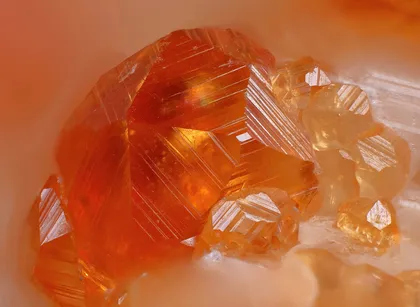
Garnet
Spessartine Garnet
Manganese garnet in a vivid mandarin orange. Namibian material from the Kunene River gave the trade name 'mandarin garnet' in the 1990s; Chinese crystals from Fujian are collectors' pieces on smoky quartz matrix.
Mohs 7-7.5 · Orange, Amber
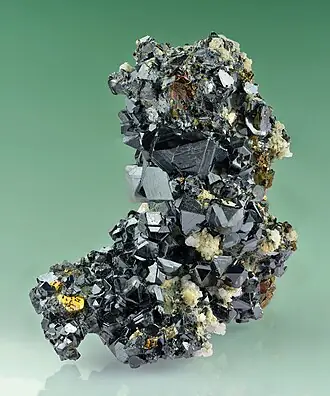
Sulfide
Sphalerite
Zinc sulfide with a dispersion three times higher than diamond, which makes cut honey-colored Spanish sphalerite one of the most fiery gemstones that exists.
Mohs 3.5-4 · Honey, Red
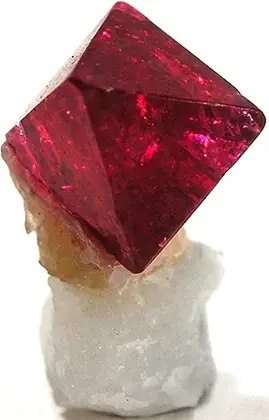
Oxide
Spinel
Long mistaken for ruby, spinel is a distinct mineral with brilliant color, excellent hardness and, crucially, almost no treatment in the trade.
Mohs 7.5-8 · Red, Pink
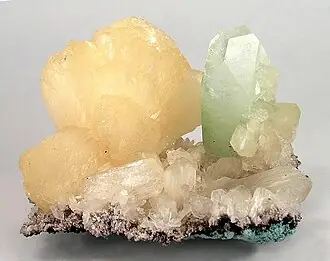
Zeolite
Stilbite
A zeolite that grows in peach-colored bowtie and sheaf-like sprays, most often alongside apophyllite in Indian basalt pockets.
Mohs 3.5-4 · Peach, White
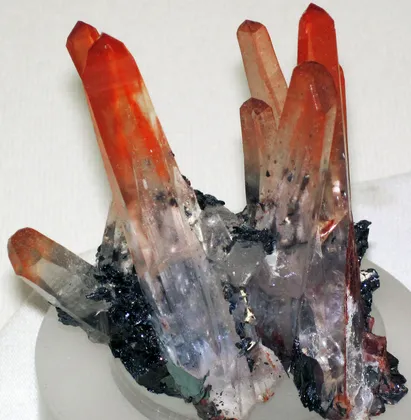
Quartz
Strawberry Quartz
Quartz filled with tiny red platelets of hematite or lepidocrocite that give a strawberry-seed sparkle through a pink body.
Mohs 7 · Pink-red, Red
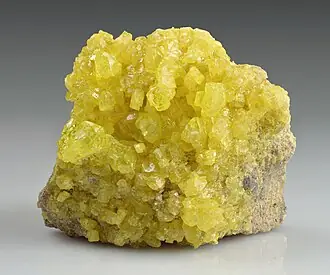
Element
Sulfur
Native sulfur in transparent lemon-yellow dipyramids, classically on white aragonite from the Sicilian mines. A pure element crystallising into gem-bright forms.
Mohs 1.5-2.5 · Yellow, Golden
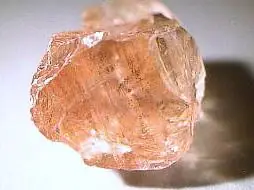
Feldspar
Sunstone
Feldspar with a glittering aventurescence from platelets of copper or hematite. Oregon sunstone is unusual in being colored by native copper, producing transparent red and green gems.
Mohs 6-6.5 · Orange, Red
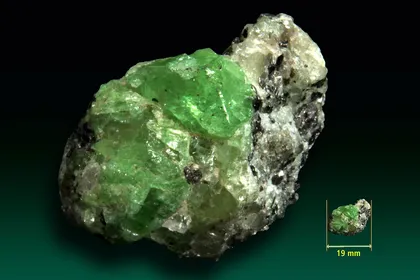
Garnet
Tsavorite Garnet
Vanadium-bearing grossular garnet with an intense, slightly warm green that rivals fine emerald — with none of emerald's fractures, because tsavorite is almost never treated.
Mohs 7-7.5 · Emerald green, Green
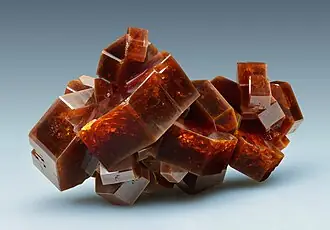
Vanadate
Vanadinite
Brilliant red-orange hexagonal crystals that grow on barite matrix in the lead deposits of Morocco. Few minerals are so intensely colored.
Mohs 3-4 · Red, Orange
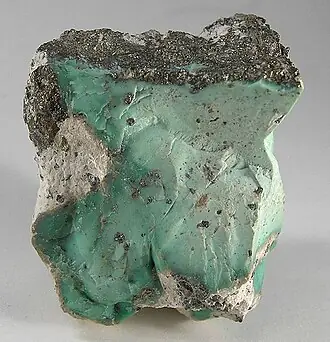
Phosphate
Variscite
A soft apple-green phosphate that looks like green turquoise and forms in the same way, by phosphate-rich water percolating through aluminous rock. Utah nodules with black spiderweb matrix are the prize material.
Mohs 3.5-4.5 · Apple green, Mint
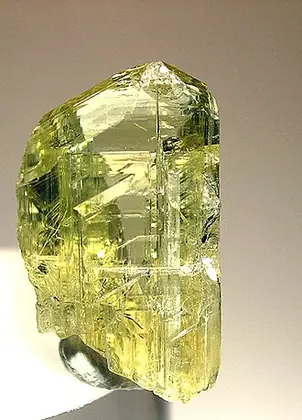
Zoisite
Zoisite (Ruby in Zoisite)
Green zoisite studded with red ruby crystals and black hornblende, sometimes called anyolite. Bold, opaque and excellent for large carvings.
Mohs 6-7 · Green, Pink
Please noteTraditional properties, effects, and aura associations are shared for cultural, historical, and personal-interest reasons only. They are folklore, not medicine. Nothing here is medical, psychological, or financial advice, and no stone is intended to diagnose, treat, cure, or prevent any condition. Please see a qualified professional for health concerns.