Chalcedony

Chrysoprase

Nickel-colored chalcedony in luminous apple green — the most valuable variety of chalcedony and historically the green stone of choice before emerald was widely available.
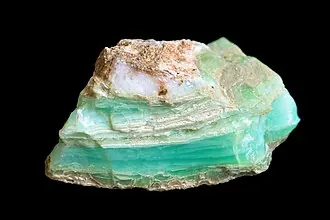
Chrysoprase — mineral specimen
Reference photograph: Xth-Floor, CC BY-SA 3.0 · source. Specimens in the shop vary.

Judging quality

Seek even, saturated green with good translucency and no brown matrix veining. Australian 'prase' material sets the standard.

Care

Color can fade with prolonged heat or sunlight. Store away from windows.

History & lore

Frederick the Great of Prussia had chrysoprase set throughout Sanssouci; it also appears in the medieval Chapel of the Holy Cross in Prague.

Cultural history, recorded as tradition rather than as medical or scientific claim.

Common questions about Chrysoprase

What is Chrysoprase?
Nickel-colored chalcedony in luminous apple green — the most valuable variety of chalcedony and historically the green stone of choice before emerald was widely available.
How hard is Chrysoprase and what is it made of?
Chrysoprase is a Chalcedony-family mineral with the composition SiO2 with Ni. It crystallizes in the trigonal system and rates 6.5-7 on the Mohs hardness scale. It occurs in apple green, mint.
Where does Chrysoprase come from?
Notable localities for Chrysoprase include Australia (Queensland), Poland, Tanzania.
How do you tell good Chrysoprase from filler?
Seek even, saturated green with good translucency and no brown matrix veining. Australian 'prase' material sets the standard.
How do you care for Chrysoprase?
Color can fade with prolonged heat or sunlight. Store away from windows.

See it in person

Photographs only go so far

Both rooms are open six days a week, and there is always someone happy to pull pieces out of the case so you can compare them under the light.

Plan a visit
Share Chrysoprase