Judging quality
Fine malachite shows tight alternating light and dark bands with a silky sheen. Beware pressed malachite powder in resin, which looks flat and shows a repeated pattern.
Carbonate
Banded green copper carbonate with concentric bullseye patterning from botryoidal growth. Congolese material sets the standard for contrast and polish.
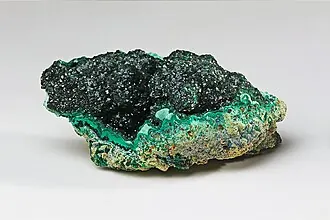
Fine malachite shows tight alternating light and dark bands with a silky sheen. Beware pressed malachite powder in resin, which looks flat and shows a repeated pattern.
Soft, and copper dust is toxic — never dry-grind or sand it. Wipe with a damp cloth only, no acids.
The Malachite Room of the Winter Palace in St Petersburg used two tons of Ural malachite veneered over stone.
Cultural history, recorded as tradition rather than as medical or scientific claim.
See it in person
Both rooms are open six days a week, and there is always someone happy to pull pieces out of the case so you can compare them under the light.