The crystal encyclopedia
58 of 218
Moving house, changing work, ending something—stones kept through the turn.
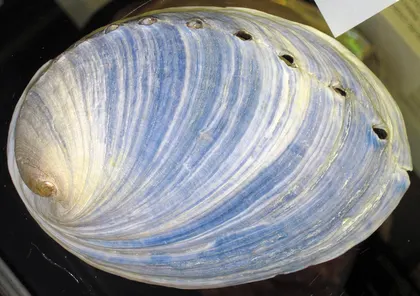
Organic
Abalone Shell
The nacreous inner shell of the abalone sea snail, layered aragonite platelets that scatter light into peacock blues and greens. New Zealand paua is the most saturated; California red abalone runs pink and silver.
Mohs 3.5-4 · Iridescent, Blue-green
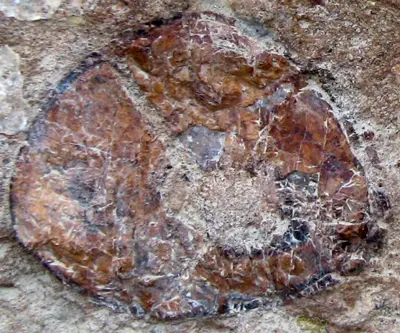
Fossil
Agatised Dinosaur Bone
Jurassic sauropod bone in which the marrow cells have been replaced cell by cell with agate and jasper — 'gembone'. The best Utah material shows red and yellow cells outlined in black, holding a mirror polish.
Mohs 6.5-7 · Red, Yellow
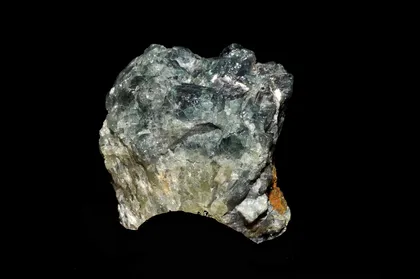
Oxide
Alexandrite
Color-change chrysoberyl: green in daylight, raspberry red under incandescent light, caused by chromium sitting in a narrow transmission window. Fine natural material above a carat is one of the most expensive colored stones on earth.
Mohs 8.5 · Emerald green, Red
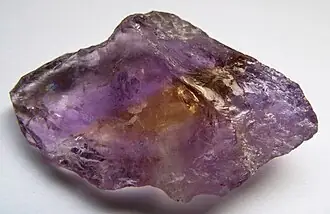
Quartz
Ametrine
A single quartz crystal zoned into amethyst purple and citrine gold, formed where differing temperatures acted on opposite ends of the same crystal. Commercially it comes essentially from one deposit in eastern Bolivia.
Mohs 7 · Purple, Yellow
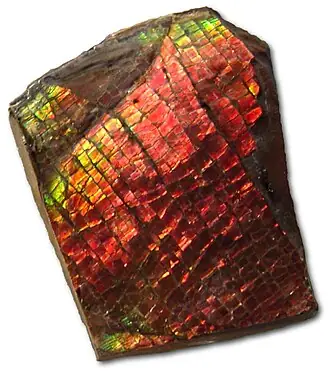
Fossil
Ammolite
The iridescent nacre of Cretaceous ammonites from a single formation in southern Alberta — one of only a handful of biogenic gemstones. Color runs from common red and green through the far rarer blue and violet, in dragon-skin, ribbon or sheet patterns.
Mohs 3.5-4.5 · Iridescent, Rainbow
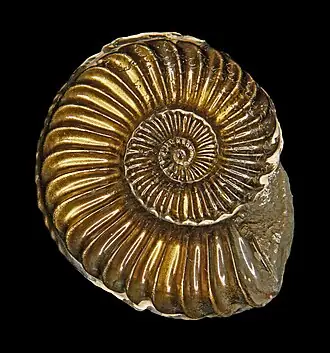
Fossil
Ammonite
The coiled shells of cephalopods that vanished with the dinosaurs. Ammolite, the iridescent Albertan variety, is one of only a handful of organic gemstones.
Mohs 3.5-4 · Brown, Iridescent
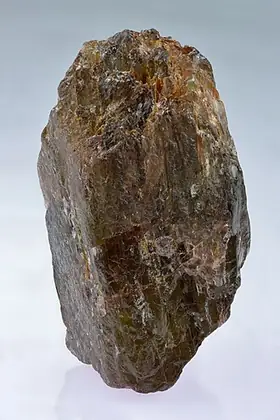
Silicate
Andalusite
A strongly pleochroic gem that shows green, gold and red-brown simultaneously from different directions — cutters deliberately orient it to display all three at once rather than trying to eliminate them.
Mohs 7-7.5 · Olive green, Brown
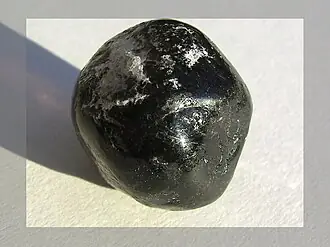
Volcanic glass
Apache Tears
Rounded nodules of obsidian weathered free from the white perlite that once enclosed them. Held to a light they glow smoky translucent brown at the edges.
Mohs 5-5.5 · Black, Brown
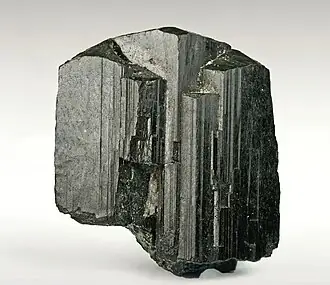
Amphibole
Arfvedsonite
A dark sodium amphibole that carries a startling blue-to-gold flash along its cleavage — sold widely and inaccurately as 'nuummite', which it superficially resembles.
Mohs 5-6 · Black, Iridescent
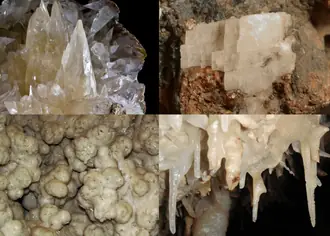
Carbonate
Calcite
One of the most polymorphic minerals known, with hundreds of crystal habits and every color of the spectrum. Optical calcite from Iceland splits an image in two through double refraction.
Mohs 3 · Orange, Honey
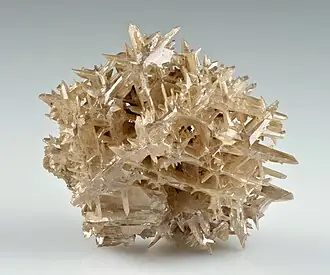
Carbonate
Cerussite
Lead carbonate with adamantine, almost diamond-like lustre, forming twinned snowflake and reticulated networks. Tsumeb specimens are legendary.
Mohs 3-3.5 · Colorless, White
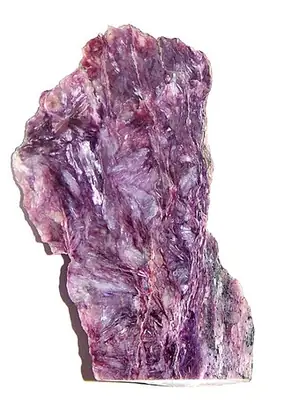
Silicate
Charoite
Swirling fibrous violet silicate found only along the Chara River in Siberia. The chatoyant feathered patterning is unmistakable.
Mohs 5-6 · Violet, Purple
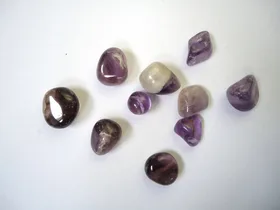
Quartz
Chevron Amethyst
Banded amethyst in which purple and milky white quartz alternate in sharp V-shaped chevrons, recording rhythmic growth along the vein.
Mohs 7 · Purple, White
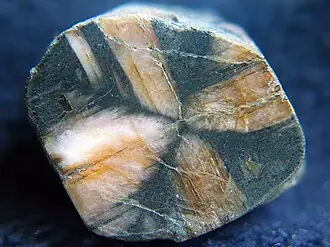
Silicate
Chiastolite
Andalusite grown with graphite inclusions arranged in a dark cross that appears when the crystal is sliced across. Every cross is slightly different, and the best show four crisp arms with no smearing.
Mohs 6.5-7.5 · Brown, Black
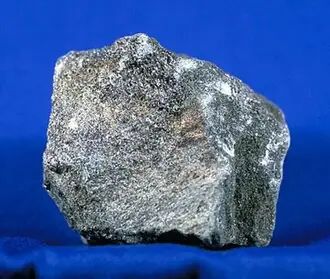
Quartz
Chlorite Quartz
Quartz with green chlorite included as clouds, phantoms or surface coatings. Himalayan chlorite quartz often pairs the green with iron staining and pristine terminations.
Mohs 7 · Green, Colorless
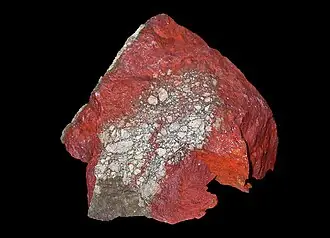
Sulfide
Cinnabar
Mercury sulfide, and the most saturated natural red in the mineral kingdom. Chinese crystals on white dolomite are the specimens collectors want; the massive ore was the world's source of mercury and of vermilion pigment.
Mohs 2-2.5 · Red, Pink-red
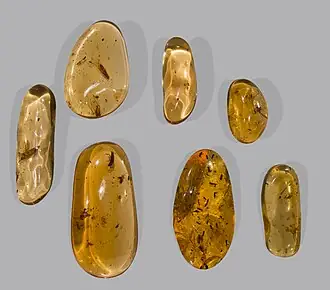
Organic
Copal
Young tree resin, typically a few thousand to a few million years old — geologically an amber in progress. Colombian copal is bright, glassy and often crowded with recent insect inclusions, which is why it is so frequently sold as amber.
Mohs 1.5-2 · Golden, Pale yellow
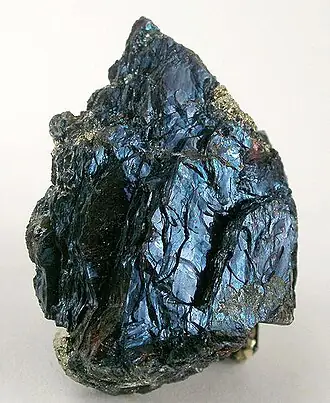
Sulfide
Covellite
Indigo copper sulfide with a peacock iridescence of purple, blue and bronze across its metallic plates. Butte, Montana produced crystallised specimens that have never been matched.
Mohs 1.5-2 · Deep blue, Iridescent
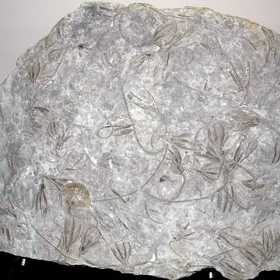
Fossil
Crinoid
Sea lilies — stalked echinoderms that carpeted Palaeozoic sea beds. Most material is disarticulated stem segments in limestone; complete crowns with the feeding arms intact are dramatically rarer and prepared over many hours.
Mohs 3-4 · Cream, Tan
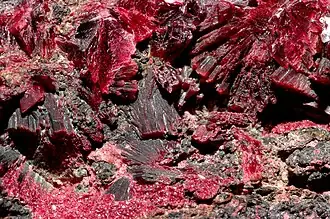
Arsenate
Erythrite
Cobalt bloom — brilliant magenta needles and crusts that form where cobalt ores weather. Moroccan Bou Azzer specimens with radiating crimson sprays are the classic.
Mohs 1.5-2.5 · Magenta, Pink-red
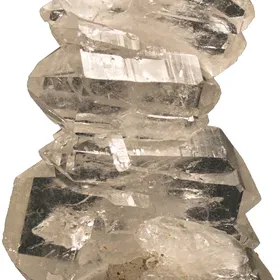
Quartz
Faden Quartz
Tabular quartz plates carrying a white thread running through the crystal — the record of a fracture that kept re-healing as the rock slowly pulled apart. Each faden line is literally a scar the crystal grew across.
Mohs 7 · Clear, Colorless
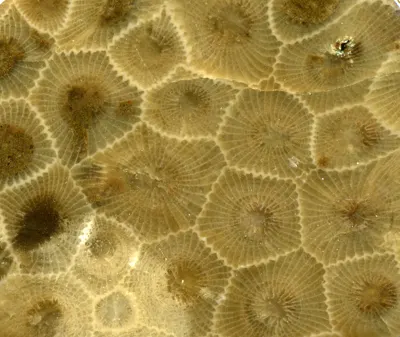
Fossil
Fossil Coral
Colonial coral replaced by agate or chalcedony, preserving the flower-like corallite pattern as a permanent stone. Florida agatised coral shows crisp white florets in grey; Petoskey stone from Michigan is a Devonian rugose coral polished to a honeycomb.
Mohs 6.5-7 · Tan, Grey
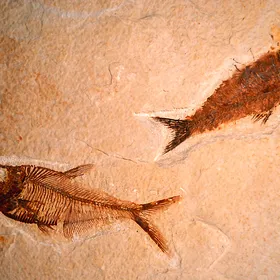
Fossil
Fossil Fish
Eocene lake fish from the Green River Formation — Knightia, Diplomystus, Phareodus — preserved whole with fins and scales in fine laminated limestone. Lebanese Cretaceous material is marine and older.
Mohs 3-4 · Brown, Cream
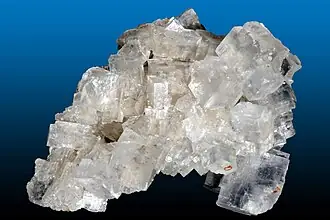
Halide
Halite
Rock salt, crystallising in perfect cubes — sometimes hopper-shaped with stepped hollow faces. Rare blue halite from German potash mines gets its color from lattice defects, not impurities.
Mohs 2-2.5 · Colorless, Pink
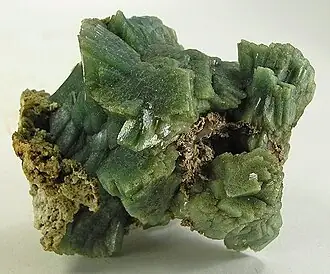
Zeolite
Heulandite
Tabular zeolite crystals in coffin-shaped plates, often orange-peach and frequently mistaken for stilbite, with which it shares its Indian localities.
Mohs 3-3.5 · Peach, White
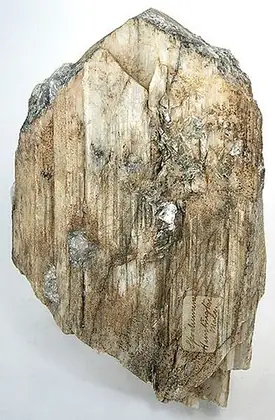
Spodumene
Kunzite
Lilac-pink spodumene, strongly pleochroic so it shifts between pink and near-colorless as it turns. Afghan crystals are famous for their size and clarity.
Mohs 6.5-7 · Pink, Lilac
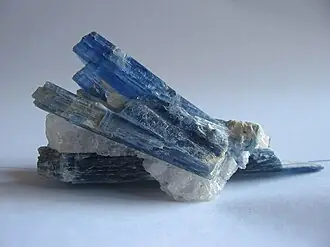
Silicate
Kyanite
A remarkable mineral with two different hardnesses in one crystal: about 4.5 along the blade and 7 across it. Blue blades from Brazil and Nepal are the classic specimen.
Mohs 4.5-7 · Blue, Black
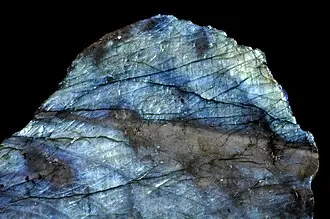
Feldspar
Labradorite
A plagioclase feldspar that hides fire inside dull grey stone. Light striking internal lamellae scatters into blue, gold, green and, in the best pieces, full-spectrum flash.
Mohs 6-6.5 · Grey, Blue
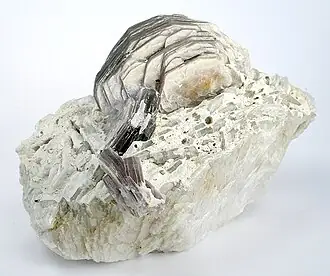
Mica
Lepidolite
Lithium-bearing mica in soft lilac, splitting into flexible sheets. Often intergrown with pink tourmaline in pegmatite pockets.
Mohs 2.5-3 · Lilac, Pink
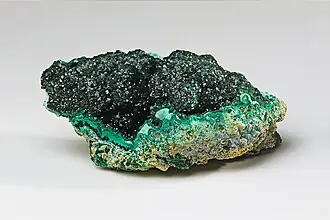
Carbonate
Malachite
Banded green copper carbonate with concentric bullseye patterning from botryoidal growth. Congolese material sets the standard for contrast and polish.
Mohs 3.5-4 · Green
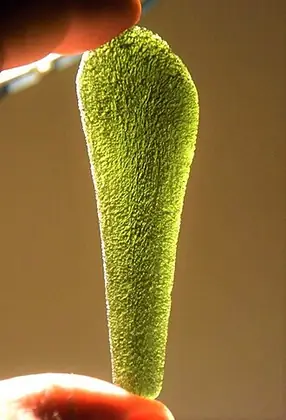
Tektite
Moldavite
A tektite: natural glass formed roughly fifteen million years ago when a meteorite struck what is now southern Germany and splashed molten crust across Bohemia.
Mohs 5.5-7 · Bottle green
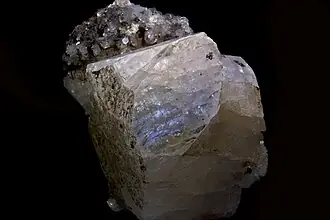
Feldspar
Moonstone
Orthoclase feldspar with a floating blue-white sheen called adularescence, caused by light scattering between microscopic layers of two feldspars.
Mohs 6-6.5 · White, Peach
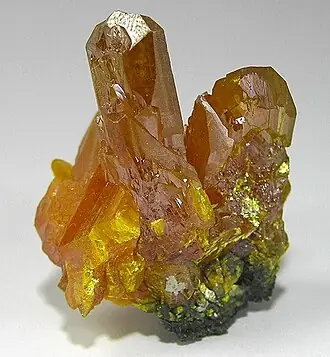
Sulfide
Orpiment
Arsenic trisulfide in sheaves of golden foliated blades with a resinous to pearly flash. It usually grows alongside realgar, the pair making one of the most striking red-and-gold associations in mineralogy.
Mohs 1.5-2 · Golden, Yellow
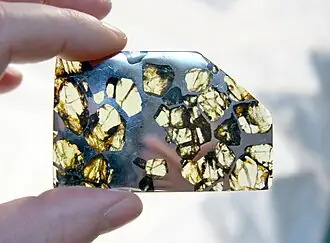
Meteorite
Pallasite Meteorite
The rarest class of meteorite most people ever see: olivine crystals suspended in a nickel-iron matrix, formed at the boundary between the core and mantle of a shattered planetesimal. Cut into slices, the gem olivine glows amber-green in transmitted light.
Mohs 4-6.5 · Silver, Golden
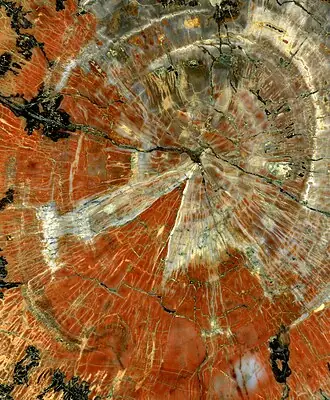
Fossil
Petrified Wood
Ancient wood in which every cell was replaced by silica, preserving growth rings, bark and even insect galleries in solid quartz.
Mohs 6.5-7 · Brown, Red
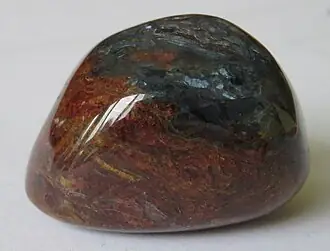
Quartz
Pietersite
A brecciated chatoyant quartz in which fragments of tiger's eye and hawk's eye were shattered and recemented, producing swirling storm-like chatoyancy.
Mohs 6.5-7 · Blue, Gold
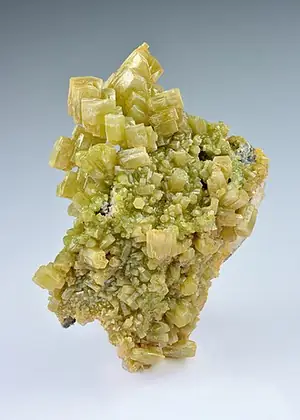
Phosphate
Pyromorphite
Barrel-shaped green hexagonal crystals with a resinous glow, forming dense druses on matrix. Chinese material from Guangxi transformed the market in the 2000s.
Mohs 3.5-4 · Green, Yellow
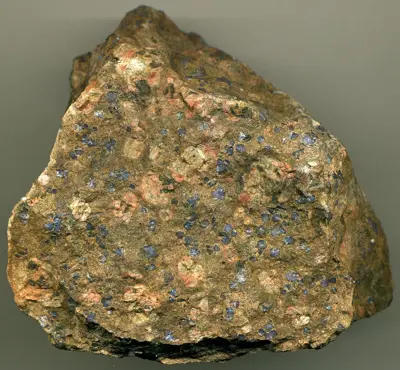
Igneous
Que Sera (Llanite)
A Brazilian rhyolitic rock in soft mottled grey, blue and rose, sold under the trade names que sera and vulcanite. Cuts into calm, cloud-like slabs and spheres.
Mohs 6-7 · Grey, Blue
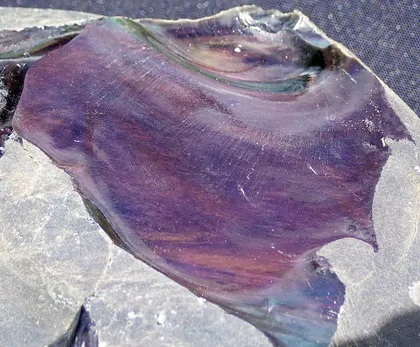
Volcanic glass
Rainbow Obsidian
Black obsidian containing aligned nanoscale magnetite crystals that throw concentric bands of green, gold and violet when the stone is oriented and polished correctly.
Mohs 5-5.5 · Black, Iridescent
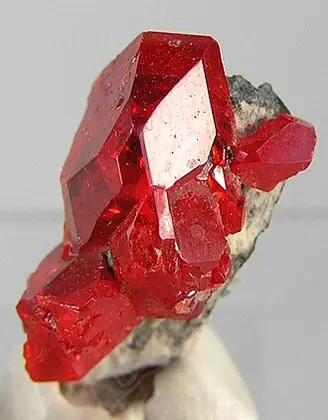
Sulfide
Realgar
Arsenic sulfide in a translucent orange-red that looks like carved candy. Chinese crystals from Shimen are the finest ever found and are stored in the dark to preserve them.
Mohs 1.5-2 · Red, Orange
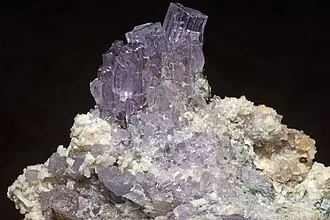
Silicate
Scapolite
An under-known gem that comes in lilac, honey yellow and pink, sometimes with a strong cat's eye from parallel tube inclusions. Tanzanian violet material is the most sought.
Mohs 5.5-6 · Violet, Yellow
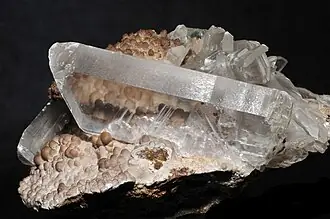
Gypsum
Selenite
A clear, satin or fibrous variety of gypsum that grows in blades, wands and — at Naica in Mexico — beams over ten metres long. Soft enough to scratch with a fingernail.
Mohs 2 · White, Colorless
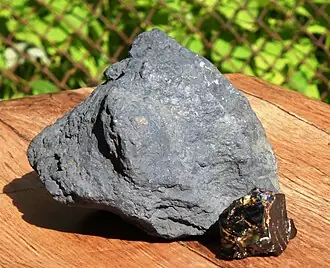
Carbon
Shungite
A non-crystalline carbon rock, roughly two billion years old, found principally around Lake Onega in Russian Karelia. Elite or noble shungite is over ninety percent carbon and has a bright metallic lustre.
Mohs 3.5-4 · Black
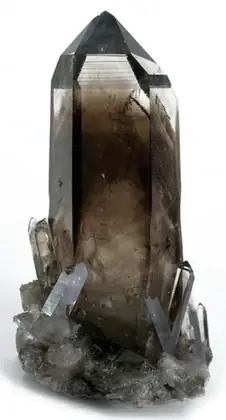
Quartz
Smoky Quartz
Quartz darkened from grey to near-black by natural irradiation of aluminium impurities. Alpine smoky quartz from Swiss and Austrian clefts is among the most sought-after crystal in the world; Scottish cairngorm has been set into ceremonial dress for centuries.
Mohs 7 · Brown, Grey
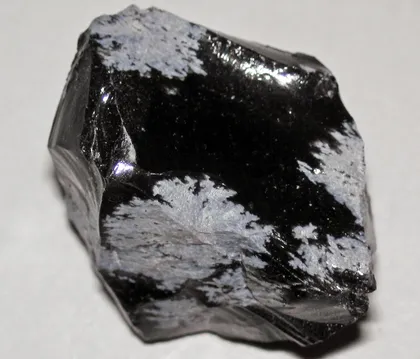
Volcanic glass
Snowflake Obsidian
Black volcanic glass in which grey-white cristobalite spherulites have begun to crystallise out — the first stage of the glass slowly devitrifying over geological time.
Mohs 5-5.5 · Black, White
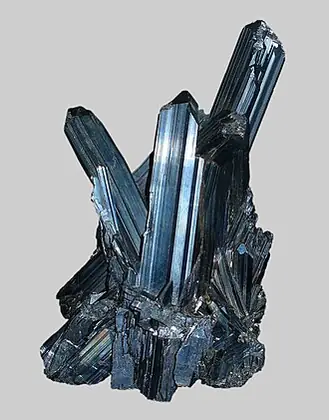
Sulfide
Stibnite
Long steel-grey blades with a brilliant metallic lustre, growing in dramatic radiating sprays. Chinese specimens from Wuning are among the most spectacular mineral objects ever mined.
Mohs 2 · Steel grey
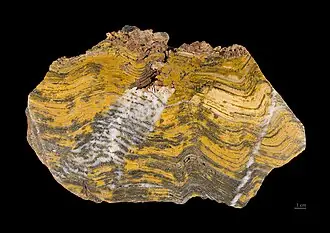
Fossil
Stromatolite
Layered structures built by cyanobacterial mats — the oldest evidence of life on earth, with examples running back 3.5 billion years. The wavy laminations polish into striking banded slabs.
Mohs 3-7 · Banded, Grey
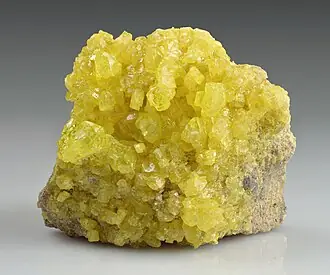
Element
Sulfur
Native sulfur in transparent lemon-yellow dipyramids, classically on white aragonite from the Sicilian mines. A pure element crystallising into gem-bright forms.
Mohs 1.5-2.5 · Yellow, Golden
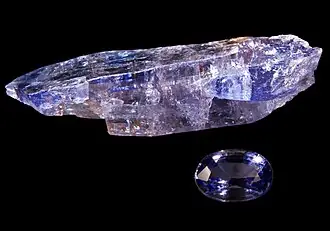
Zoisite
Tanzanite
Blue-violet zoisite found in a single four-square-mile stretch of northern Tanzania. Almost all material is heat-treated to convert brownish rough into blue.
Mohs 6-7 · Violet, Blue
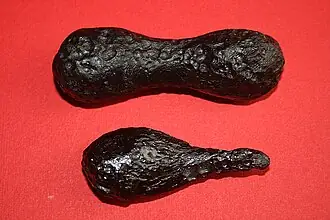
Impactite
Tektite
Terrestrial rock melted and flung into the atmosphere by a large impact, then frozen into glass as it fell. Indochinite tektites carry deep sculpted grooves; australites can retain aerodynamic flanges from atmospheric re-entry.
Mohs 5-6 · Black, Brown
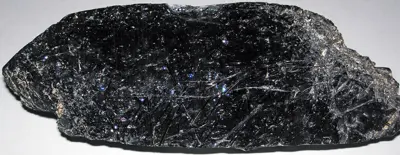
Quartz
Tourmalinated Quartz
Clear quartz shot through with black schorl tourmaline, producing graphic ink-on-glass patterns. Slabs and spheres show the composition best.
Mohs 7 · Colorless, Black
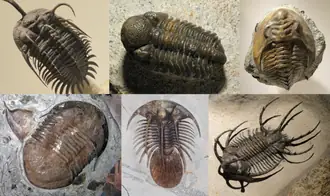
Fossil
Trilobite
Arthropods that ruled the sea floor for nearly 300 million years and left one of the best fossil records on earth. Moroccan Devonian species carry extravagant spines; Russian material from the Baltic is famously three-dimensional and glossy.
Mohs 3-6 · Brown, Black
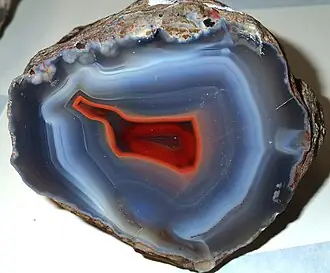
Chalcedony
Turritella Agate
Dark brown agate packed with the spiral shells of freshwater snails — properly Elimia tenera, not Turritella, but the trade name stuck a century ago. Cut faces show the spirals in cross-section like a mosaic.
Mohs 6.5-7 · Brown, Black
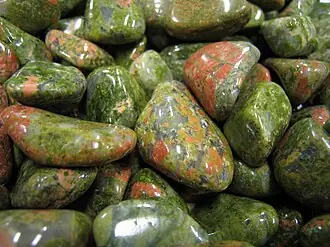
Granite
Unakite
An altered granite of pistachio epidote, salmon feldspar and clear quartz, named for the Unaka Range of the Appalachians.
Mohs 6-7 · Green, Pink
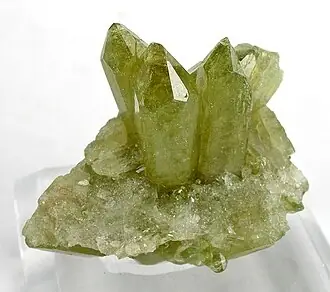
Silicate
Vesuvianite
Also called idocrase. Stubby tetragonal prisms in bottle green to olive, with a resinous lustre; the Jeffrey Mine in Quebec produced the finest gem crystals ever found before it closed.
Mohs 6-7 · Green, Olive green
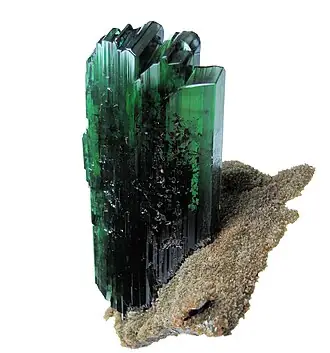
Phosphate
Vivianite
Bladed iron phosphate that grows colorless and darkens through blue-green to near-black as it oxidises in light. Bolivian crystals reach hand size and are among the most dramatic bladed specimens available.
Mohs 1.5-2 · Blue-green, Deep blue
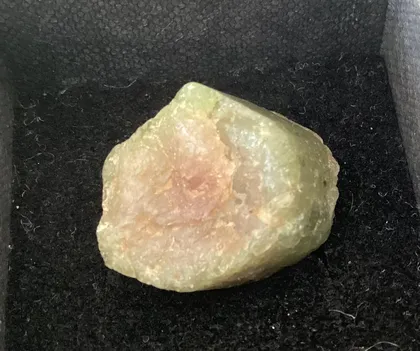
Tourmaline
Watermelon Tourmaline
Tourmaline zoned with a pink core and green rind, sliced across the prism to show the fruit-like cross-section that gives it its name.
Mohs 7-7.5 · Pink, Green
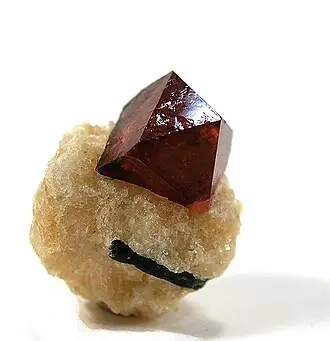
Silicate
Zircon
A genuinely brilliant natural gem with dispersion approaching diamond, and quite unrelated to cubic zirconia despite the name confusion. Cambodian material is heat-treated to the familiar electric blue; natural stones run honey, red and brown.
Mohs 6-7.5 · Blue, Golden
Please noteTraditional properties, effects, and aura associations are shared for cultural, historical, and personal-interest reasons only. They are folklore, not medicine. Nothing here is medical, psychological, or financial advice, and no stone is intended to diagnose, treat, cure, or prevent any condition. Please see a qualified professional for health concerns.