Judging quality
Look for complete uncrushed spirals, sharp suture lines and, for ammolite, broad unbroken color play. Many Moroccan pieces are heavily restored — ask what has been reconstructed.
Fossil
The coiled shells of cephalopods that vanished with the dinosaurs. Ammolite, the iridescent Albertan variety, is one of only a handful of organic gemstones.
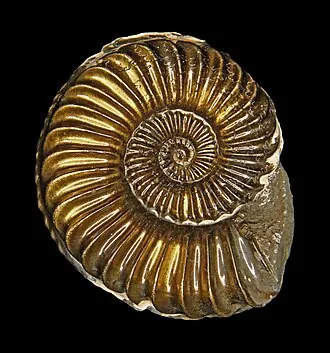
Look for complete uncrushed spirals, sharp suture lines and, for ammolite, broad unbroken color play. Many Moroccan pieces are heavily restored — ask what has been reconstructed.
Aragonitic shells are fragile and dry out. Keep out of direct sun and away from heat.
Ammonites are named for the ram-horned Egyptian god Ammon; in medieval England they were called snakestones.
Cultural history, recorded as tradition rather than as medical or scientific claim.
See it in person
Both rooms are open six days a week, and there is always someone happy to pull pieces out of the case so you can compare them under the light.