Judging quality
Look for straight, undamaged blades with untarnished mirror lustre and intact terminations. Stibnite bends permanently under slight pressure, so perfect large sprays are extraordinarily rare.
Sulfide
Long steel-grey blades with a brilliant metallic lustre, growing in dramatic radiating sprays. Chinese specimens from Wuning are among the most spectacular mineral objects ever mined.
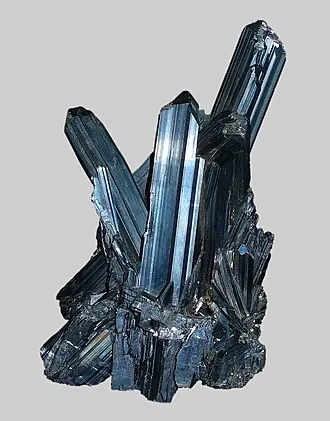
Look for straight, undamaged blades with untarnished mirror lustre and intact terminations. Stibnite bends permanently under slight pressure, so perfect large sprays are extraordinarily rare.
Soft as a fingernail and toxic (antimony). Handle minimally with clean hands and never wash.
Ground stibnite was the kohl of ancient Egypt, used as eye paint for over four thousand years.
Cultural history, recorded as tradition rather than as medical or scientific claim.
See it in person
Both rooms are open six days a week, and there is always someone happy to pull pieces out of the case so you can compare them under the light.