Volcanic glass

Apache Tears

Rounded nodules of obsidian weathered free from the white perlite that once enclosed them. Held to a light they glow smoky translucent brown at the edges.
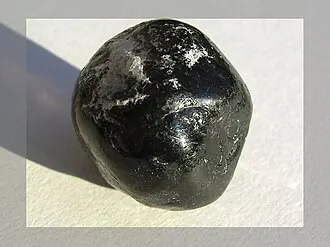
Apache Tears — mineral specimen
Reference photograph: Wikimedia Commons · source. Specimens in the shop vary.

Judging quality

Naturally rounded with a slightly frosted skin; tumbled pieces are glossy all over. Genuine nodules are translucent when back-lit.

Care

Glass. Keep from harder stones.

History & lore

The name comes from an Arizona legend of Apache women mourning warriors at Big Picacho; the story is widely repeated and of uncertain age.

Cultural history, recorded as tradition rather than as medical or scientific claim.

Common questions about Apache Tears

What is Apache Tears?
Rounded nodules of obsidian weathered free from the white perlite that once enclosed them. Held to a light they glow smoky translucent brown at the edges.
How hard is Apache Tears and what is it made of?
Apache Tears is a Volcanic glass-family mineral with the composition SiO2-rich glass. It crystallizes in the amorphous system and rates 5-5.5 on the Mohs hardness scale. It occurs in black, brown, grey.
Where does Apache Tears come from?
Notable localities for Apache Tears include Arizona, USA (Superior), Nevada, USA, Mexico.
How do you tell good Apache Tears from filler?
Naturally rounded with a slightly frosted skin; tumbled pieces are glossy all over. Genuine nodules are translucent when back-lit.
How do you care for Apache Tears?
Glass. Keep from harder stones.

See it in person

Photographs only go so far

Both rooms are open six days a week, and there is always someone happy to pull pieces out of the case so you can compare them under the light.

Plan a visit
Share Apache Tears