Volcanic glass

Snowflake Obsidian

Black volcanic glass in which grey-white cristobalite spherulites have begun to crystallise out — the first stage of the glass slowly devitrifying over geological time.
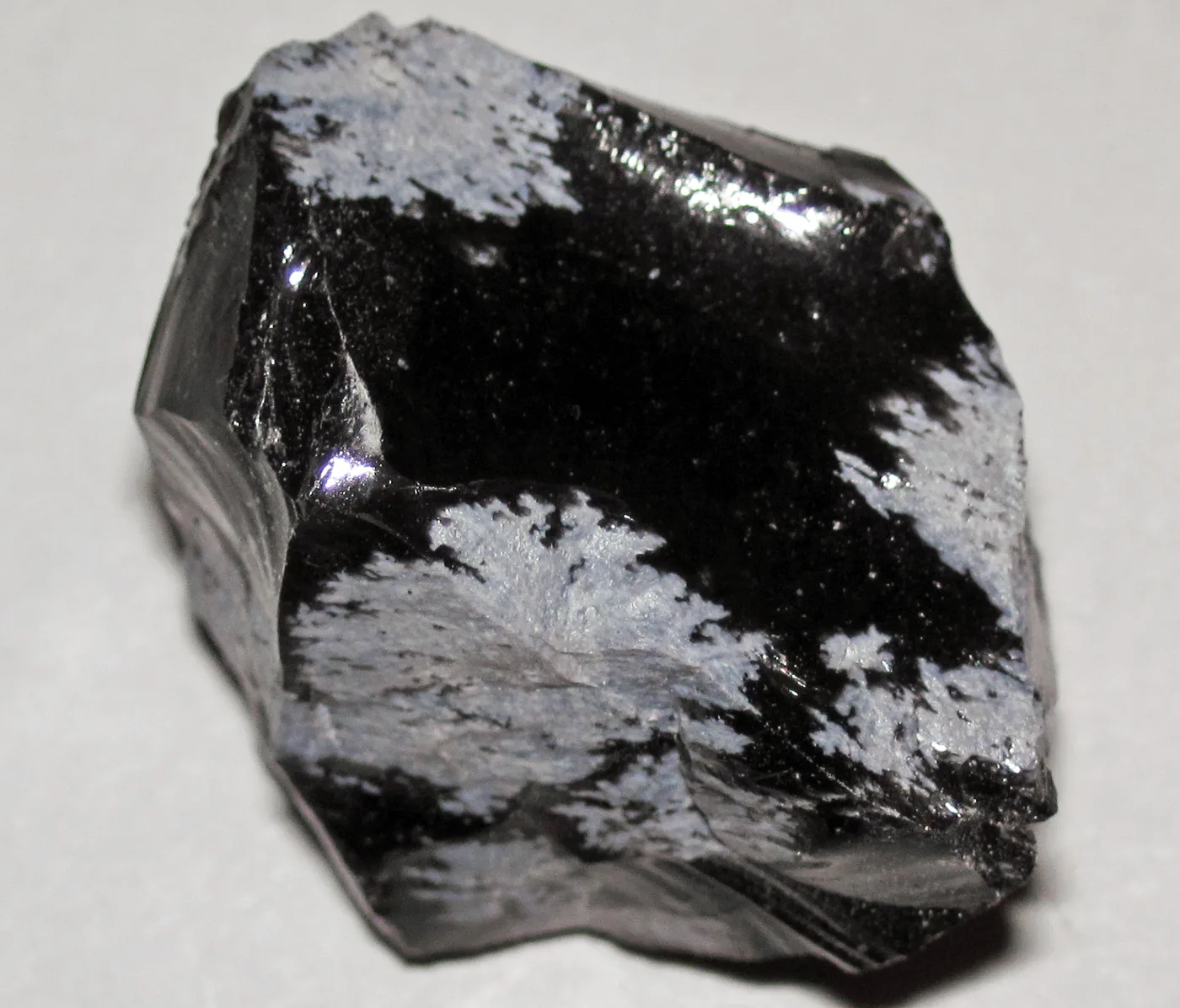
Snowflake Obsidian — mineral specimen
Reference photograph: James St. John, CC BY 2.0 · source. Specimens in the shop vary.

Judging quality

Snowflakes should be three-dimensional and slightly radial under a loupe. Painted or resin imitations show flat, evenly scattered dots.

Care

Glass: chips and scratches. Store separately from harder stones.

History & lore

Utah's Millard County beds have supplied the bulk of the world's snowflake obsidian for decades.

Cultural history, recorded as tradition rather than as medical or scientific claim.

Common questions about Snowflake Obsidian

What is Snowflake Obsidian?
Black volcanic glass in which grey-white cristobalite spherulites have begun to crystallise out — the first stage of the glass slowly devitrifying over geological time.
How hard is Snowflake Obsidian and what is it made of?
Snowflake Obsidian is a Volcanic glass-family mineral with the composition SiO2-rich glass with cristobalite. It crystallizes in the amorphous system and rates 5-5.5 on the Mohs hardness scale. It occurs in black, white, grey.
Where does Snowflake Obsidian come from?
Notable localities for Snowflake Obsidian include Utah, USA, Oregon, USA, Mexico.
How do you tell good Snowflake Obsidian from filler?
Snowflakes should be three-dimensional and slightly radial under a loupe. Painted or resin imitations show flat, evenly scattered dots.
How do you care for Snowflake Obsidian?
Glass: chips and scratches. Store separately from harder stones.

See it in person

Photographs only go so far

Both rooms are open six days a week, and there is always someone happy to pull pieces out of the case so you can compare them under the light.

Plan a visit
Share Snowflake Obsidian