Amphibole

Arfvedsonite

A dark sodium amphibole that carries a startling blue-to-gold flash along its cleavage — sold widely and inaccurately as 'nuummite', which it superficially resembles.
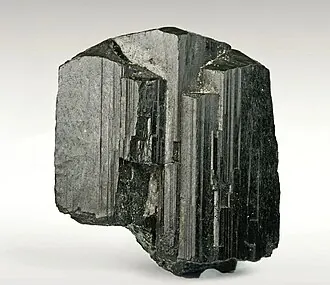
Arfvedsonite — mineral specimen
Reference photograph: Modris Baum, Public domain · source. Specimens in the shop vary.

Judging quality

Flash is generally blue and appears in broad streaks along cleavage rather than nuummite's fine needles. Crystals are prismatic with a resinous black lustre.

Care

Moderate hardness; the polish scratches. Store apart from quartz.

History & lore

Named for the Swedish chemist Johan August Arfwedson, who discovered lithium.

Cultural history, recorded as tradition rather than as medical or scientific claim.

Common questions about Arfvedsonite

What is Arfvedsonite?
A dark sodium amphibole that carries a startling blue-to-gold flash along its cleavage — sold widely and inaccurately as 'nuummite', which it superficially resembles.
How hard is Arfvedsonite and what is it made of?
Arfvedsonite is a Amphibole-family mineral with the composition Na3Fe4FeSi8O22(OH)2. It crystallizes in the monoclinic system and rates 5-6 on the Mohs hardness scale. It occurs in black, iridescent, blue.
Where does Arfvedsonite come from?
Notable localities for Arfvedsonite include Greenland, Norway, Russia, Malawi.
How do you tell good Arfvedsonite from filler?
Flash is generally blue and appears in broad streaks along cleavage rather than nuummite's fine needles. Crystals are prismatic with a resinous black lustre.
How do you care for Arfvedsonite?
Moderate hardness; the polish scratches. Store apart from quartz.

See it in person

Photographs only go so far

Both rooms are open six days a week, and there is always someone happy to pull pieces out of the case so you can compare them under the light.

Plan a visit
Share Arfvedsonite