Carbonate

Cerussite

Lead carbonate with adamantine, almost diamond-like lustre, forming twinned snowflake and reticulated networks. Tsumeb specimens are legendary.
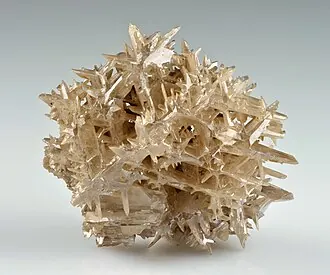
Cerussite — mineral specimen
Reference photograph: Wikimedia Commons · source. Specimens in the shop vary.

Judging quality

Look for brilliant lustre, complex twinning and transparency. Cerussite is very heavy for its size and remarkably brittle.

Care

Contains lead and is fragile. Handle by the matrix; wash hands afterwards.

History & lore

The Tsumeb mine in Namibia produced over two hundred and fifty mineral species, dozens found nowhere else.

Cultural history, recorded as tradition rather than as medical or scientific claim.

Common questions about Cerussite

What is Cerussite?
Lead carbonate with adamantine, almost diamond-like lustre, forming twinned snowflake and reticulated networks. Tsumeb specimens are legendary.
How hard is Cerussite and what is it made of?
Cerussite is a Carbonate-family mineral with the composition PbCO3. It crystallizes in the orthorhombic system and rates 3-3.5 on the Mohs hardness scale. It occurs in colorless, white, grey.
Where does Cerussite come from?
Notable localities for Cerussite include Namibia (Tsumeb), Morocco, Australia (Broken Hill).
How do you tell good Cerussite from filler?
Look for brilliant lustre, complex twinning and transparency. Cerussite is very heavy for its size and remarkably brittle.
How do you care for Cerussite?
Contains lead and is fragile. Handle by the matrix; wash hands afterwards.

See it in person

Photographs only go so far

Both rooms are open six days a week, and there is always someone happy to pull pieces out of the case so you can compare them under the light.

Plan a visit
Share Cerussite