Judging quality
Look for undamaged, translucent blades standing free of the matrix. Wulfenite is exceptionally fragile and complete specimens are far rarer than the abundance of the mineral suggests.
Molybdate
Thin tabular crystals like stained glass windows, ranging from butterscotch yellow to the legendary deep red of Arizona's Red Cloud Mine.
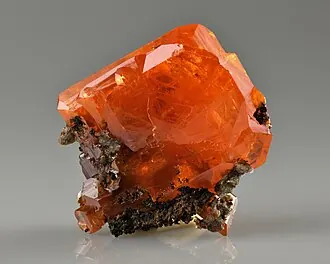
Look for undamaged, translucent blades standing free of the matrix. Wulfenite is exceptionally fragile and complete specimens are far rarer than the abundance of the mineral suggests.
Contains lead and is very soft. Never wash or handle the crystals directly.
The Red Cloud Mine in Arizona produced what is widely considered the finest wulfenite ever found, and is now essentially exhausted.
Cultural history, recorded as tradition rather than as medical or scientific claim.
See it in person
Both rooms are open six days a week, and there is always someone happy to pull pieces out of the case so you can compare them under the light.