The crystal encyclopedia
34 of 218
Golden and green stones associated with fortune, work and opportunity.
Arsenate
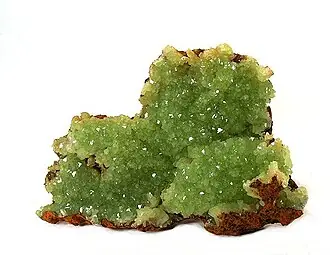
Adamite
Bright yellow-green zinc arsenate crusts, best known from the Ojuela mine at Mapimí where it carpets brown limonite matrix in glowing druzy sprays.
Mohs 3.5 · Yellow-green, Lime
Fossil
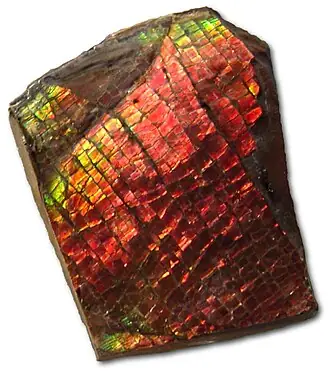
Ammolite
The iridescent nacre of Cretaceous ammonites from a single formation in southern Alberta — one of only a handful of biogenic gemstones. Color runs from common red and green through the far rarer blue and violet, in dragon-skin, ribbon or sheet patterns.
Mohs 3.5-4.5 · Iridescent, Rainbow
Phosphate
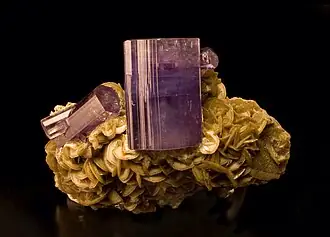
Apatite
The mineral of bone and tooth enamel, and a gem in its own right. Neon blue-green Madagascan apatite is one of the most electric colors in the mineral kingdom.
Mohs 5 · Blue, Green
Quartz
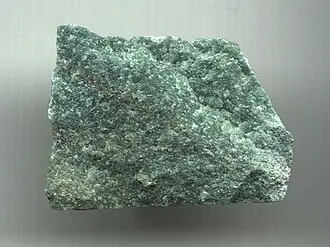
Aventurine
Quartzite spangled with reflective mica platelets — green from fuchsite, blue from dumortierite. The shimmer is called aventurescence.
Mohs 6.5-7 · Green, Blue
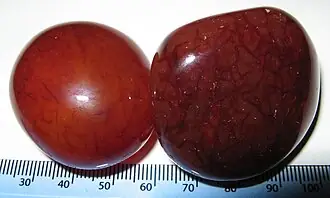
Chalcedony
Carnelian
Translucent orange to deep red chalcedony colored by iron oxide. Warm, glowing and tough, it has been one of the world's favourite carving stones for millennia.
Mohs 6.5-7 · Orange, Red
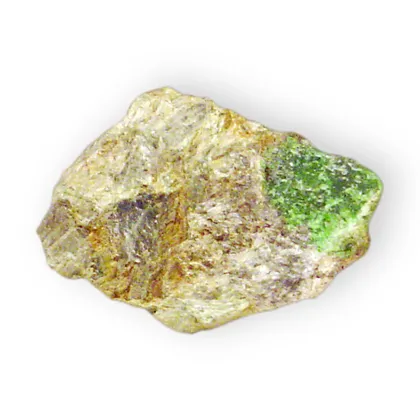
Pyroxene
Chrome Diopside
Intensely green chromium diopside from Siberia, mined in a brief window each year when the Yakutian ground is workable. Small stones are vividly green; larger ones darken toward black.
Mohs 5.5-6.5 · Emerald green, Bottle green
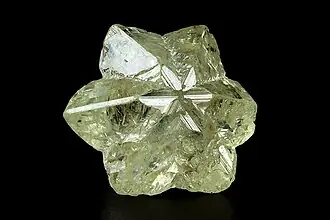
Oxide
Chrysoberyl
The third hardest gem mineral after diamond and corundum, and badly underrated. Ordinary chrysoberyl is a crisp yellow-green; the cat's eye variety cymophane shows a razor-sharp band of light from fine parallel inclusions.
Mohs 8.5 · Yellow-green, Golden
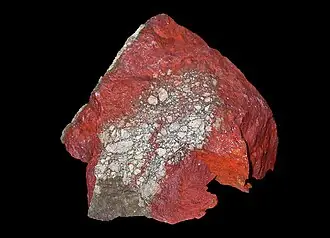
Sulfide
Cinnabar
Mercury sulfide, and the most saturated natural red in the mineral kingdom. Chinese crystals on white dolomite are the specimens collectors want; the massive ore was the world's source of mercury and of vermilion pigment.
Mohs 2-2.5 · Red, Pink-red
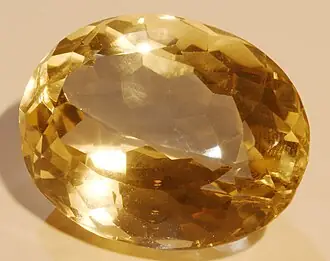
Quartz
Citrine
Yellow to golden quartz. Genuinely natural citrine is uncommon and tends toward a smoky lemon or champagne tone; the vivid orange 'burnt' material widely sold is heat-treated amethyst, which is a legitimate product but a different thing entirely.
Mohs 7 · Yellow, Golden
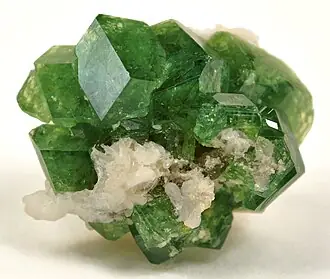
Garnet
Demantoid Garnet
Andradite garnet with dispersion higher than diamond — a green stone that throws visible rainbow fire. Russian Ural material often contains the golden 'horsetail' inclusion of byssolite fibres, which raises rather than lowers value.
Mohs 6.5-7 · Green, Apple green
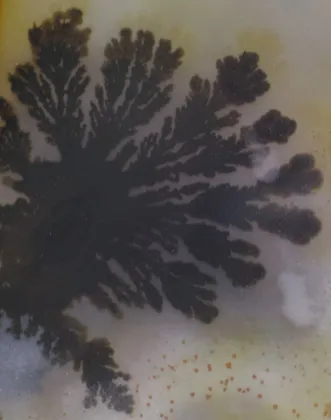
Chalcedony
Dendritic Agate
Translucent chalcedony containing black fern-like dendrites of manganese oxide that look exactly like plants but are pure mineral growth along fractures.
Mohs 6.5-7 · White, Colorless
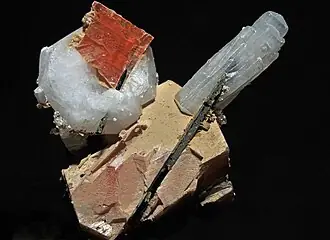
Mineraloid
Dendritic Opal
Common opal without play-of-color, patterned instead by black manganese dendrites branching through pale cream host — sometimes called Merlinite in the trade.
Mohs 5.5-6.5 · Cream, Black
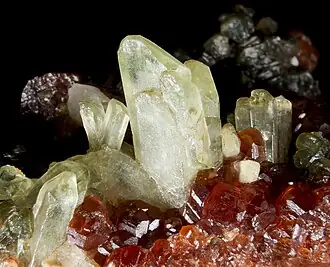
Pyroxene
Diopside
Chrome diopside from Siberia is a deep forest green rivalling emerald; star diopside from India shows a four-rayed black star.
Mohs 5.5-6.5 · Green, Black
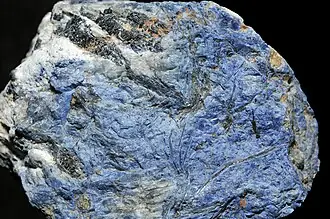
Silicate
Dumortierite
Dense blue borosilicate, usually massive or as fibrous inclusions in quartz. Hard, deeply colored and often mistaken for sodalite or lapis.
Mohs 7-8.5 · Blue, Violet
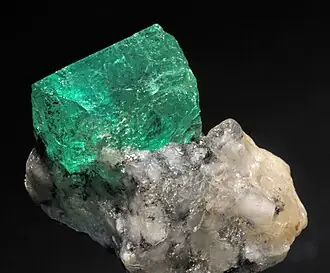
Beryl
Emerald
Chromium- or vanadium-colored green beryl and one of the four classical precious stones. Colombian material from Muzo and Chivor is the historical benchmark.
Mohs 7.5-8 · Green
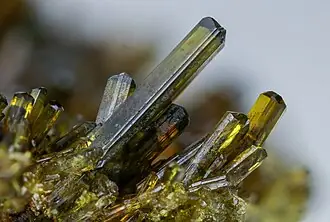
Silicate
Epidote
Distinctly pistachio-green striated crystals with a resinous lustre, often forming radiating sprays on quartz or prehnite.
Mohs 6-7 · Pistachio green, Black-green
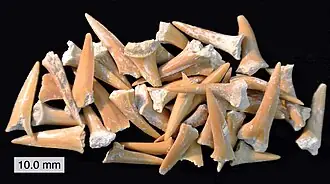
Fossil
Fossil Shark Tooth
Sharks shed teeth continuously, which is why they are the most abundant vertebrate fossil on earth. Color comes from the minerals in the burial sediment — river-tumbled Florida teeth run jet black, Moroccan phosphate teeth tan and grey.
Mohs 4.5-5 · Black, Grey
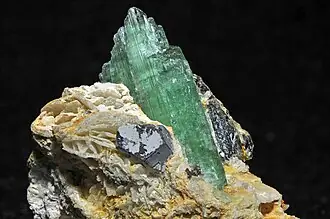
Spodumene
Hiddenite
The green chromium-bearing variety of spodumene, and one of the few significant gemstones first described from the eastern United States.
Mohs 6.5-7 · Green, Yellow-green
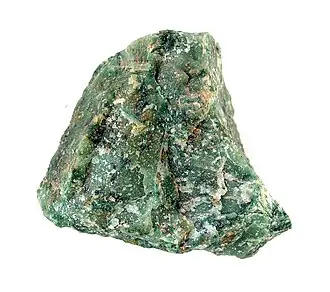
Pyroxene
Jadeite
The rarer, harder jade, and the source of imperial green. Nearly all top gem jadeite comes from a small region of northern Myanmar.
Mohs 6.5-7 · Green, Lavender
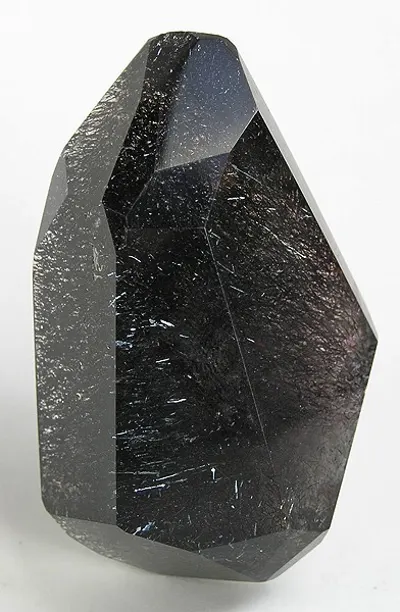
Quartz
Lepidocrocite in Quartz
Clear or amethystine quartz hosting fans of red-orange lepidocrocite blades, often in super-seven and 'harlequin' combinations from Madagascar.
Mohs 7 · Red, Orange
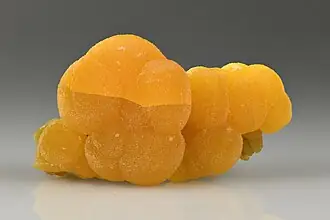
Arsenate
Mimetite
Lead arsenate that grows as glassy yellow barrel crystals or as botryoidal 'campylite' spheres. The Mexican Mapimí material, in warm marigold rounds, is the one most often seen.
Mohs 3.5-4 · Yellow, Orange
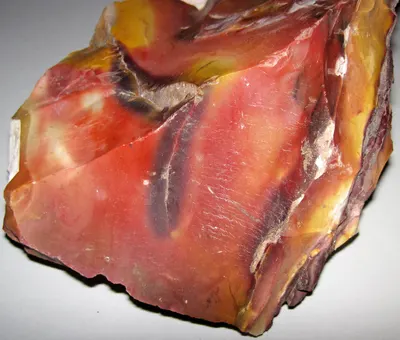
Chalcedony
Mookaite
Australian radiolarite — silicified deep-sea microfossil ooze — in mustard yellow, plum and brick red. Dense, takes a glassy polish and comes from one station in the Kennedy Ranges.
Mohs 6.5-7 · Red, Yellow
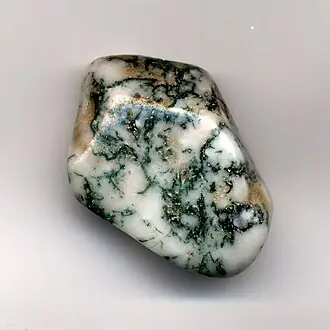
Chalcedony
Moss Agate
Translucent chalcedony filled with dendritic mineral growths that look like moss, ferns or distant trees. Not banded, so technically not a true agate.
Mohs 6.5-7 · Green, Colorless
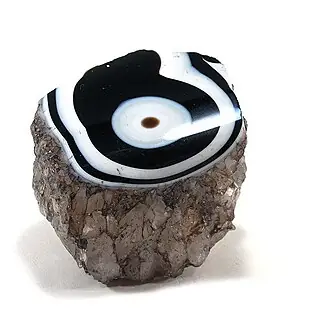
Chalcedony
Onyx
Chalcedony with straight parallel banding. Most 'black onyx' on the market is grey chalcedony dyed black, a practice so old and so standard that it is not considered a deception.
Mohs 6.5-7 · Black, White
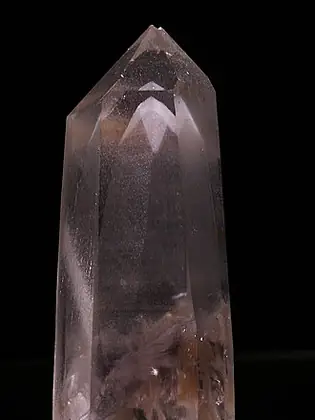
Quartz
Phantom Quartz
Quartz that paused during growth long enough for a film of chlorite, hematite or clay to settle on its faces, then resumed — leaving a ghost crystal sealed inside the finished one.
Mohs 7 · Colorless, Green
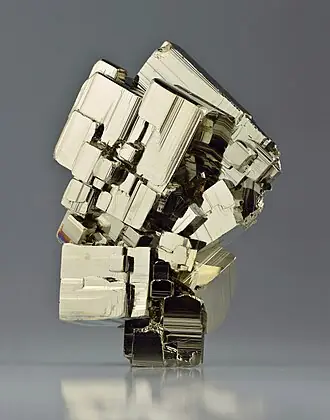
Sulfide
Pyrite
Iron sulfide that grows in astonishingly perfect cubes, dodecahedra and radiating suns. The Navajun mine in Spain produces cubes so sharp they look machined.
Mohs 6-6.5 · Brass, Gold
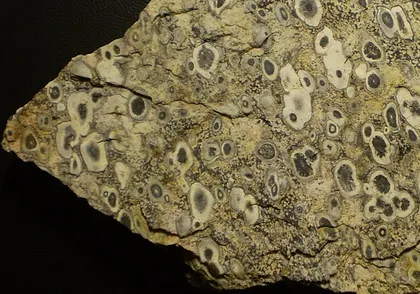
Igneous
Rainforest Rhyolite
Green and cream orbicular rhyolite, sometimes called rainforest jasper, patterned by epidote and quartz-filled gas pockets in an old lava flow.
Mohs 6-7 · Green, Olive green
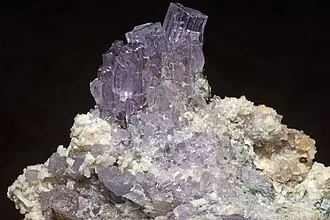
Silicate
Scapolite
An under-known gem that comes in lilac, honey yellow and pink, sometimes with a strong cat's eye from parallel tube inclusions. Tanzanian violet material is the most sought.
Mohs 5.5-6 · Violet, Yellow
Silicate
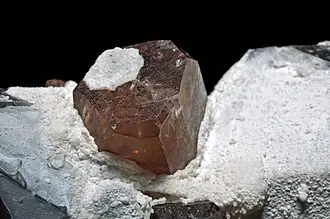
Topaz
A very hard silicate that grows in glassy prismatic crystals. Imperial topaz, the sherry-orange to pink material from Ouro Preto, is the aristocrat of the family.
Mohs 8 · Colorless, Blue
Garnet
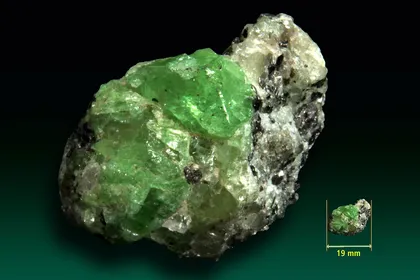
Tsavorite Garnet
Vanadium-bearing grossular garnet with an intense, slightly warm green that rivals fine emerald — with none of emerald's fractures, because tsavorite is almost never treated.
Mohs 7-7.5 · Emerald green, Green
Vanadate
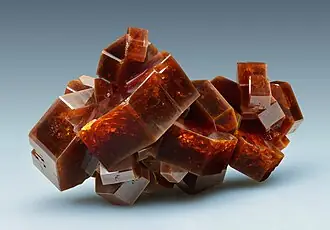
Vanadinite
Brilliant red-orange hexagonal crystals that grow on barite matrix in the lead deposits of Morocco. Few minerals are so intensely colored.
Mohs 3-4 · Red, Orange
Silicate
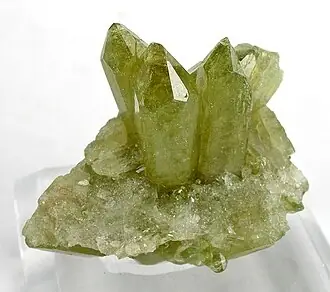
Vesuvianite
Also called idocrase. Stubby tetragonal prisms in bottle green to olive, with a resinous lustre; the Jeffrey Mine in Quebec produced the finest gem crystals ever found before it closed.
Mohs 6-7 · Green, Olive green
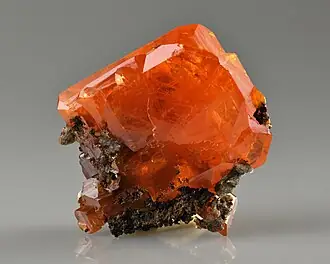
Molybdate
Wulfenite
Thin tabular crystals like stained glass windows, ranging from butterscotch yellow to the legendary deep red of Arizona's Red Cloud Mine.
Mohs 2.75-3 · Orange, Yellow
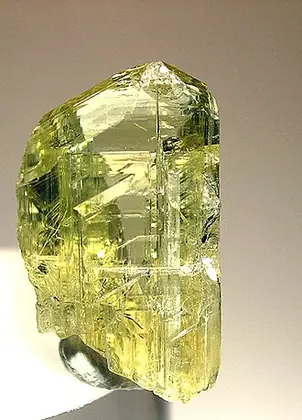
Zoisite
Zoisite (Ruby in Zoisite)
Green zoisite studded with red ruby crystals and black hornblende, sometimes called anyolite. Bold, opaque and excellent for large carvings.
Mohs 6-7 · Green, Pink
Please noteTraditional properties, effects, and aura associations are shared for cultural, historical, and personal-interest reasons only. They are folklore, not medicine. Nothing here is medical, psychological, or financial advice, and no stone is intended to diagnose, treat, cure, or prevent any condition. Please see a qualified professional for health concerns.