Judging quality
Nearly all emeralds contain inclusions, poetically called the jardin; clarity expectations are lower than for other gems. Most are oiled or resin-filled, which must be disclosed. Color, not clarity, drives value.
Beryl
Chromium- or vanadium-colored green beryl and one of the four classical precious stones. Colombian material from Muzo and Chivor is the historical benchmark.
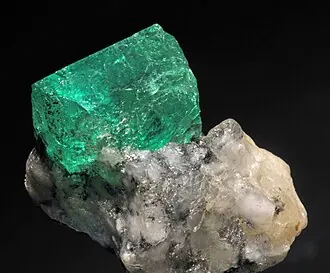
Nearly all emeralds contain inclusions, poetically called the jardin; clarity expectations are lower than for other gems. Most are oiled or resin-filled, which must be disclosed. Color, not clarity, drives value.
Brittle with internal fractures. Never ultrasonic clean; wipe with a soft damp cloth to protect fillers.
Cleopatra's mines in Egypt's Eastern Desert were producing emerald by 300 BCE, centuries before the Colombian deposits reached Europe.
Cultural history, recorded as tradition rather than as medical or scientific claim.
See it in person
Both rooms are open six days a week, and there is always someone happy to pull pieces out of the case so you can compare them under the light.