The crystal encyclopedia
45 of 218
Rose quartz, rhodochrosite and the pink-and-green stones of affection.
Organic
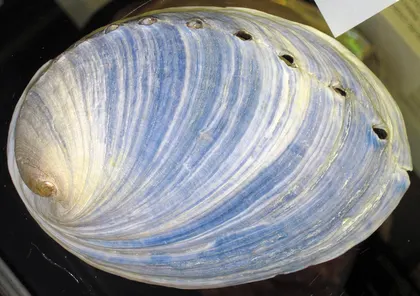
Abalone Shell
The nacreous inner shell of the abalone sea snail, layered aragonite platelets that scatter light into peacock blues and greens. New Zealand paua is the most saturated; California red abalone runs pink and silver.
Mohs 3.5-4 · Iridescent, Blue-green
Organic
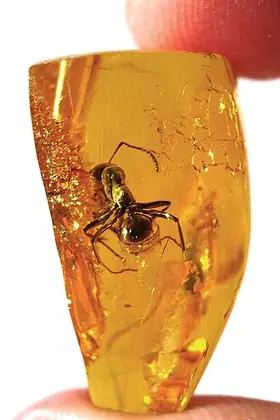
Amber
Tree resin fossilised over 30 to 100 million years. Baltic amber runs butterscotch to cognac; Dominican material can be transparent blue under daylight; Burmese burmite is the oldest at roughly 99 million years and is the amber most often carrying insect inclusions.
Mohs 2-2.5 · Amber, Honey
Pyroxene
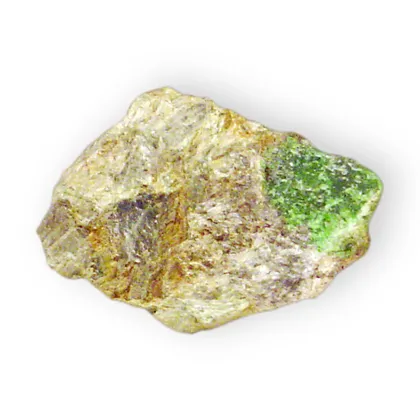
Chrome Diopside
Intensely green chromium diopside from Siberia, mined in a brief window each year when the Yakutian ground is workable. Small stones are vividly green; larger ones darken toward black.
Mohs 5.5-6.5 · Emerald green, Bottle green
Oxide
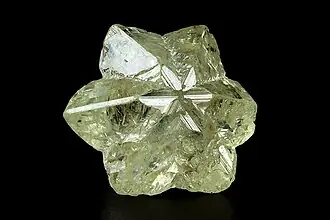
Chrysoberyl
The third hardest gem mineral after diamond and corundum, and badly underrated. Ordinary chrysoberyl is a crisp yellow-green; the cat's eye variety cymophane shows a razor-sharp band of light from fine parallel inclusions.
Mohs 8.5 · Yellow-green, Golden
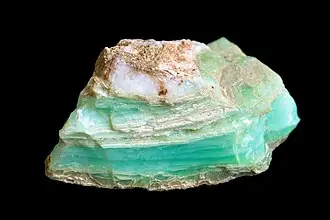
Chalcedony
Chrysoprase
Nickel-colored chalcedony in luminous apple green — the most valuable variety of chalcedony and historically the green stone of choice before emerald was widely available.
Mohs 6.5-7 · Apple green, Mint
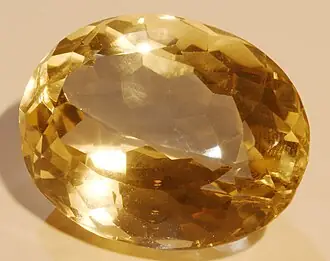
Quartz
Citrine
Yellow to golden quartz. Genuinely natural citrine is uncommon and tends toward a smoky lemon or champagne tone; the vivid orange 'burnt' material widely sold is heat-treated amethyst, which is a legitimate product but a different thing entirely.
Mohs 7 · Yellow, Golden
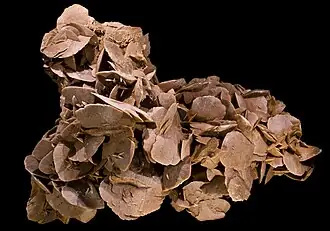
Gypsum
Desert Rose
Rosette clusters of gypsum or barite that grow in arid basins, trapping sand grains between their blades so each 'petal' carries the color of the desert it formed in.
Mohs 2 · Sand, Tan
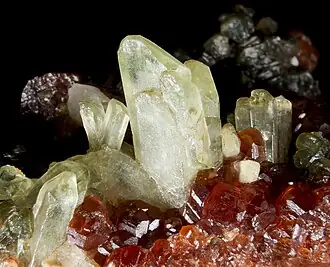
Pyroxene
Diopside
Chrome diopside from Siberia is a deep forest green rivalling emerald; star diopside from India shows a four-rayed black star.
Mohs 5.5-6.5 · Green, Black
Silicate
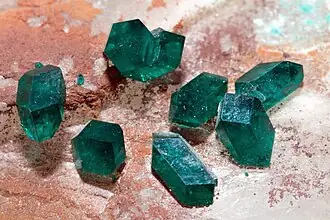
Dioptase
Perhaps the most intensely green mineral there is — copper silicate crystals of a saturated emerald so vivid that eighteenth-century collectors assumed they had found an emerald deposit. Tsumeb specimens on white dolomite are the benchmark.
Mohs 5 · Emerald green, Green
Beryl
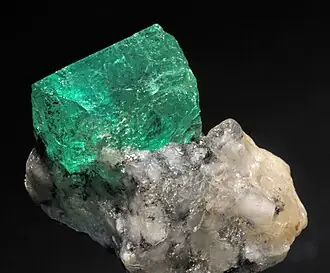
Emerald
Chromium- or vanadium-colored green beryl and one of the four classical precious stones. Colombian material from Muzo and Chivor is the historical benchmark.
Mohs 7.5-8 · Green
Silicate
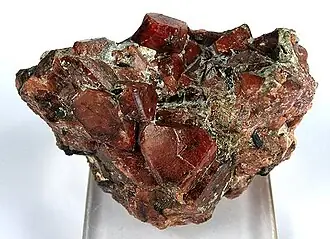
Eudialyte
Raspberry-red zirconium silicate scattered through dark alkaline rock with black aegirine and white feldspar — a striking three-color combination unique to a handful of peralkaline intrusions.
Mohs 5-6 · Magenta, Pink-red
Fossil
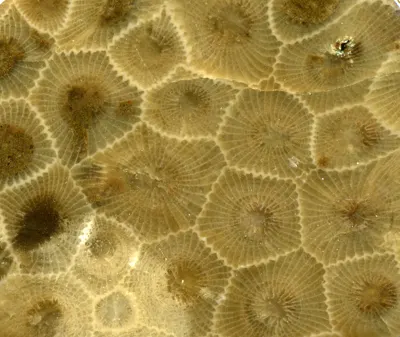
Fossil Coral
Colonial coral replaced by agate or chalcedony, preserving the flower-like corallite pattern as a permanent stone. Florida agatised coral shows crisp white florets in grey; Petoskey stone from Michigan is a Devonian rugose coral polished to a honeycomb.
Mohs 6.5-7 · Tan, Grey
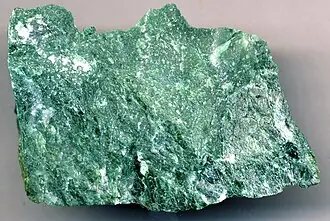
Mica
Fuchsite
Chromium-bearing muscovite mica in a glittering emerald green. Ruby in fuchsite pairs the sparkle with pink corundum crystals.
Mohs 2-3 · Emerald green, Silver-green
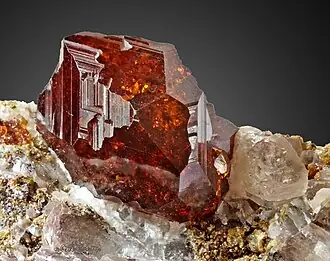
Garnet group
Garnet
A family of related silicates rather than one mineral, spanning almandine red, tsavorite green, spessartine orange and color-changing pyrope-spessartine. Crystals grow as dodecahedra with striking geometric perfection.
Mohs 6.5-7.5 · Red, Green
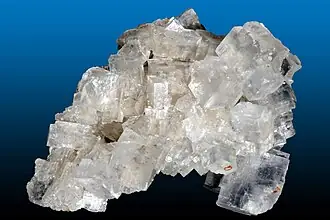
Halide
Halite
Rock salt, crystallising in perfect cubes — sometimes hopper-shaped with stepped hollow faces. Rare blue halite from German potash mines gets its color from lattice defects, not impurities.
Mohs 2-2.5 · Colorless, Pink
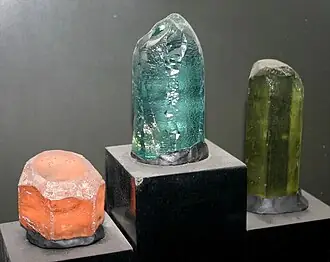
Beryl
Heliodor
Golden beryl, colored by iron — the sunlit member of the family that also gives emerald, aquamarine and morganite. Ukrainian Volyn crystals are the classic: sharp hexagonal prisms in champagne to deep gold.
Mohs 7.5-8 · Golden, Yellow
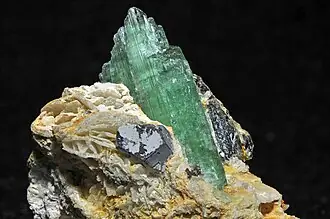
Spodumene
Hiddenite
The green chromium-bearing variety of spodumene, and one of the few significant gemstones first described from the eastern United States.
Mohs 6.5-7 · Green, Yellow-green
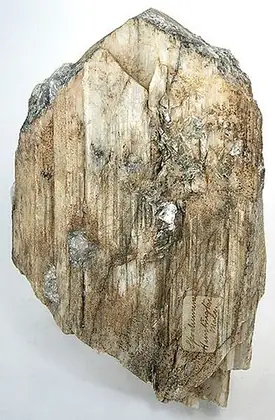
Spodumene
Kunzite
Lilac-pink spodumene, strongly pleochroic so it shifts between pink and near-colorless as it turns. Afghan crystals are famous for their size and clarity.
Mohs 6.5-7 · Pink, Lilac
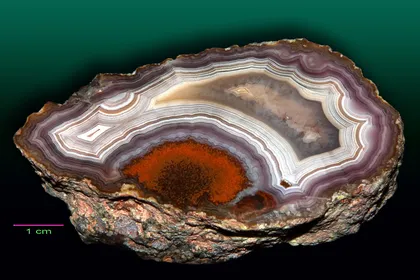
Chalcedony
Laguna Agate
Widely considered the finest banded agate on earth: tight, high-contrast red and white fortification banding from one ranch in Chihuahua. Collector-grade nodules are sold by name and by pattern.
Mohs 6.5-7 · Red, Orange
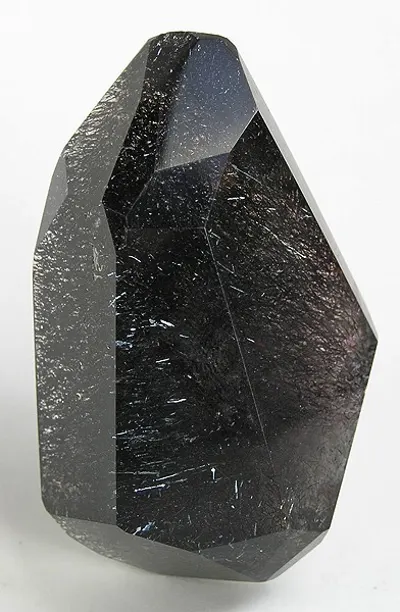
Quartz
Lepidocrocite in Quartz
Clear or amethystine quartz hosting fans of red-orange lepidocrocite blades, often in super-seven and 'harlequin' combinations from Madagascar.
Mohs 7 · Red, Orange
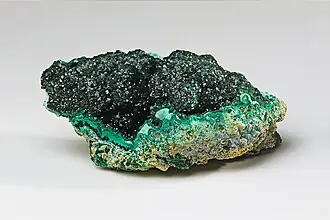
Carbonate
Malachite
Banded green copper carbonate with concentric bullseye patterning from botryoidal growth. Congolese material sets the standard for contrast and polish.
Mohs 3.5-4 · Green
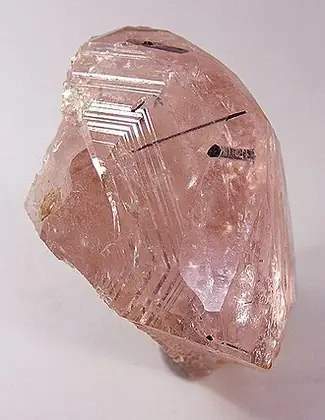
Beryl
Morganite
Pink to peach beryl colored by manganese. Crystals tend to be tabular rather than long, and the softest apricot tones are the most characteristic.
Mohs 7.5-8 · Peach, Pink
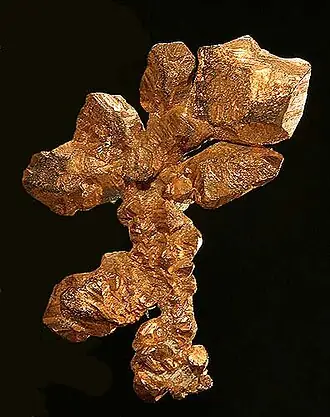
Element
Native Copper
Metallic copper that crystallised directly out of hydrothermal fluid, growing in twisted branching sprays and flattened arborescent plates. Michigan's Keweenaw deposits produced masses weighing tonnes.
Mohs 2.5-3 · Bronze, Red
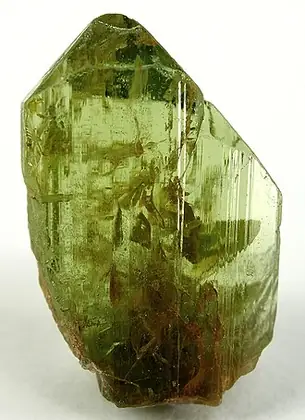
Olivine
Peridot
Gem olivine, one of very few gemstones that occurs in only one color. It arrives at the surface in basalt and, occasionally, inside pallasite meteorites.
Mohs 6.5-7 · Olive green, Lime
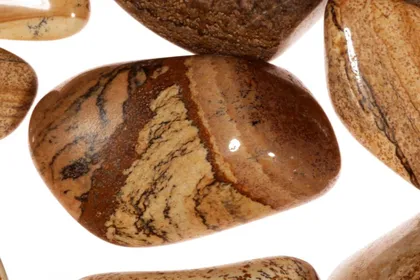
Chalcedony
Picture Jasper
Jasper whose iron staining and sediment layering read as desert landscapes — mesas, dunes, storm skies. Biggs and Bruneau material from the Pacific Northwest are the classics of the type.
Mohs 6.5-7 · Tan, Brown
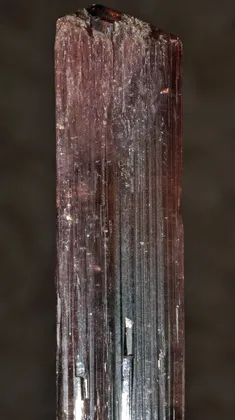
Tourmaline
Pink Tourmaline (Rubellite)
Lithium tourmaline in pink to raspberry red. Rubellite proper keeps its color under both daylight and artificial light, which is what separates it from lighter pink material.
Mohs 7-7.5 · Pink, Red
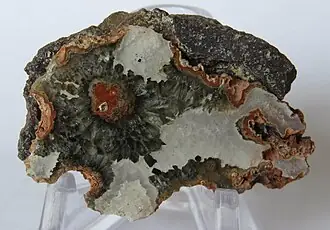
Quartz
Prasiolite
Green quartz. Almost all of it is amethyst that has been heated to about 500°C — a stable, permanent transformation, but a treatment, and any honest seller says so. Genuinely natural prasiolite is rare and paler.
Mohs 7 · Apple green, Pistachio green
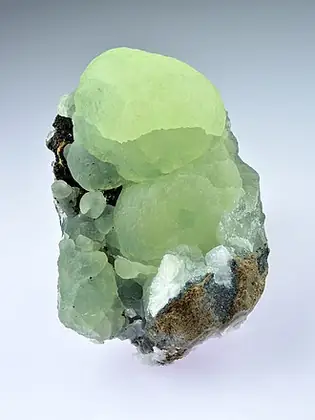
Silicate
Prehnite
Botryoidal green silicate with a soft grape-cluster surface, frequently hosting black epidote needles that make the best specimens.
Mohs 6-6.5 · Green, Yellow-green
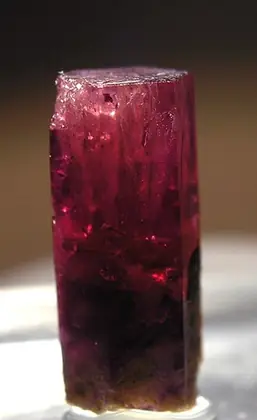
Beryl
Red Beryl
One of the rarest gem minerals in existence, found in commercial quantity at a single Utah locality. Manganese gives it a raspberry red no other beryl reaches, and faceted stones over a carat are counted in the low hundreds worldwide.
Mohs 7.5-8 · Red, Pink-red
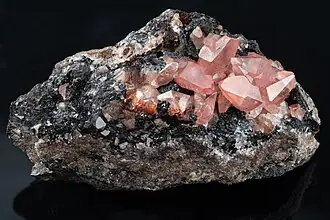
Carbonate
Rhodochrosite
Manganese carbonate in rose pink, occurring both as banded stalactitic material from Argentina and as vivid transparent rhombs from Colorado's Sweet Home Mine.
Mohs 3.5-4 · Rose pink, Red
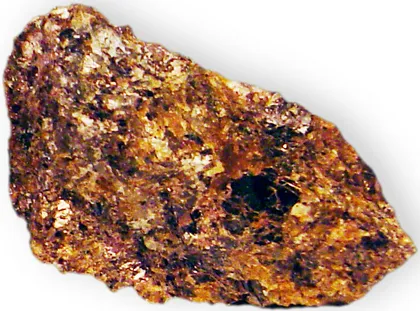
Garnet
Rhodolite Garnet
A pyrope-almandine blend with a raspberry to grape color that is lighter and more purple than common red garnet, and reads far livelier in a faceted stone.
Mohs 7-7.5 · Pink-red, Magenta
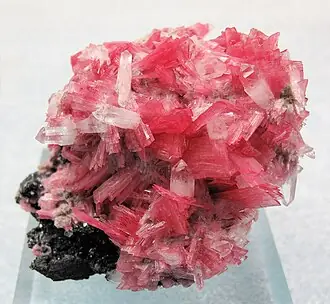
Silicate
Rhodonite
Pink manganese silicate laced with black manganese oxide veining. Harder and far more durable than rhodochrosite, which makes it the better carving stone.
Mohs 5.5-6.5 · Pink, Black
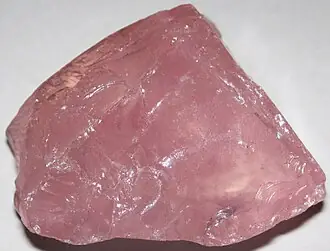
Quartz
Rose Quartz
The soft pink massive quartz that almost everyone recognises. Most rose quartz occurs as cloudy vein material rather than crystals; true terminated rose quartz crystals, mainly from Brazil, are genuinely rare and collectible.
Mohs 7 · Pink, Blush
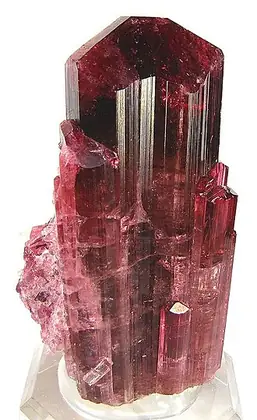
Tourmaline
Rubellite Tourmaline
The deep red to hot magenta end of elbaite tourmaline. True rubellite holds its color under both daylight and lamplight rather than going brown, which is the trade's dividing line from ordinary pink tourmaline.
Mohs 7-7.5 · Pink-red, Magenta
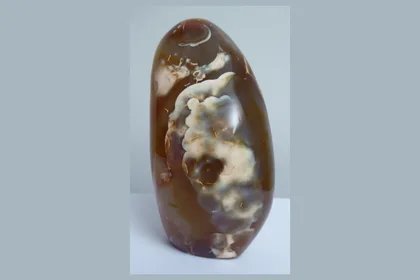
Chalcedony
Sardonyx
Straight-banded chalcedony alternating reddish-brown sard with white — the classic cameo material, because a carver can cut through the pale layer to reveal the dark one beneath.
Mohs 6.5-7 · Red, White
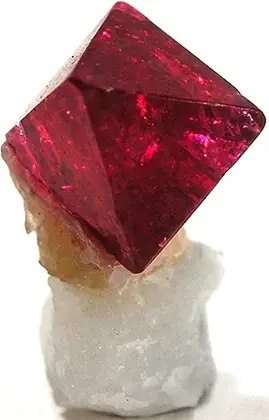
Oxide
Spinel
Long mistaken for ruby, spinel is a distinct mineral with brilliant color, excellent hardness and, crucially, almost no treatment in the trade.
Mohs 7.5-8 · Red, Pink
Quartz
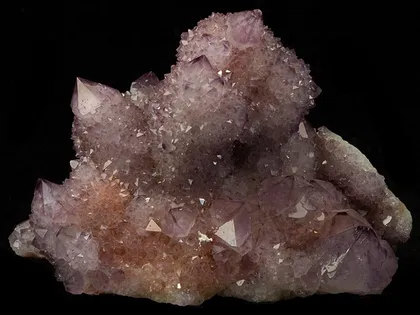
Spirit Quartz
Amethyst or citrine points entirely encrusted with a coat of tiny second-generation crystals, so the wand bristles like frost. Found in commercial quantity in one district of South Africa.
Mohs 7 · Lavender, Violet
Silicate
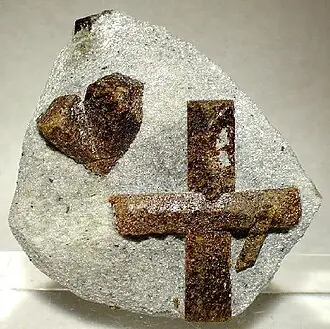
Staurolite
Iron aluminium silicate famous for twinning into natural crosses — some at ninety degrees, some at sixty. Russian Kola material gives the crispest right-angle crosses.
Mohs 7-7.5 · Brown, Clove brown
Zeolite
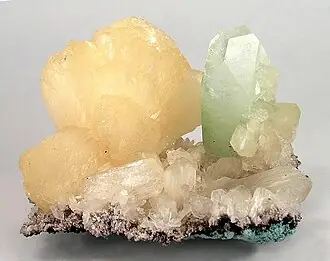
Stilbite
A zeolite that grows in peach-colored bowtie and sheaf-like sprays, most often alongside apophyllite in Indian basalt pockets.
Mohs 3.5-4 · Peach, White
Quartz
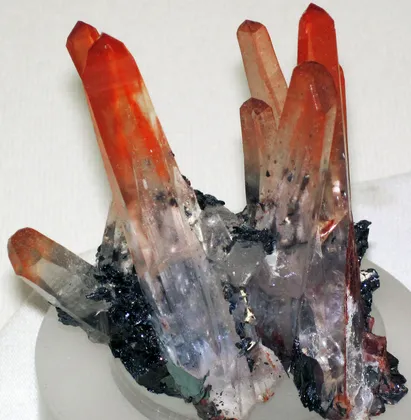
Strawberry Quartz
Quartz filled with tiny red platelets of hematite or lepidocrocite that give a strawberry-seed sparkle through a pink body.
Mohs 7 · Pink-red, Red
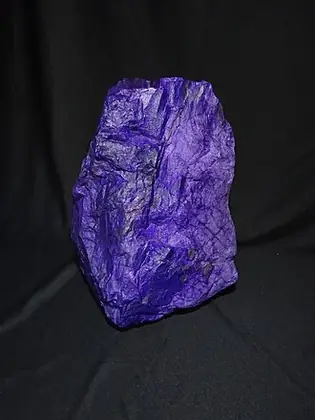
Cyclosilicate
Sugilite
Deep violet manganese silicate, effectively a single-deposit stone: virtually all gem sugilite comes from the Wessels Mine in the Kalahari manganese field.
Mohs 5.5-6.5 · Violet, Magenta
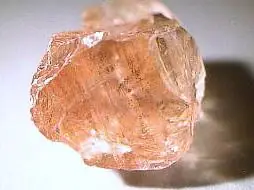
Feldspar
Sunstone
Feldspar with a glittering aventurescence from platelets of copper or hematite. Oregon sunstone is unusual in being colored by native copper, producing transparent red and green gems.
Mohs 6-6.5 · Orange, Red
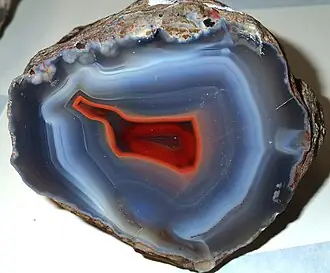
Chalcedony
Turritella Agate
Dark brown agate packed with the spiral shells of freshwater snails — properly Elimia tenera, not Turritella, but the trade name stuck a century ago. Cut faces show the spirals in cross-section like a mosaic.
Mohs 6.5-7 · Brown, Black
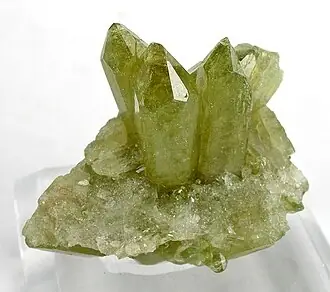
Silicate
Vesuvianite
Also called idocrase. Stubby tetragonal prisms in bottle green to olive, with a resinous lustre; the Jeffrey Mine in Quebec produced the finest gem crystals ever found before it closed.
Mohs 6-7 · Green, Olive green
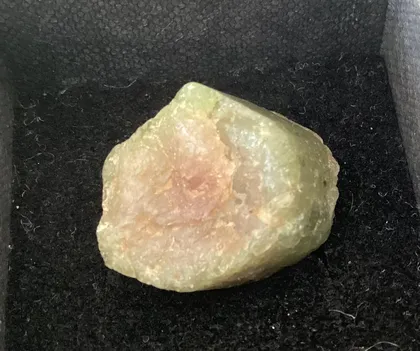
Tourmaline
Watermelon Tourmaline
Tourmaline zoned with a pink core and green rind, sliced across the prism to show the fruit-like cross-section that gives it its name.
Mohs 7-7.5 · Pink, Green
Please noteTraditional properties, effects, and aura associations are shared for cultural, historical, and personal-interest reasons only. They are folklore, not medicine. Nothing here is medical, psychological, or financial advice, and no stone is intended to diagnose, treat, cure, or prevent any condition. Please see a qualified professional for health concerns.