Quartz

Prasiolite

Green quartz. Almost all of it is amethyst that has been heated to about 500°C — a stable, permanent transformation, but a treatment, and any honest seller says so. Genuinely natural prasiolite is rare and paler.
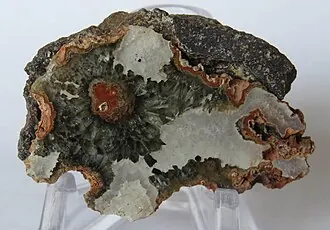
Prasiolite — mineral specimen
Reference photograph: John Collins, CC0 · source. Specimens in the shop vary.

Judging quality

Even, slightly muted leaf green. Vivid emerald 'green amethyst' is usually green-coated or irradiated quartz rather than prasiolite.

Care

Color is stable in light. Ordinary cleaning.

History & lore

The Montezuma mine in Minas Gerais produced the amethyst that first heat-treated reliably to green in the 1950s.

Cultural history, recorded as tradition rather than as medical or scientific claim.

Common questions about Prasiolite

What is Prasiolite?
Green quartz. Almost all of it is amethyst that has been heated to about 500°C — a stable, permanent transformation, but a treatment, and any honest seller says so. Genuinely natural prasiolite is rare and paler.
How hard is Prasiolite and what is it made of?
Prasiolite is a Quartz-family mineral with the composition SiO2. It crystallizes in the trigonal system and rates 7 on the Mohs hardness scale. It occurs in apple green, pistachio green, pale yellow.
Where does Prasiolite come from?
Notable localities for Prasiolite include Brazil (Montezuma), Poland, Arizona, USA.
How do you tell good Prasiolite from filler?
Even, slightly muted leaf green. Vivid emerald 'green amethyst' is usually green-coated or irradiated quartz rather than prasiolite.
How do you care for Prasiolite?
Color is stable in light. Ordinary cleaning.

See it in person

Photographs only go so far

Both rooms are open six days a week, and there is always someone happy to pull pieces out of the case so you can compare them under the light.

Plan a visit
Share Prasiolite