The crystal encyclopedia
53 of 218
Self-worth, willpower and the confident part of a person.
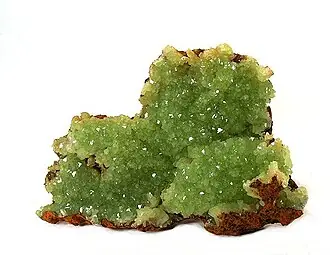
Arsenate
Adamite
Bright yellow-green zinc arsenate crusts, best known from the Ojuela mine at Mapimí where it carpets brown limonite matrix in glowing druzy sprays.
Mohs 3.5 · Yellow-green, Lime
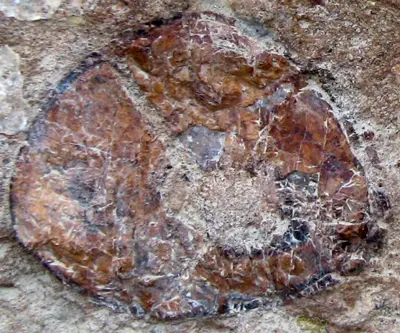
Fossil
Agatised Dinosaur Bone
Jurassic sauropod bone in which the marrow cells have been replaced cell by cell with agate and jasper — 'gembone'. The best Utah material shows red and yellow cells outlined in black, holding a mirror polish.
Mohs 6.5-7 · Red, Yellow
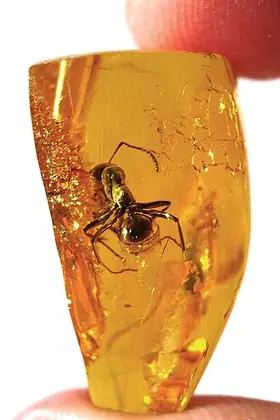
Organic
Amber
Tree resin fossilised over 30 to 100 million years. Baltic amber runs butterscotch to cognac; Dominican material can be transparent blue under daylight; Burmese burmite is the oldest at roughly 99 million years and is the amber most often carrying insect inclusions.
Mohs 2-2.5 · Amber, Honey
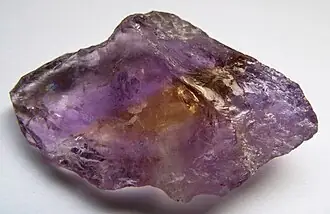
Quartz
Ametrine
A single quartz crystal zoned into amethyst purple and citrine gold, formed where differing temperatures acted on opposite ends of the same crystal. Commercially it comes essentially from one deposit in eastern Bolivia.
Mohs 7 · Purple, Yellow
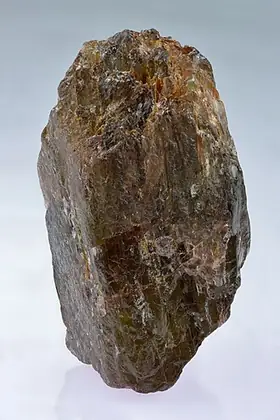
Silicate
Andalusite
A strongly pleochroic gem that shows green, gold and red-brown simultaneously from different directions — cutters deliberately orient it to display all three at once rather than trying to eliminate them.
Mohs 7-7.5 · Olive green, Brown
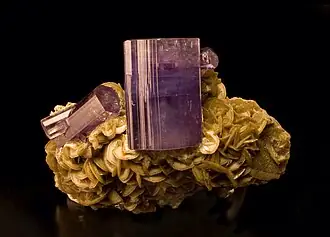
Phosphate
Apatite
The mineral of bone and tooth enamel, and a gem in its own right. Neon blue-green Madagascan apatite is one of the most electric colors in the mineral kingdom.
Mohs 5 · Blue, Green
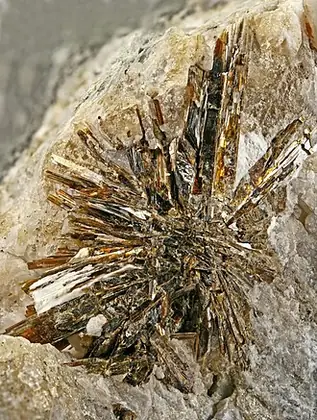
Silicate
Astrophyllite
Bronze-gold blades radiating in star-bursts through dark nepheline syenite. The name means star leaf, and a good slab looks like a night sky of gold flares.
Mohs 3-4 · Bronze, Golden
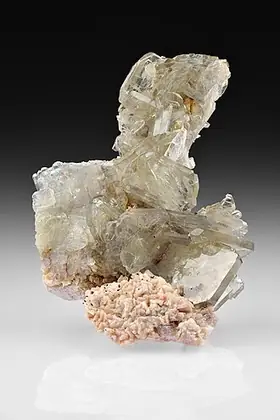
Sulfate
Barite
Unusually heavy for a pale mineral — its high barium content makes barite feel like metal in the hand. Grows in blades, roses and elegant tabular crystals.
Mohs 3-3.5 · White, Blue
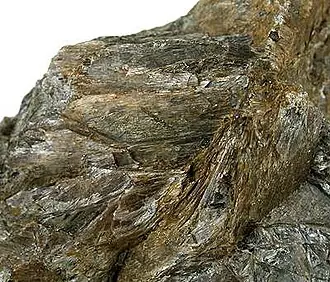
Pyroxene
Bronzite
Enstatite with enough iron to develop a warm metallic bronze sheen across the cleavage planes. Usually cut as cabochons or beads, sometimes intergrown with green serpentine.
Mohs 5-6 · Bronze, Brown
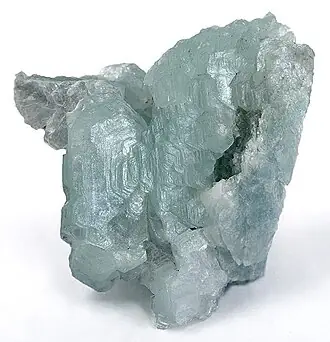
Hydroxide
Brucite
Pale golden-yellow platy crystals with a pearly, almost waxy glow, best known from Pakistani specimens where honey-colored brucite sits on grey matrix.
Mohs 2.5-3 · Yellow, Golden
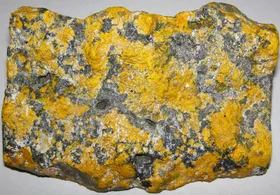
Sedimentary
Bumblebee Stone
Banded yellow, orange and black material from a live volcanic fumarole field in Java. Sold as 'bumblebee jasper', but it is not a jasper at all — it is volcanic sediment cemented with sulfur, calcite and arsenic minerals.
Mohs 4-5 · Yellow, Black
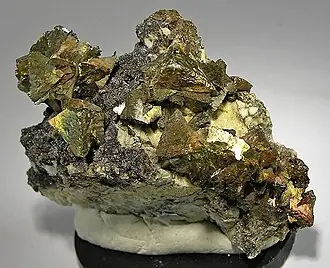
Sulfide
Chalcopyrite (Peacock Ore)
Copper iron sulfide whose tarnish film refracts into peacock blues, purples and greens. Most 'peacock ore' sold has been acid-treated to intensify the effect.
Mohs 3.5-4 · Gold, Iridescent
Oxide
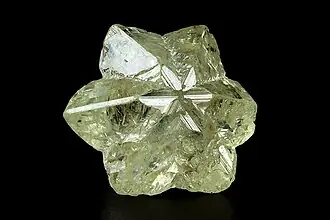
Chrysoberyl
The third hardest gem mineral after diamond and corundum, and badly underrated. Ordinary chrysoberyl is a crisp yellow-green; the cat's eye variety cymophane shows a razor-sharp band of light from fine parallel inclusions.
Mohs 8.5 · Yellow-green, Golden
Quartz
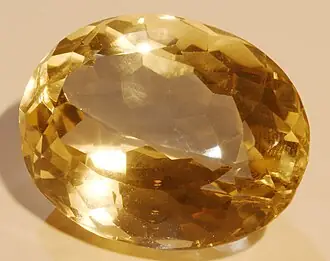
Citrine
Yellow to golden quartz. Genuinely natural citrine is uncommon and tends toward a smoky lemon or champagne tone; the vivid orange 'burnt' material widely sold is heat-treated amethyst, which is a legitimate product but a different thing entirely.
Mohs 7 · Yellow, Golden
Organic
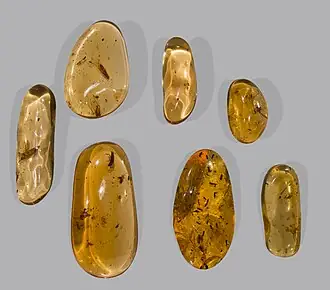
Copal
Young tree resin, typically a few thousand to a few million years old — geologically an amber in progress. Colombian copal is bright, glassy and often crowded with recent insect inclusions, which is why it is so frequently sold as amber.
Mohs 1.5-2 · Golden, Pale yellow
Chalcedony
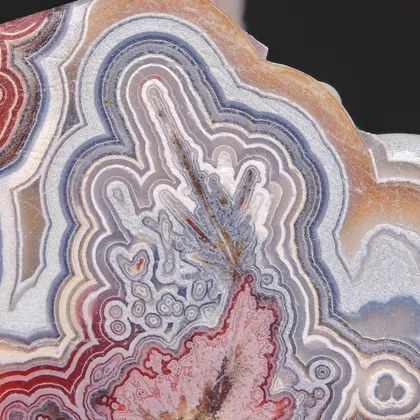
Crazy Lace Agate
Chaotic swirling agate in cream, butterscotch and brick red, formed in Cretaceous limestone in northern Mexico. Sometimes called the laughter stone for how busy and cheerful the pattern reads.
Mohs 6.5-7 · Red, Cream
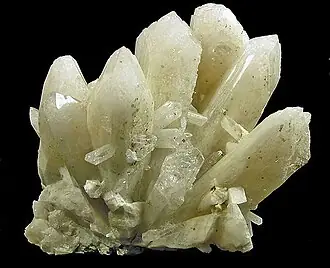
Silicate
Danburite
Chisel-tipped prisms of glassy calcium boron silicate, most familiar from the Charcas mines of San Luis Potosí where crystals grow water-clear and doubly terminated.
Mohs 7-7.5 · Colorless, Pale yellow
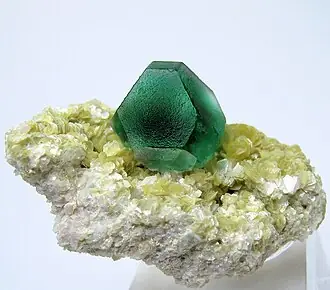
Halide
Fluorite
The most colorful mineral in the world, fluorite grows in perfect cubes and octahedra, often color-zoned in bands of green, purple and clear within a single crystal.
Mohs 4 · Green, Purple
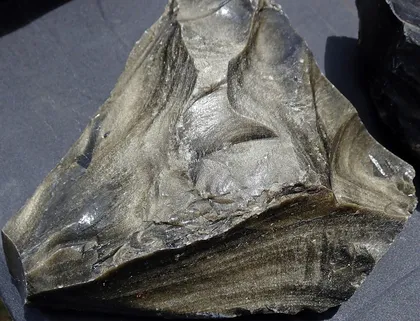
Volcanic glass
Gold & Silver Sheen Obsidian
Obsidian with a metallic golden or silver shimmer produced by a layer of aligned microscopic gas bubbles reflecting light in unison.
Mohs 5-5.5 · Black, Golden
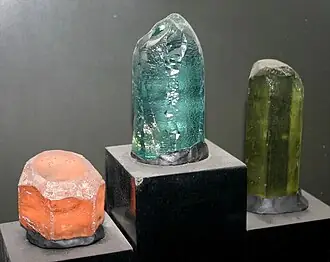
Beryl
Heliodor
Golden beryl, colored by iron — the sunlit member of the family that also gives emerald, aquamarine and morganite. Ukrainian Volyn crystals are the classic: sharp hexagonal prisms in champagne to deep gold.
Mohs 7.5-8 · Golden, Yellow
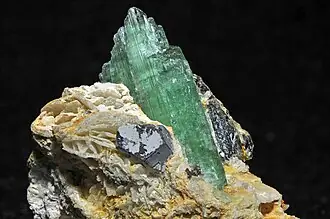
Spodumene
Hiddenite
The green chromium-bearing variety of spodumene, and one of the few significant gemstones first described from the eastern United States.
Mohs 6.5-7 · Green, Yellow-green
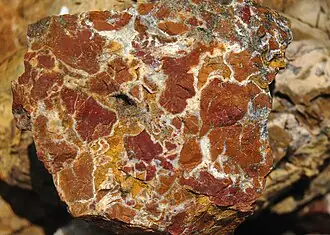
Chalcedony
Jasper
Opaque microcrystalline quartz colored by iron and clay impurities. Jasper is a family rather than a single stone, and named varieties — ocean, picture, mookaite, bumblebee — often come from a single deposit.
Mohs 6.5-7 · Red, Yellow
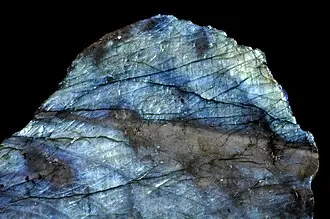
Feldspar
Labradorite
A plagioclase feldspar that hides fire inside dull grey stone. Light striking internal lamellae scatters into blue, gold, green and, in the best pieces, full-spectrum flash.
Mohs 6-6.5 · Grey, Blue
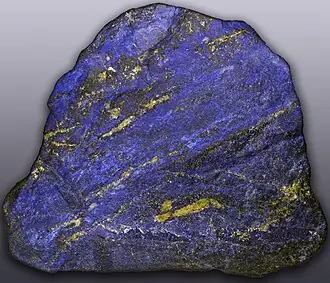
Rock (lazurite)
Lapis Lazuli
A rock rather than a single mineral: deep blue lazurite with white calcite and flecks of golden pyrite. The Sar-e-Sang mines of Badakhshan have supplied the world for over six thousand years.
Mohs 5-5.5 · Blue, Gold
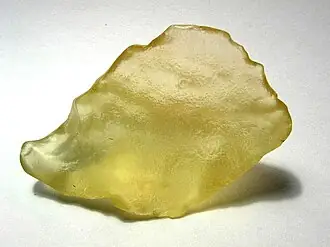
Impactite
Libyan Desert Glass
Almost pure silica glass, twenty-nine million years old, scattered across a remote corner of the Sahara by an impact event that has never been fully resolved.
Mohs 6-7 · Pale yellow, Clear
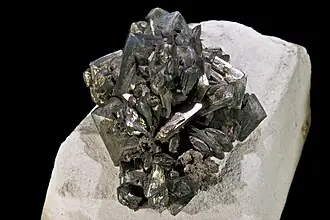
Sulfide
Marcasite
Chemically identical to pyrite but crystallising in a different system, marcasite is paler, more brittle and prone to breaking down over time.
Mohs 6-6.5 · Pale brass, Silver
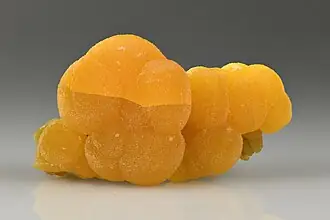
Arsenate
Mimetite
Lead arsenate that grows as glassy yellow barrel crystals or as botryoidal 'campylite' spheres. The Mexican Mapimí material, in warm marigold rounds, is the one most often seen.
Mohs 3.5-4 · Yellow, Orange
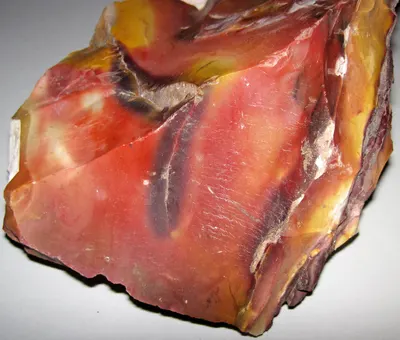
Chalcedony
Mookaite
Australian radiolarite — silicified deep-sea microfossil ooze — in mustard yellow, plum and brick red. Dense, takes a glassy polish and comes from one station in the Kennedy Ranges.
Mohs 6.5-7 · Red, Yellow
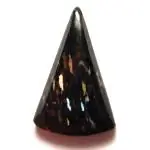
Metamorphic
Nuummite
One of the oldest gem materials on earth at roughly three billion years — a black amphibole rock threaded with iridescent gold, green and violet flash from intergrown crystal lamellae. Mined by hand from a remote Greenland site with a short seasonal window.
Mohs 5.5-6 · Black, Iridescent
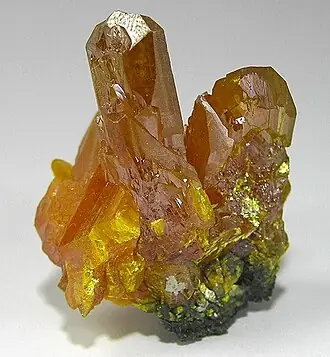
Sulfide
Orpiment
Arsenic trisulfide in sheaves of golden foliated blades with a resinous to pearly flash. It usually grows alongside realgar, the pair making one of the most striking red-and-gold associations in mineralogy.
Mohs 1.5-2 · Golden, Yellow
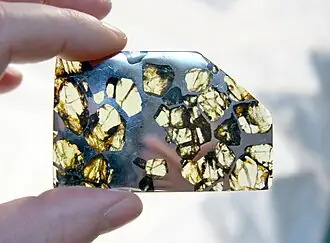
Meteorite
Pallasite Meteorite
The rarest class of meteorite most people ever see: olivine crystals suspended in a nickel-iron matrix, formed at the boundary between the core and mantle of a shattered planetesimal. Cut into slices, the gem olivine glows amber-green in transmitted light.
Mohs 4-6.5 · Silver, Golden
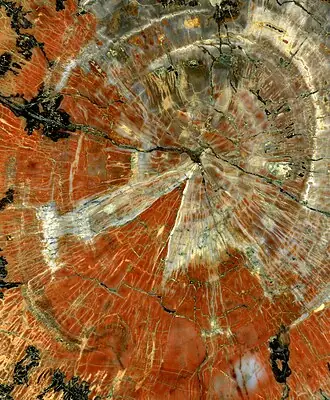
Fossil
Petrified Wood
Ancient wood in which every cell was replaced by silica, preserving growth rings, bark and even insect galleries in solid quartz.
Mohs 6.5-7 · Brown, Red
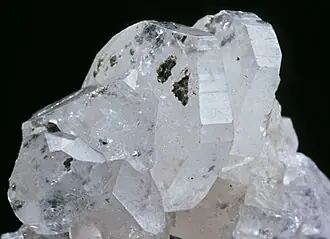
Silicate
Phenakite
A hard, brilliant beryllium silicate that is rare as gem rough and prized by collectors for water-clear rhombohedral crystals. Its name comes from the Greek for deceiver, because it was so often mistaken for quartz.
Mohs 7.5-8 · Colorless, White
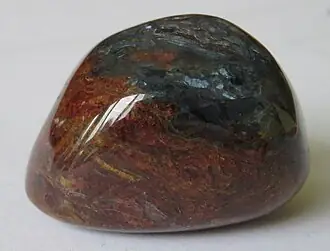
Quartz
Pietersite
A brecciated chatoyant quartz in which fragments of tiger's eye and hawk's eye were shattered and recemented, producing swirling storm-like chatoyancy.
Mohs 6.5-7 · Blue, Gold
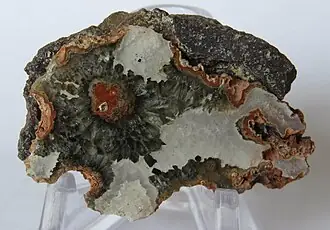
Quartz
Prasiolite
Green quartz. Almost all of it is amethyst that has been heated to about 500°C — a stable, permanent transformation, but a treatment, and any honest seller says so. Genuinely natural prasiolite is rare and paler.
Mohs 7 · Apple green, Pistachio green
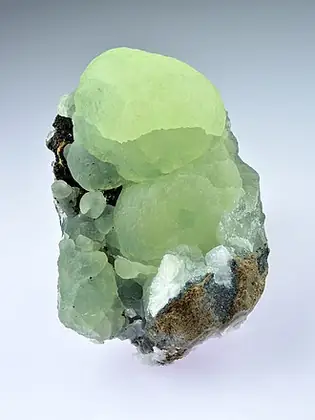
Silicate
Prehnite
Botryoidal green silicate with a soft grape-cluster surface, frequently hosting black epidote needles that make the best specimens.
Mohs 6-6.5 · Green, Yellow-green
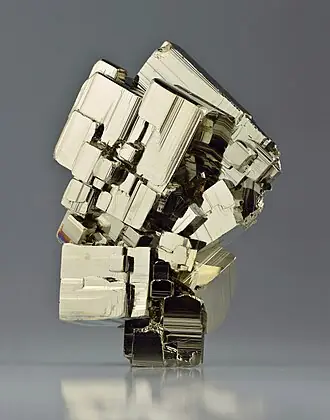
Sulfide
Pyrite
Iron sulfide that grows in astonishingly perfect cubes, dodecahedra and radiating suns. The Navajun mine in Spain produces cubes so sharp they look machined.
Mohs 6-6.5 · Brass, Gold
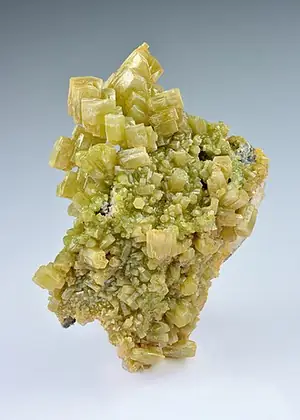
Phosphate
Pyromorphite
Barrel-shaped green hexagonal crystals with a resinous glow, forming dense druses on matrix. Chinese material from Guangxi transformed the market in the 2000s.
Mohs 3.5-4 · Green, Yellow
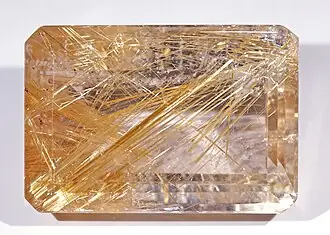
Quartz
Rutilated Quartz
Clear or smoky quartz threaded with needles of rutile, a titanium oxide that grows in golden, copper or silver hairs. The best material looks like light frozen mid-flight.
Mohs 7 · Colorless, Golden
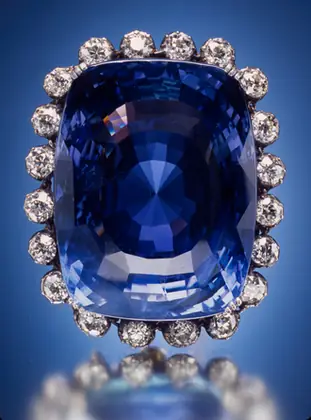
Corundum
Sapphire
Every color of gem corundum other than red. Blue comes from iron and titanium; the pink-orange padparadscha is the rarest and most coveted.
Mohs 9 · Blue, Yellow
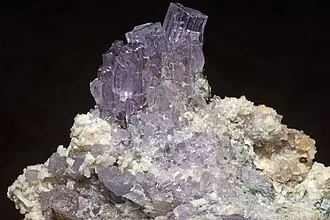
Silicate
Scapolite
An under-known gem that comes in lilac, honey yellow and pink, sometimes with a strong cat's eye from parallel tube inclusions. Tanzanian violet material is the most sought.
Mohs 5.5-6 · Violet, Yellow
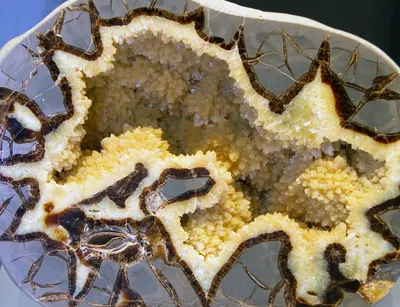
Concretion
Septarian Nodule
Mud concretions that dried and cracked internally, then had the cracks filled with golden calcite and brown aragonite — a fossil record of shrinkage roughly fifty million years old.
Mohs 3-4 · Yellow, Brown
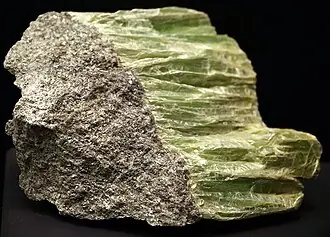
Silicate
Serpentine
A group of magnesium silicates named for their scaled, snake-like patterning. Californian serpentine is the state rock and forms the backbone of the Coast Ranges.
Mohs 3-5 · Green, Yellow-green
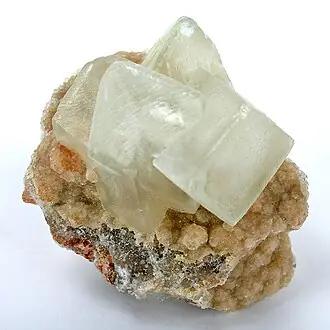
Carbonate
Smithsonite
Botryoidal zinc carbonate with a distinctive satiny lustre, appearing in gentle blue-green, lavender and pink depending on trace metals.
Mohs 4-4.5 · Blue-green, Pink
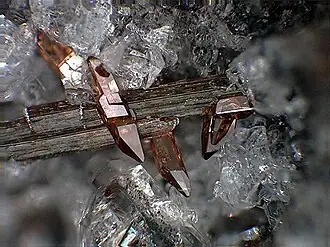
Silicate
Sphene (Titanite)
Titanite, better known as sphene, has dispersion higher than diamond, throwing intense rainbow fire from every cut surface.
Mohs 5-5.5 · Green, Yellow
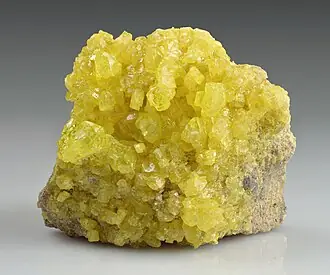
Element
Sulfur
Native sulfur in transparent lemon-yellow dipyramids, classically on white aragonite from the Sicilian mines. A pure element crystallising into gem-bright forms.
Mohs 1.5-2.5 · Yellow, Golden
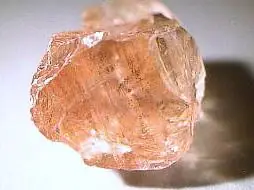
Feldspar
Sunstone
Feldspar with a glittering aventurescence from platelets of copper or hematite. Oregon sunstone is unusual in being colored by native copper, producing transparent red and green gems.
Mohs 6-6.5 · Orange, Red
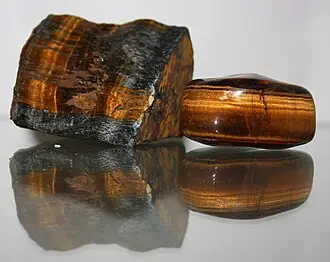
Quartz
Tiger's Eye
Quartz that replaced fibrous crocidolite, inheriting its parallel structure and producing a rolling band of light called chatoyancy. Blue hawk's eye is the unoxidised form.
Mohs 6.5-7 · Gold, Brown
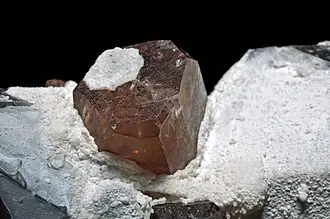
Silicate
Topaz
A very hard silicate that grows in glassy prismatic crystals. Imperial topaz, the sherry-orange to pink material from Ouro Preto, is the aristocrat of the family.
Mohs 8 · Colorless, Blue
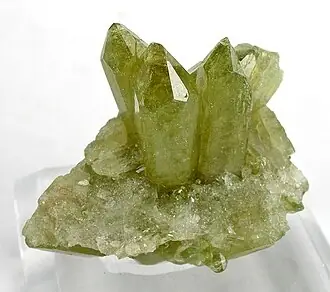
Silicate
Vesuvianite
Also called idocrase. Stubby tetragonal prisms in bottle green to olive, with a resinous lustre; the Jeffrey Mine in Quebec produced the finest gem crystals ever found before it closed.
Mohs 6-7 · Green, Olive green
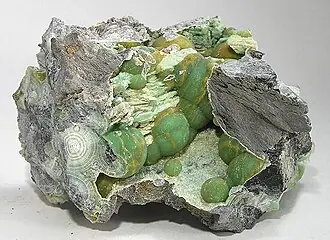
Phosphate
Wavellite
Radiating spheres of green needles that, when broken open, show a starburst cross-section like a cut kiwi. Arkansas material from the Ouachita Mountains is the world's best.
Mohs 3.5-4 · Apple green, Yellow-green
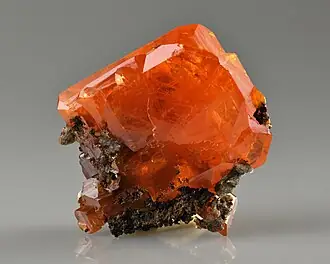
Molybdate
Wulfenite
Thin tabular crystals like stained glass windows, ranging from butterscotch yellow to the legendary deep red of Arizona's Red Cloud Mine.
Mohs 2.75-3 · Orange, Yellow
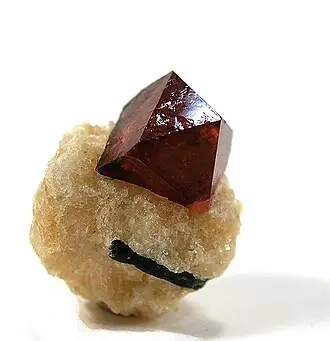
Silicate
Zircon
A genuinely brilliant natural gem with dispersion approaching diamond, and quite unrelated to cubic zirconia despite the name confusion. Cambodian material is heat-treated to the familiar electric blue; natural stones run honey, red and brown.
Mohs 6-7.5 · Blue, Golden
Please noteTraditional properties, effects, and aura associations are shared for cultural, historical, and personal-interest reasons only. They are folklore, not medicine. Nothing here is medical, psychological, or financial advice, and no stone is intended to diagnose, treat, cure, or prevent any condition. Please see a qualified professional for health concerns.