Judging quality
Higher refractive index and specific gravity than quartz; it feels heavier for its size and shows more life when faceted. Doubly terminated Brazilian crystals are the classic form.
Silicate
A hard, brilliant beryllium silicate that is rare as gem rough and prized by collectors for water-clear rhombohedral crystals. Its name comes from the Greek for deceiver, because it was so often mistaken for quartz.
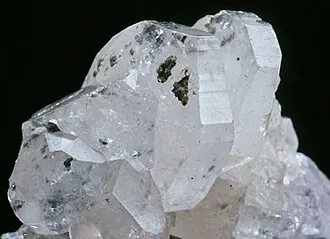
Higher refractive index and specific gravity than quartz; it feels heavier for its size and shows more life when faceted. Doubly terminated Brazilian crystals are the classic form.
Durable. Ordinary cleaning is fine.
The Russian Urals produced the first recognised specimens in 1833, alongside emerald in the same schists.
Cultural history, recorded as tradition rather than as medical or scientific claim.
See it in person
Both rooms are open six days a week, and there is always someone happy to pull pieces out of the case so you can compare them under the light.