Judging quality
Look for saturated neon color and glassy hexagonal prism faces. Apatite is soft for jewellery use and often included; clean transparent crystals are collector items.
Phosphate
The mineral of bone and tooth enamel, and a gem in its own right. Neon blue-green Madagascan apatite is one of the most electric colors in the mineral kingdom.
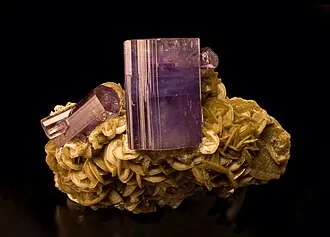
Look for saturated neon color and glassy hexagonal prism faces. Apatite is soft for jewellery use and often included; clean transparent crystals are collector items.
Soft and brittle; scratches easily and reacts to acid. Store separately.
Its name comes from the Greek for 'to deceive', because it was so often mistaken for other minerals.
Cultural history, recorded as tradition rather than as medical or scientific claim.
See it in person
Both rooms are open six days a week, and there is always someone happy to pull pieces out of the case so you can compare them under the light.