Pyroxene

Bronzite

Enstatite with enough iron to develop a warm metallic bronze sheen across the cleavage planes. Usually cut as cabochons or beads, sometimes intergrown with green serpentine.
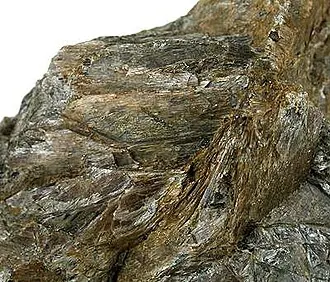
Bronzite — mineral specimen
Reference photograph: Robert M. Lavinsky, CC BY-SA 3.0 · source. Specimens in the shop vary.

Judging quality

Look for a submetallic copper-gold shimmer over a brown body. Tiger's eye has parallel silky fibres; bronzite's shine is flat and platy.

Care

Modest hardness; keep from abrasives.

History & lore

Bronzite has been used as decorative inlay in Alpine metalwork since the eighteenth century.

Cultural history, recorded as tradition rather than as medical or scientific claim.

Common questions about Bronzite

What is Bronzite?
Enstatite with enough iron to develop a warm metallic bronze sheen across the cleavage planes. Usually cut as cabochons or beads, sometimes intergrown with green serpentine.
How hard is Bronzite and what is it made of?
Bronzite is a Pyroxene-family mineral with the composition (Mg,Fe)SiO3. It crystallizes in the orthorhombic system and rates 5-6 on the Mohs hardness scale. It occurs in bronze, brown, golden.
Where does Bronzite come from?
Notable localities for Bronzite include Brazil, Austria, South Africa, India.
How do you tell good Bronzite from filler?
Look for a submetallic copper-gold shimmer over a brown body. Tiger's eye has parallel silky fibres; bronzite's shine is flat and platy.
How do you care for Bronzite?
Modest hardness; keep from abrasives.

See it in person

Photographs only go so far

Both rooms are open six days a week, and there is always someone happy to pull pieces out of the case so you can compare them under the light.

Plan a visit
Share Bronzite