Impactite

Libyan Desert Glass

Almost pure silica glass, twenty-nine million years old, scattered across a remote corner of the Sahara by an impact event that has never been fully resolved.
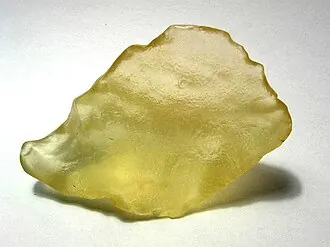
Libyan Desert Glass — mineral specimen
Reference photograph: H. Raab (User:Vesta), CC BY-SA 3.0 · source. Specimens in the shop vary.

Judging quality

Look for the pale yellow-green translucency, frosted wind-polished exterior and internal schlieren swirls. Export is now heavily restricted, so old-collection provenance matters.

Care

Durable but brittle. Rinse only.

History & lore

A carved scarab of this glass sits at the centre of a pectoral from the tomb of Tutankhamun.

Cultural history, recorded as tradition rather than as medical or scientific claim.

Common questions about Libyan Desert Glass

What is Libyan Desert Glass?
Almost pure silica glass, twenty-nine million years old, scattered across a remote corner of the Sahara by an impact event that has never been fully resolved.
How hard is Libyan Desert Glass and what is it made of?
Libyan Desert Glass is a Impactite-family mineral with the composition SiO2 glass. It crystallizes in the amorphous system and rates 6-7 on the Mohs hardness scale. It occurs in pale yellow, clear.
Where does Libyan Desert Glass come from?
Notable localities for Libyan Desert Glass include Egypt / Libya (Great Sand Sea).
How do you tell good Libyan Desert Glass from filler?
Look for the pale yellow-green translucency, frosted wind-polished exterior and internal schlieren swirls. Export is now heavily restricted, so old-collection provenance matters.
How do you care for Libyan Desert Glass?
Durable but brittle. Rinse only.

See it in person

Photographs only go so far

Both rooms are open six days a week, and there is always someone happy to pull pieces out of the case so you can compare them under the light.

Plan a visit
Share Libyan Desert Glass