Judging quality
Genuine moldavite has a distinctive etched, wrinkled surface texture and translucent bottle-green color with internal bubbles. Green bottle-glass fakes are extremely common and look too smooth or too even. Buy only with provenance.
Tektite
A tektite: natural glass formed roughly fifteen million years ago when a meteorite struck what is now southern Germany and splashed molten crust across Bohemia.
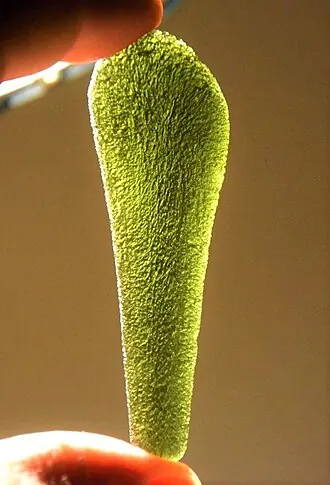
Genuine moldavite has a distinctive etched, wrinkled surface texture and translucent bottle-green color with internal bubbles. Green bottle-glass fakes are extremely common and look too smooth or too even. Buy only with provenance.
Brittle and increasingly scarce as the fields are worked out. Handle carefully.
Moldavite beads appear in Neolithic burials in central Europe, thousands of years before its origin was understood.
Cultural history, recorded as tradition rather than as medical or scientific claim.
See it in person
Both rooms are open six days a week, and there is always someone happy to pull pieces out of the case so you can compare them under the light.