Silicate

Scapolite

An under-known gem that comes in lilac, honey yellow and pink, sometimes with a strong cat's eye from parallel tube inclusions. Tanzanian violet material is the most sought.
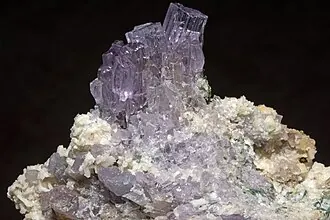
Scapolite — mineral specimen
Reference photograph: Wikimedia Commons · source. Specimens in the shop vary.

Judging quality

Strongly fluorescent under longwave UV, often bright yellow or orange. Softer than amethyst, which the violet material superficially resembles.

Care

Modest hardness and distinct cleavage; treat as a display or occasional-wear stone.

History & lore

The name comes from the Greek skapos, a rod, for the long prismatic crystals.

Cultural history, recorded as tradition rather than as medical or scientific claim.

Common questions about Scapolite

What is Scapolite?
An under-known gem that comes in lilac, honey yellow and pink, sometimes with a strong cat's eye from parallel tube inclusions. Tanzanian violet material is the most sought.
How hard is Scapolite and what is it made of?
Scapolite is a Silicate-family mineral with the composition (Na,Ca)4Al3Si9O24(Cl,CO3). It crystallizes in the tetragonal system and rates 5.5-6 on the Mohs hardness scale. It occurs in violet, yellow, pink, colorless.
Where does Scapolite come from?
Notable localities for Scapolite include Tanzania, Madagascar, Myanmar, Afghanistan.
How do you tell good Scapolite from filler?
Strongly fluorescent under longwave UV, often bright yellow or orange. Softer than amethyst, which the violet material superficially resembles.
How do you care for Scapolite?
Modest hardness and distinct cleavage; treat as a display or occasional-wear stone.

See it in person

Photographs only go so far

Both rooms are open six days a week, and there is always someone happy to pull pieces out of the case so you can compare them under the light.

Plan a visit
Share Scapolite