Carbonate

Smithsonite

Botryoidal zinc carbonate with a distinctive satiny lustre, appearing in gentle blue-green, lavender and pink depending on trace metals.
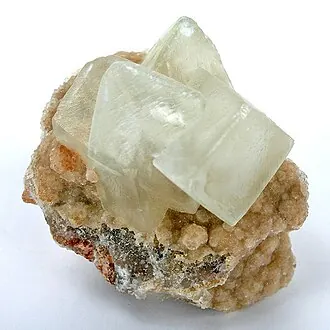
Smithsonite — mineral specimen
Reference photograph: Robert M. Lavinsky, CC BY-SA 3.0 · source. Specimens in the shop vary.

Judging quality

Look for a smooth complete botryoidal surface with silky sheen and even color. Kelly Mine blue-green from New Mexico is the American classic.

Care

Reasonably soft and acid-sensitive. Wipe dry; avoid household cleaners.

History & lore

Named for James Smithson, the mineralogist whose bequest founded the Smithsonian Institution.

Cultural history, recorded as tradition rather than as medical or scientific claim.

Common questions about Smithsonite

What is Smithsonite?
Botryoidal zinc carbonate with a distinctive satiny lustre, appearing in gentle blue-green, lavender and pink depending on trace metals.
How hard is Smithsonite and what is it made of?
Smithsonite is a Carbonate-family mineral with the composition ZnCO3. It crystallizes in the trigonal system and rates 4-4.5 on the Mohs hardness scale. It occurs in blue-green, pink, yellow.
Where does Smithsonite come from?
Notable localities for Smithsonite include Namibia (Tsumeb), USA (New Mexico, Kelly Mine), Greece, Mexico.
How do you tell good Smithsonite from filler?
Look for a smooth complete botryoidal surface with silky sheen and even color. Kelly Mine blue-green from New Mexico is the American classic.
How do you care for Smithsonite?
Reasonably soft and acid-sensitive. Wipe dry; avoid household cleaners.

See it in person

Photographs only go so far

Both rooms are open six days a week, and there is always someone happy to pull pieces out of the case so you can compare them under the light.

Plan a visit
Share Smithsonite