Chalcedony

Turritella Agate

Dark brown agate packed with the spiral shells of freshwater snails — properly Elimia tenera, not Turritella, but the trade name stuck a century ago. Cut faces show the spirals in cross-section like a mosaic.
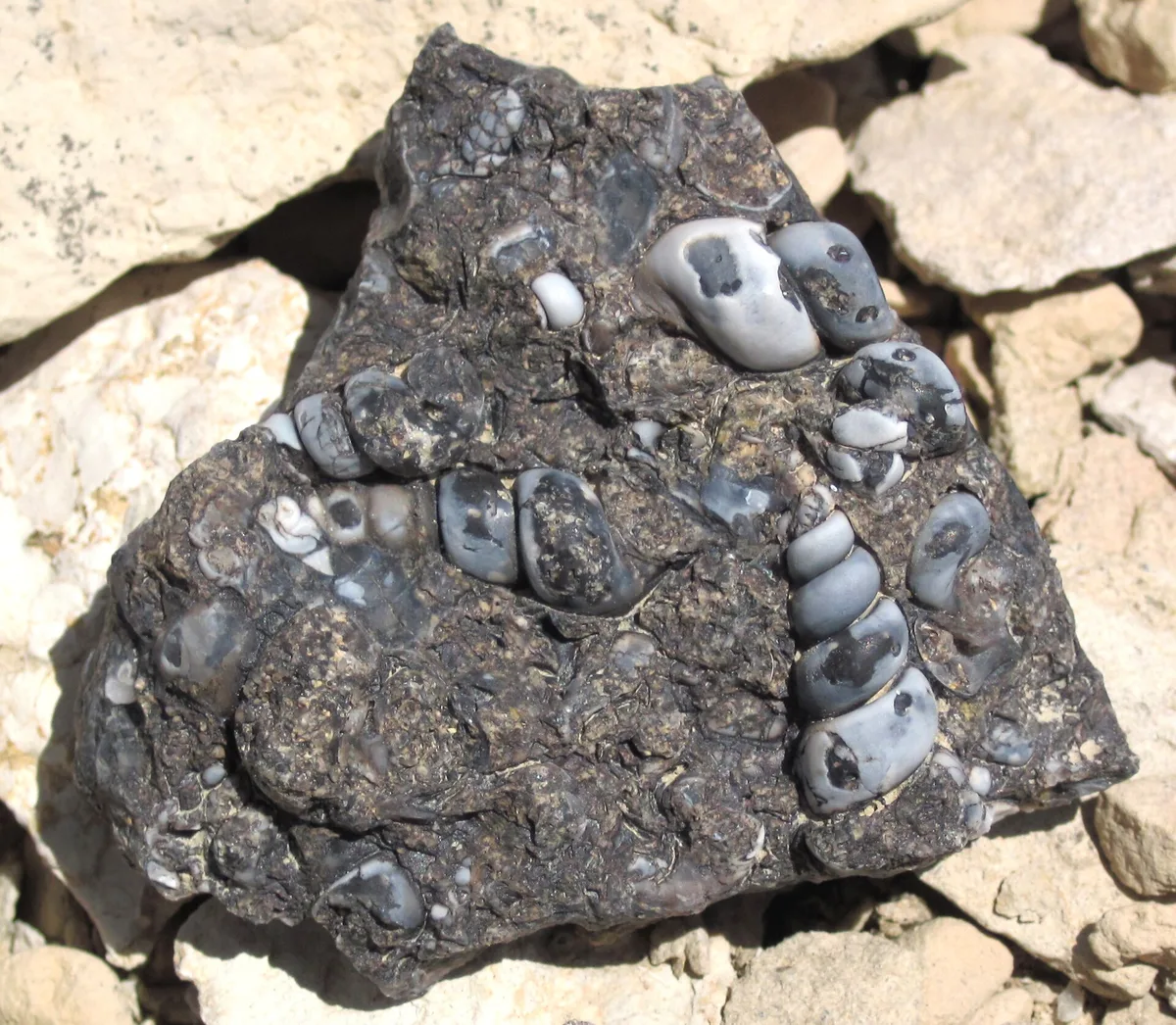
Turritella Agate — mineral specimen
Reference photograph: James St. John, CC BY 2.0 · source. Specimens in the shop vary.

Judging quality

Genuine material is dense, dark and glassy, with shells in every orientation. Resin imitations have suspiciously even shell spacing and warm plastic feel.

Care

Hard and stable. Wash with water.

History & lore

It comes from the same Wyoming lake deposits as the Green River fossil fish, laid down about 50 million years ago.

Cultural history, recorded as tradition rather than as medical or scientific claim.

Common questions about Turritella Agate

What is Turritella Agate?
Dark brown agate packed with the spiral shells of freshwater snails — properly Elimia tenera, not Turritella, but the trade name stuck a century ago. Cut faces show the spirals in cross-section like a mosaic.
How hard is Turritella Agate and what is it made of?
Turritella Agate is a Chalcedony-family mineral with the composition SiO2 with fossil shells. It crystallizes in the trigonal system and rates 6.5-7 on the Mohs hardness scale. It occurs in brown, black, tan, clove brown.
Where does Turritella Agate come from?
Notable localities for Turritella Agate include Wyoming, USA (Green River Formation).
How do you tell good Turritella Agate from filler?
Genuine material is dense, dark and glassy, with shells in every orientation. Resin imitations have suspiciously even shell spacing and warm plastic feel.
How do you care for Turritella Agate?
Hard and stable. Wash with water.

See it in person

Photographs only go so far

Both rooms are open six days a week, and there is always someone happy to pull pieces out of the case so you can compare them under the light.

Plan a visit
Share Turritella Agate