Judging quality
Judge on transparency and color saturation; larger stones hold color better. Much material is heat-treated to shift orange toward pink, which is stable and standard.
Beryl
Pink to peach beryl colored by manganese. Crystals tend to be tabular rather than long, and the softest apricot tones are the most characteristic.
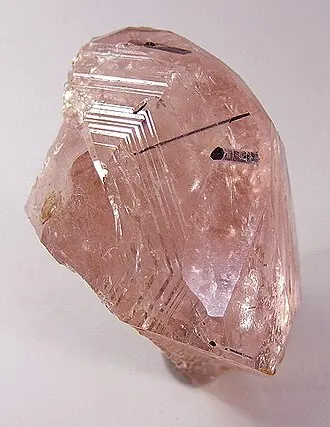
Judge on transparency and color saturation; larger stones hold color better. Much material is heat-treated to shift orange toward pink, which is stable and standard.
Durable. Warm soapy water; avoid harsh knocks on crystal edges.
Named in 1911 for the financier and gem collector J.P. Morgan at the suggestion of Tiffany's chief gemologist George Kunz.
Cultural history, recorded as tradition rather than as medical or scientific claim.
See it in person
Both rooms are open six days a week, and there is always someone happy to pull pieces out of the case so you can compare them under the light.